What it means
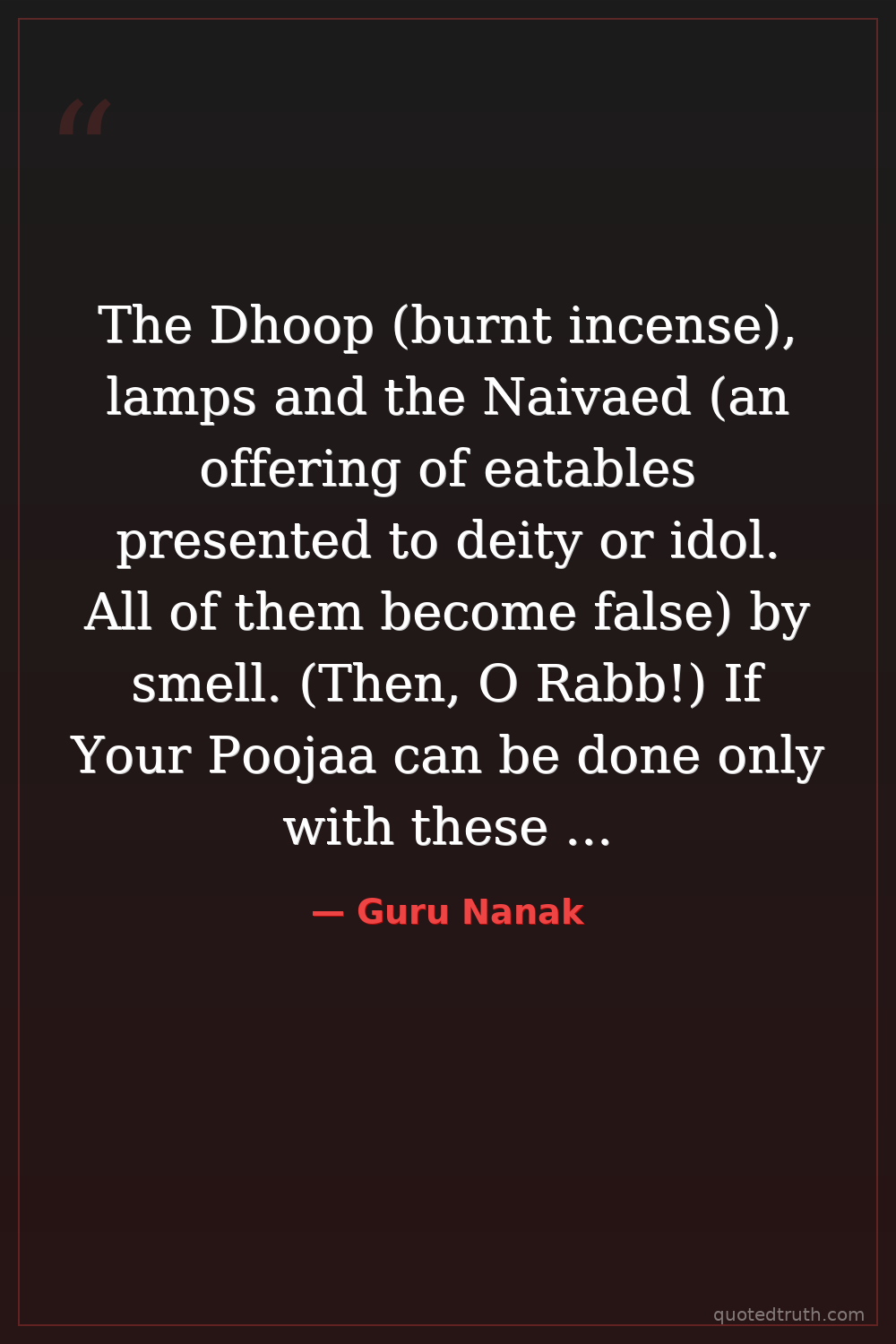
External rituals like burning incense, lighting lamps, and offering food to idols are meaningless when presented as the core of worship. If God could only be reached through these physical props, true devotion would be impossible, since the offerings themselves are impermanent and superficial. Real worship cannot depend on material objects; it must come from sincere inner connection, not performance of ceremonial acts that carry no spiritual substance.
Relevance to Guru Nanak
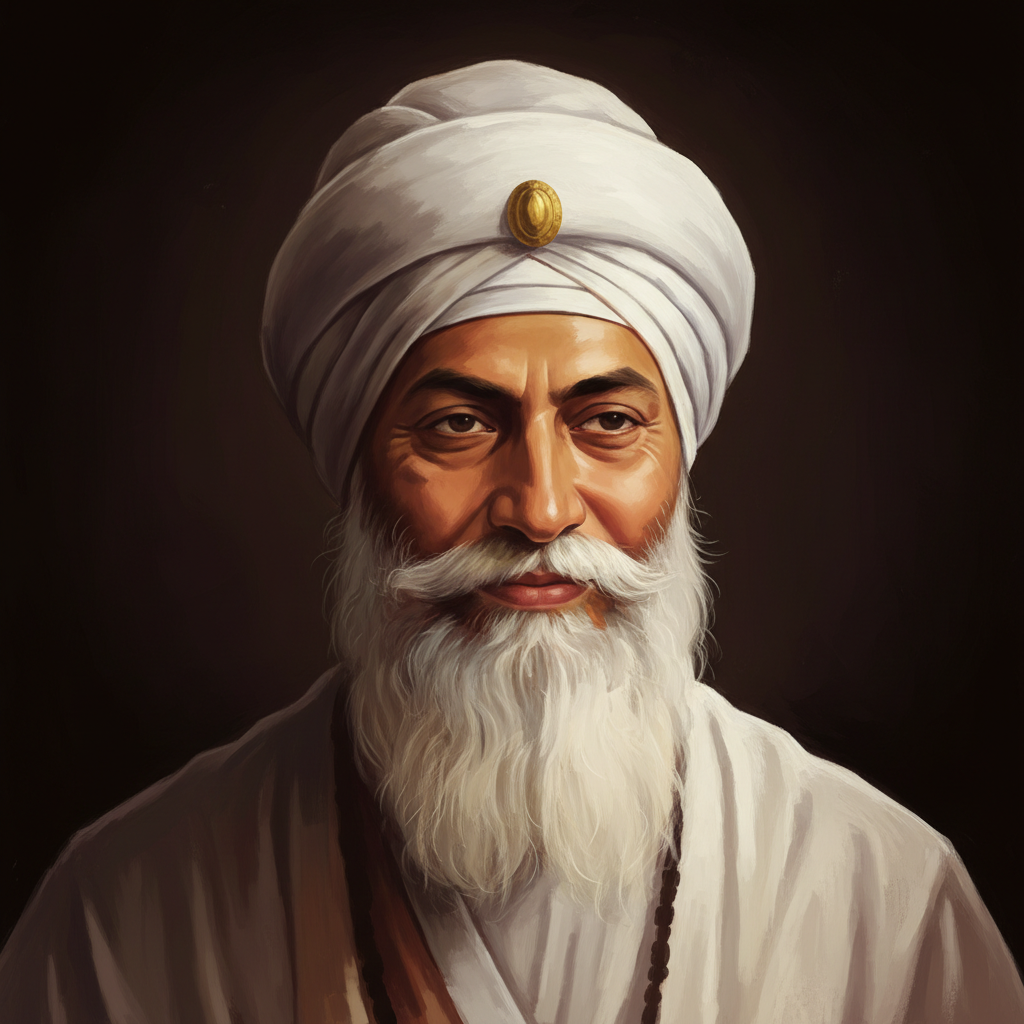
Guru Nanak founded Sikhism by rejecting ritualism in both Hinduism and Islam, insisting God is formless and reached through honest living, remembrance of the Name, and service. Born 1469 in Punjab, he famously challenged priestly offerings at Haridwar and dismissed temple idol worship. This verse echoes his lifelong teaching that ceremony without inner devotion is hollow, a conviction that shaped the Sikh emphasis on Naam Simran over external religious theater.
The era
In early modern Punjab under the Lodi and early Mughal rulers, Hindu temple ritualism and Brahminical gatekeeping dominated devotion, while Islamic orthodoxy enforced its own formalism. Ordinary people were told salvation required priests, offerings, and caste-bound ceremonies. The Bhakti and Sufi movements were pushing back, and Nanak spoke into this climate, attacking empty ritual on both sides and offering a direct, casteless path to the divine accessible to farmers and weavers alike.
AI-generated insights based on extensive research and information for context. Factual errors? Email [email protected].