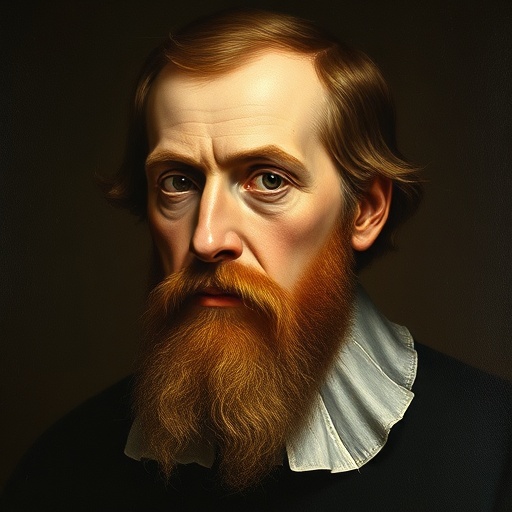
John Calvin — "All who are truly godly desire to live a holy life."
All who are truly godly desire to live a holy life.
All who are truly godly desire to live a holy life.
Click any product to generate a realistic preview. Up to 3 at a time.
* Initial load can take up to 90 seconds — revising the preview in another color is nearly instant.
"This is not laid down on human authority; it is God who speaks and prescribes a perpetual rule for his Church."
"We frankly confess that God has ordained to death those whom he has not deemed worthy of life."
"It would be indeed better to grant license to thieves and sorcerers and adulterers, than to suffer the blasphemies which the ungodly utter against God, to prevail without any punishment and without an…"
"The gospel is the power of God unto salvation."
"It is not in our power to believe, but it is the gift of God."
French theologian whose Institutes of the Christian Religion (1536) systematized Protestant Reformed doctrine, including predestination. Closely associated with Martin Luther (Reformation founder, Calvin's predecessor). For an intellectual contrast, see Jacobus Arminius, Dutch Reformed theologian (1560-1609) — Arminius's rejection of strict double-predestination founded Arminianism — the theological tradition modern Methodism, most evangelicalism, and Pentecostalism descend from. The Calvinist-Arminian debate has divided Protestantism for 400 years.
Found in 1 providers: grok
1 source checked
Genuine piety and the desire for holiness are inseparable. Anyone who claims faith but feels no pull toward righteous living is not truly godly by this standard. The critical word is desire—not perfection. Calvin distinguishes those who merely profess belief from those whose inner life is genuinely transformed. Authentic faith produces a real, ongoing hunger to align behavior with God's moral standard, regardless of how often one falls short.
Calvin's entire theological project—the Institutes, his Geneva governance, his vast commentary work—rested on the conviction that election produces transformation. He implemented strict moral discipline in Geneva because he believed authentic salvation makes believers hunger for righteousness. His doctrine of sanctification held that God's elect are not merely forgiven but progressively remade. His own austere, prolific life exemplified the relentless self-examination he demanded from every true believer.
Calvin wrote in the 1540s–1560s, decades after Luther's break with Rome exposed widespread clerical corruption: priests and bishops living dissolute lives while administering sacraments. Meanwhile, antinomian factions within Protestantism argued grace freed believers from moral law entirely. Calvin's insistence that genuine faith is evidenced by a desire for holiness staked out a middle position—against corrupt Catholicism and against lawless Protestant fringe movements—making visible holy living a theological battleground.
AI-generated insights based on extensive research and information for context. Factual errors? Email [email protected].
Your cart is empty