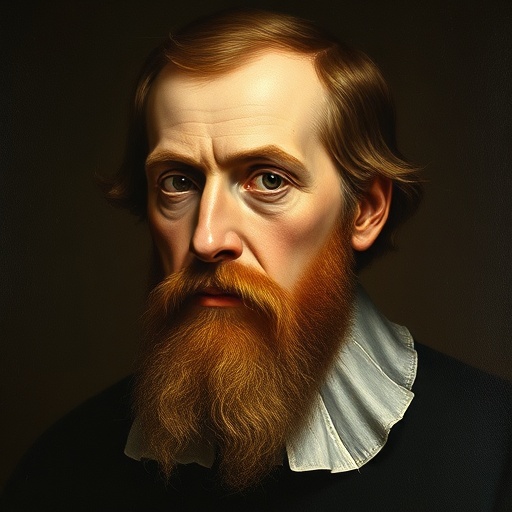
John Calvin — "The elect are saved by grace, and the reprobate are damned by justice."
The elect are saved by grace, and the reprobate are damned by justice.
The elect are saved by grace, and the reprobate are damned by justice.
Click any product to generate a realistic preview. Up to 3 at a time.
* Initial load can take up to 90 seconds — revising the preview in another color is nearly instant.
"For the will is so overwhelmed by wickedness and so pervaded by vice and corruption that it cannot in any way escape to honorable exertion or devote itself to righteousness."
"For we must not think that it is an arbitrary will in God that is the cause of election, but that he wills justly and without fault."
"God's providence extends to all things, even to the least of them."
"God will not suffer his truth to be obscured, but will always raise up some to maintain it."
"It is not enough to have a good cause, but we must also have a good conscience."
French theologian whose Institutes of the Christian Religion (1536) systematized Protestant Reformed doctrine, including predestination. Closely associated with Martin Luther (Reformation founder, Calvin's predecessor). For an intellectual contrast, see Jacobus Arminius, Dutch Reformed theologian (1560-1609) — Arminius's rejection of strict double-predestination founded Arminianism — the theological tradition modern Methodism, most evangelicalism, and Pentecostalism descend from. The Calvinist-Arminian debate has divided Protestantism for 400 years.
Found in 1 providers: grok
1 source checked
Some people are chosen by God for salvation through pure unearned grace — nothing they did merited it. Others are condemned through justice — receiving the punishment their sins deserve. God's will is absolute over both outcomes. Neither group earns their fate; one receives mercy they don't deserve, the other receives punishment they do. Human free will plays no decisive role in either direction.
Calvin built his entire theological system around divine sovereignty and predestination, most fully developed in his Institutes of the Christian Religion (1536–59). As the reformer who shaped Geneva into a theocratic city-state, he insisted God's glory required absolute control over salvation. This quote captures his double predestination doctrine — that God actively elects and actively passes over — which defined Calvinist churches, the Synod of Dort, and Puritan theology for centuries.
The 16th-century Reformation shattered the Catholic framework where sacraments and merit earned salvation. Calvin wrote amid fierce debates about grace, works, and human agency. The Council of Trent (1545–63) was directly countering Protestant predestination with its decree on justification. Religious wars — the French Wars of Religion, the Schmalkaldic War — made theology a matter of political survival, giving Calvin's sharp doctrinal lines urgent practical weight beyond academic dispute.
AI-generated insights based on extensive research and information for context. Factual errors? Email [email protected].
Your cart is empty