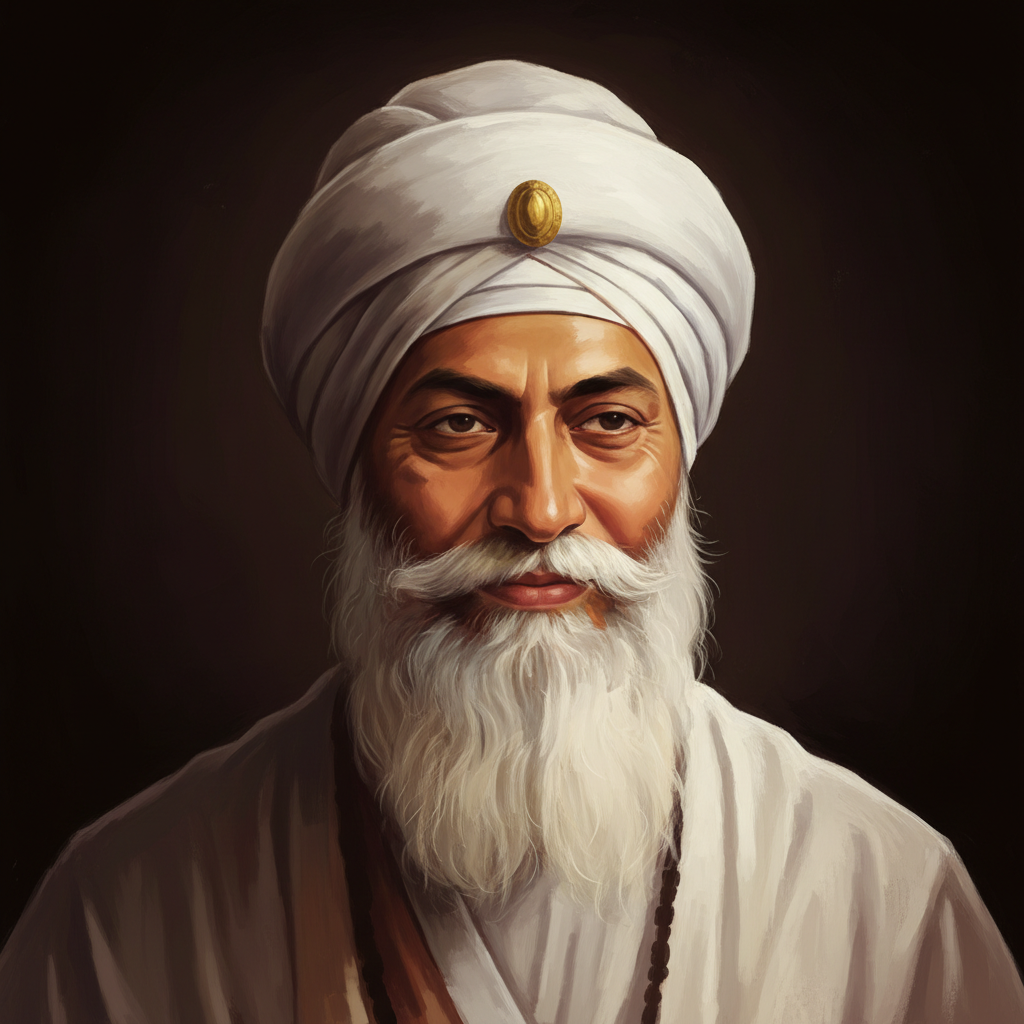
Guru Nanak — "The five thieves (lust, anger, greed, attachment, ego) plunder the house of the …"
The five thieves (lust, anger, greed, attachment, ego) plunder the house of the body.
The five thieves (lust, anger, greed, attachment, ego) plunder the house of the body.
Click any product to generate a realistic preview. Up to 3 at a time.
* Initial load can take up to 90 seconds — revising the preview in another color is nearly instant.
"He who has no enemies, and is without hatred, and who sees God in all beings, he is a true saint."
"The True Guru is the Giver of peace and tranquility."
"The world is a garden, love is its flower. And sometimes, you get weeds."
"Hindus are getting Spiritually ruined by worshiping their idols all life and the Muslims by bowing their heads towards Mecca (believing that God exists only in Mecca); but both do not understand/reali…"
"Realization of Truth is higher than all else. Higher still is truthful living."
Founder of Sikhism and the first of the Ten Sikh Gurus, whose teachings of one universal God and rejection of caste shaped Punjab. Closely associated with Kabir (mystical poet whose verses appear in the Sikh Guru Granth Sahib). For an intellectual contrast, see Brahmanical orthodoxy, the Hindu caste-and-ritual establishment of his era — Sikhism was founded as a deliberate alternative to both Hindu ritual hierarchy and Islamic exclusivism — Nanak's universalism was a structural rejection of caste and priestly mediation.
Found in 1 providers: gemini
1 source checked
Five internal vices—lust, anger, greed, attachment, and ego—operate like thieves that silently rob a person of their spiritual well-being. The body is portrayed as a house these destructive impulses ransack from within, stealing peace, clarity, and connection to the divine. Recognizing and actively resisting these forces is central to living an honest, spiritually fulfilled life free from inner corruption.
Guru Nanak traveled extensively across South Asia, the Middle East, and Central Asia, preaching inner purification over empty ritual. He openly challenged caste hierarchy, priestly corruption, and material obsession—directly confronting ego, greed, and attachment. His compositions in the Guru Granth Sahib name these five vices repeatedly as core barriers separating the soul from Waheguru. His life of simplicity and selfless service embodied resistance to all five.
Guru Nanak lived from 1469 to 1539, amid Mughal conquest, Hindu caste rigidity, and widespread clerical corruption across the Indian subcontinent. Both dominant religious traditions emphasized external ritual over internal transformation. Political rulers hoarded wealth while common people suffered exploitation. His framing of vice as an internal thief rather than an external enemy shifted moral accountability inward, challenging orthodoxies that used outward compliance to define righteousness.
AI-generated insights based on extensive research and information for context. Factual errors? Email [email protected].
Your cart is empty