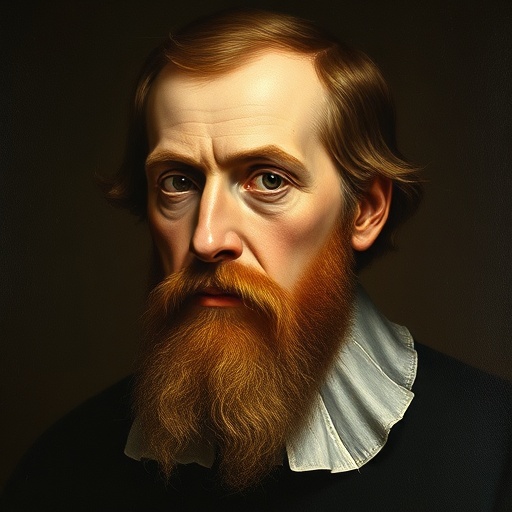
John Calvin — "The grace of God is the only foundation of our salvation."
The grace of God is the only foundation of our salvation.
The grace of God is the only foundation of our salvation.
Click any product to generate a realistic preview. Up to 3 at a time.
* Initial load can take up to 90 seconds — revising the preview in another color is nearly instant.
"...those whom God passes over [praeterit], he condemns [reprobat]; and this he does for no other reason than that he wills to exclude them from the inheritance which he predestines [praedestinat] for …"
"All are not created on equal terms, but some are preordained to eternal life, others to eternal damnation; and, accordingly, as each has been created for one or other of these ends, we say that he has…"
"The whole life of a Christian should be a meditation on death."
"It is by no means necessary that the righteous should be distinguished from the wicked by external signs."
"The best way to overcome evil is to do good."
French theologian whose Institutes of the Christian Religion (1536) systematized Protestant Reformed doctrine, including predestination. Closely associated with Martin Luther (Reformation founder, Calvin's predecessor). For an intellectual contrast, see Jacobus Arminius, Dutch Reformed theologian (1560-1609) — Arminius's rejection of strict double-predestination founded Arminianism — the theological tradition modern Methodism, most evangelicalism, and Pentecostalism descend from. The Calvinist-Arminian debate has divided Protestantism for 400 years.
Found in 1 providers: grok
1 source checked
Salvation — being rescued from sin and its eternal consequences — isn't earned through good deeds, rituals, or moral effort. It comes entirely from God's grace: an undeserved gift freely given. Human beings cannot accumulate enough merit to secure their own rescue. Whatever spiritual standing a person has before God rests solely on what God chooses to give, not on what the individual accomplishes. Everything else in faith flows from this one unshakeable starting point.
Calvin built his entire theological system — codified in his landmark Institutes of the Christian Religion — around God's absolute sovereignty and grace. Having broken from Catholicism's emphasis on works and sacramental merit, he governed Geneva as a reformed Christian city, preaching hundreds of sermons grounding every aspect of Christian life in grace. His doctrine of predestination flows directly from this: if grace is the only foundation, God alone determines who receives it.
Calvin wrote during the Protestant Reformation, when Luther's challenge to Rome had split Western Christianity. The medieval Catholic Church taught that salvation required both divine grace and human cooperation — good works, sacraments, indulgences, and penance. Reformers rejected this as spiritual commerce that corrupted the faith. Declaring grace the sole foundation was a radical, dangerous claim in an era of religious wars, heresy trials, and executions. Calvin himself watched fellow reformers burned at the stake.
AI-generated insights based on extensive research and information for context. Factual errors? Email [email protected].
Your cart is empty