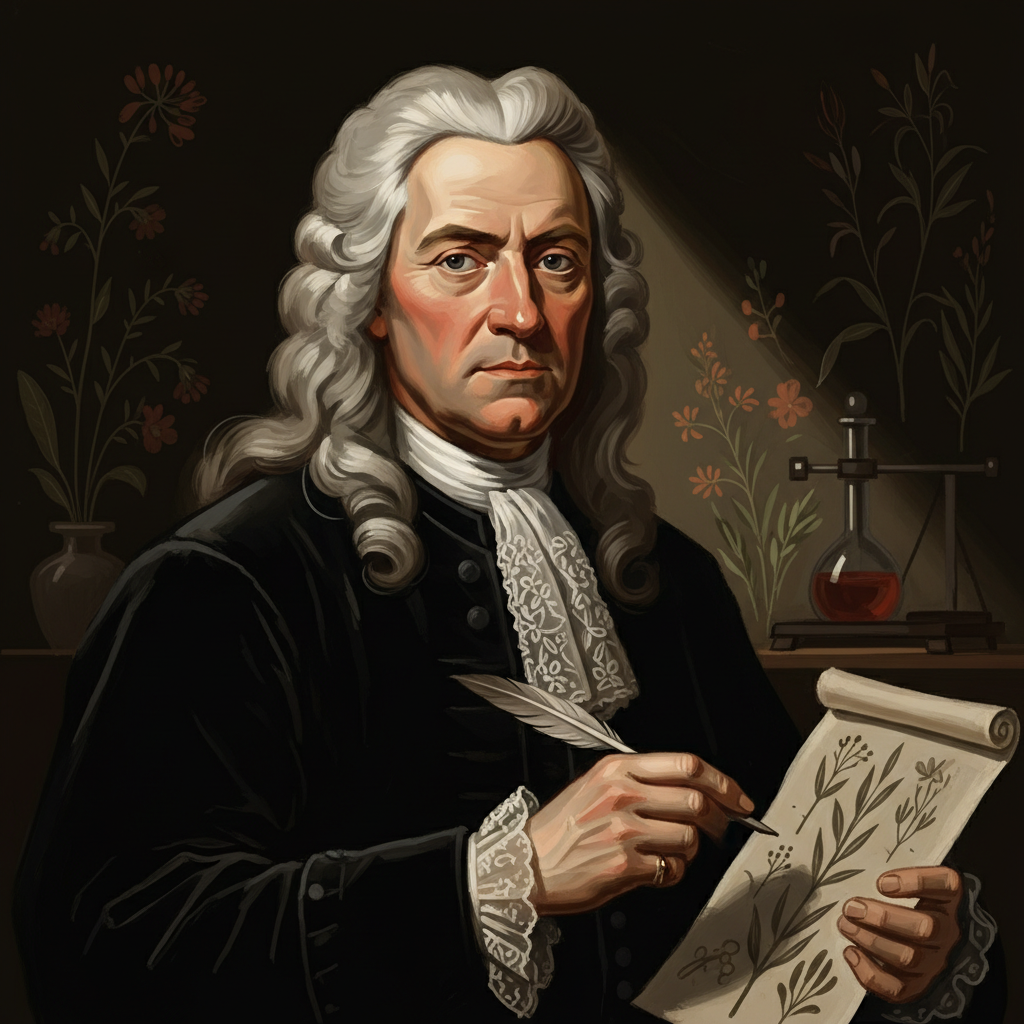
Carl Linnaeus — "The greatest pleasure of a gardener is to survey his work, and to admire the res…"
The greatest pleasure of a gardener is to survey his work, and to admire the result of his own industry.
The greatest pleasure of a gardener is to survey his work, and to admire the result of his own industry.
Click any product to generate a realistic preview. Up to 3 at a time.
* Initial load can take up to 90 seconds — revising the preview in another color is nearly instant.
"The flower's leaves...serve as bridal beds which the Creator has so gloriously prepared, adorned with such noble bed curtains, and perfumed with so many sweet scents to induce the young bridegroom to …"
"The only way to know nature is to love it."
"The species are as numerous as the different forms which the Infinite Being produced in the beginning."
"The greatest happiness is to be able to contemplate nature."
"There are as many species as the infinite being created diverse forms in the beginning, which, following the laws of generation, produced many others, but always similar to them: therefore there are a…"
Swedish botanist and the father of modern taxonomy whose Systema Naturae (1735) introduced binomial nomenclature for naming all species. Closely associated with Joseph Banks (British naturalist who carried Linnaean classification on Cook's voyages). For an intellectual contrast, see Comte de Buffon, French naturalist and Histoire Naturelle author (1749-1788) — Buffon explicitly attacked Linnaean fixed-categories taxonomy as artificial and rejected the binomial system; his gradualist, environment-shaped natural history was the explicit alternative. Anticipates the fixed-species-vs-evolution debate Darwin would later resolve.
From 'Amoenitates Academicae' or similar writings, reflecting his personal enjoyment of botany.
Date: c. 1749-1769
Nature & WorldFound in 1 providers: gemini
1 source checked
Real satisfaction comes from stepping back and looking at what you have built with your own effort. A gardener who has planted, weeded, and tended a plot feels deep joy seeing the finished landscape thrive. The reward is not money or applause but the quiet pride of recognizing that your sustained labor produced something living, ordered, and beautiful that would not exist without your steady hands.
Linnaeus was literally a gardener and botanist who spent decades cultivating the Uppsala Botanical Garden and classifying thousands of plants into his Systema Naturae. His binomial nomenclature imposed order on the natural world much as a gardener imposes order on a plot. Surveying rows of named, cataloged specimens was his personal joy, reflecting a man whose life's industry was turning botanical chaos into a surveyable, admirable system.
In the early modern 1700s, European science was transitioning from scattered natural history into systematic disciplines. Enlightenment thinkers prized observation, classification, and human mastery over nature. Wealthy patrons funded botanical gardens as symbols of empire and knowledge, while global exploration flooded Europe with unfamiliar species. Linnaeus worked in Sweden as colonial plant specimens arrived from around the world, making the act of cataloging a garden both a scientific milestone and a cultural statement of rational order.
AI-generated insights based on extensive research and information for context. Factual errors? Email [email protected].
Your cart is empty