Carl Linnaeus — "The greatest happiness is to be able to contemplate nature."
The greatest happiness is to be able to contemplate nature.
The greatest happiness is to be able to contemplate nature.
Click any product to generate a realistic preview. Up to 3 at a time.
* Initial load can take up to 90 seconds — revising the preview in another color is nearly instant.
"For wealth disappears, the most magnificent houses fall into decay, the most numerous family at some time or another comes to an end: the greatest and the most prosperous kingdoms can be overthrown: b…"
"The whole earth is a garden, and man is its gardener."
"I have been called a second Adam."
"The purpose of science is to know the works of God."
"The American is obstinate, contented, free. He paints himself with red lines and is regulated by custom."
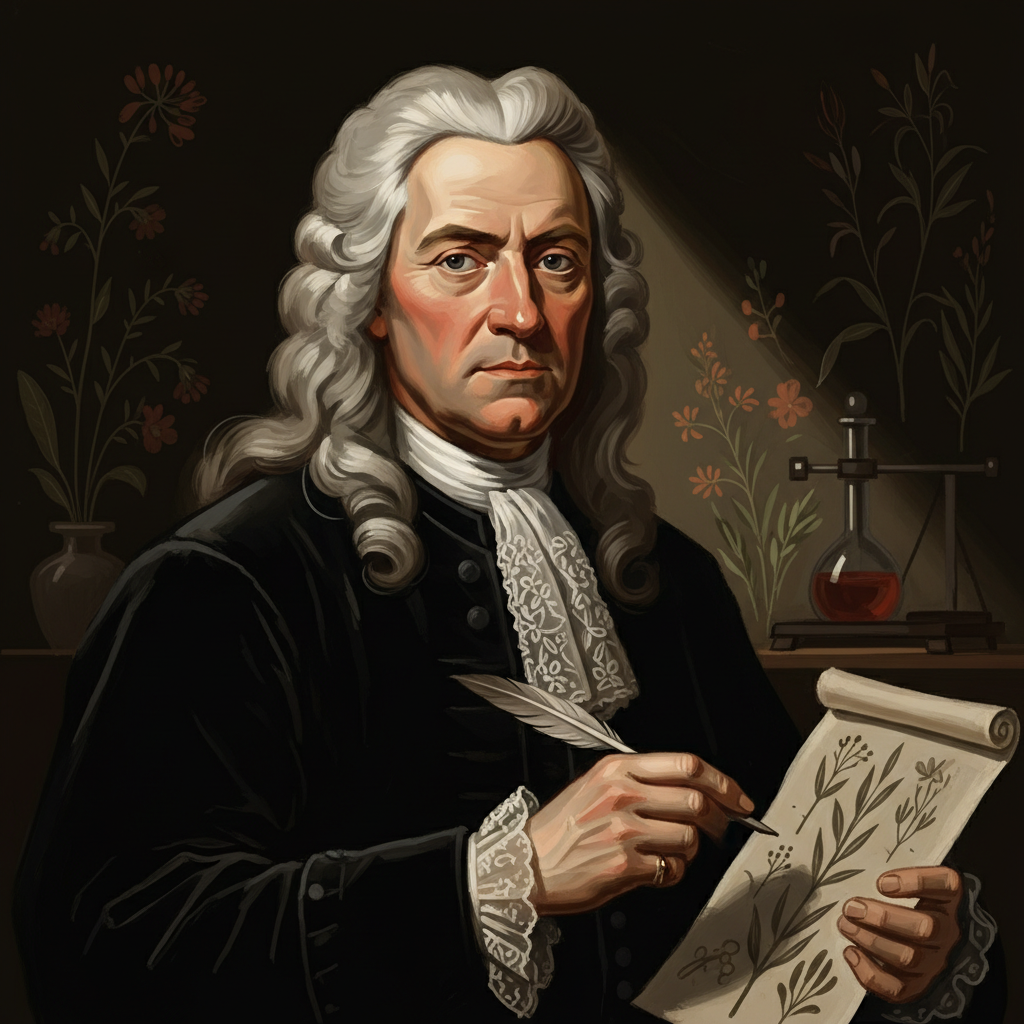
Swedish botanist and the father of modern taxonomy whose Systema Naturae (1735) introduced binomial nomenclature for naming all species. Closely associated with Joseph Banks (British naturalist who carried Linnaean classification on Cook's voyages). For an intellectual contrast, see Comte de Buffon, French naturalist and Histoire Naturelle author (1749-1788) — Buffon explicitly attacked Linnaean fixed-categories taxonomy as artificial and rejected the binomial system; his gradualist, environment-shaped natural history was the explicit alternative. Anticipates the fixed-species-vs-evolution debate Darwin would later resolve.
A statement reflecting his deep personal joy derived from natural observation.
Date: Uncertain (attributed)
Nature & WorldFound in 1 providers: gemini
1 source checked
True happiness comes from being able to observe, study, and reflect on the natural world. The quote places nature—not wealth, status, or achievement—as the highest source of human fulfillment. It suggests that the capacity to slow down and genuinely engage with the living world around us is itself a form of grace, available to anyone willing to pay attention.
Linnaeus spent his life enacting this belief—he led a grueling expedition to Lapland at 25, catalogued over 7,700 plant species in Species Plantarum, and built the binomial nomenclature system still in use today. He called botany a divine gift and described nature as the most exquisite masterpiece. His entire career transformed personal wonder into rigorous science, making contemplation the engine of his greatest achievements.
Linnaeus worked during the 18th-century Enlightenment, as European exploration voyages flooded natural history collections with thousands of unclassified specimens from the Americas, Africa, and Asia. Natural philosophy was becoming empirical science, yet nature was still widely understood as evidence of God's design. Contemplating nature carried both spiritual weight and intellectual urgency—understanding creation meant understanding the Creator, giving taxonomy a nearly devotional character.
AI-generated insights based on extensive research and information for context. Factual errors? Email [email protected].
Your cart is empty