What it means
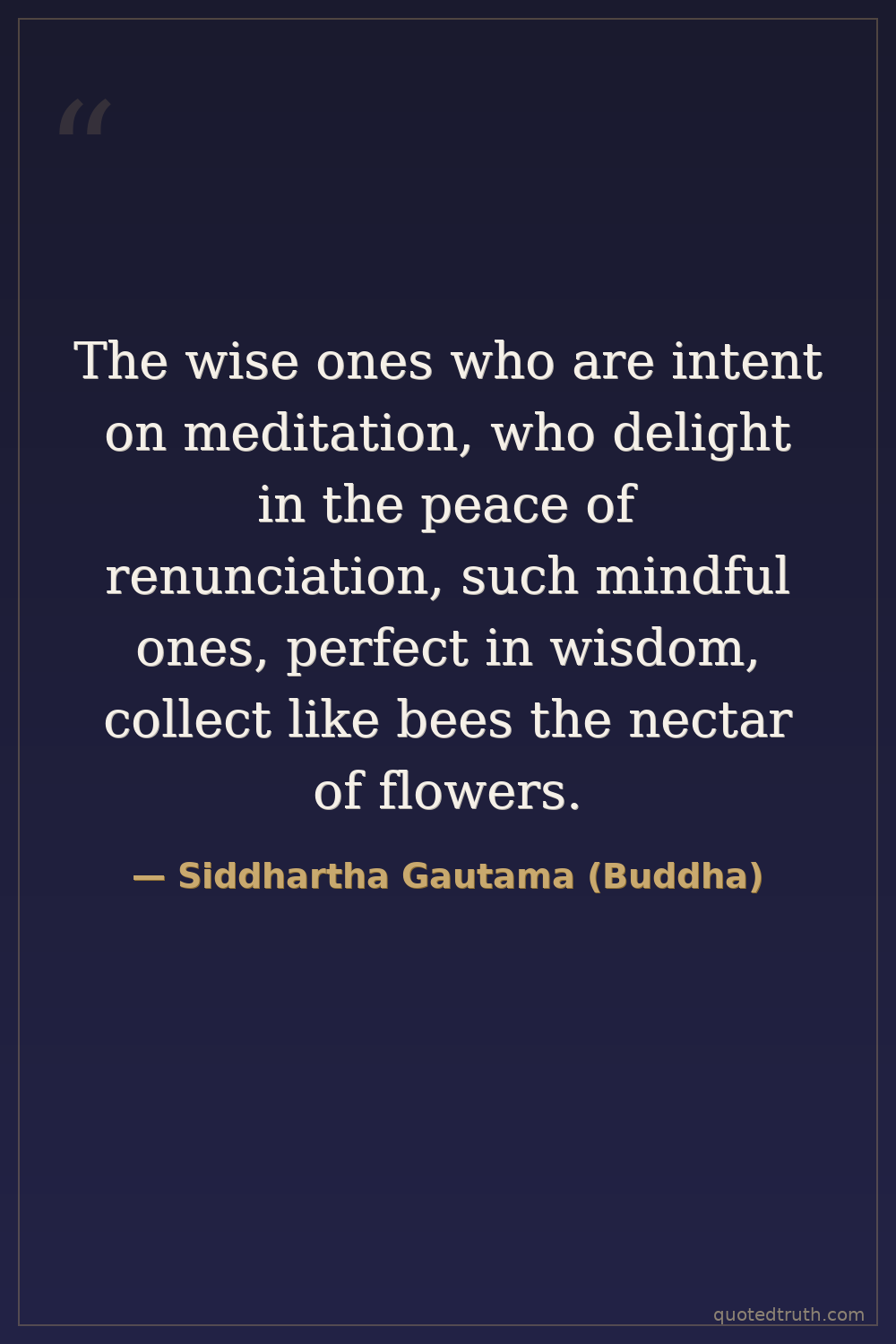
Disciplined thinkers who commit themselves to deep reflection and find joy in letting go of worldly attachments gather insight carefully and steadily. Like bees visiting many flowers without damaging them, they draw wisdom from every experience, every teaching, and every encounter. Their attentiveness and mental clarity let them extract what nourishes the mind while leaving the source unharmed, building understanding gradually rather than through force or grasping.
Relevance to Siddhartha Gautama (Buddha)
The Buddha spent six years as a wandering ascetic before achieving enlightenment through disciplined meditation under the Bodhi tree. After his awakening, he taught mindfulness, renunciation, and the Middle Way for 45 years across northern India. The bee metaphor reflects his own practice of sampling teachings from multiple teachers like Alara Kalama and Uddaka Ramaputta before synthesizing his own insight, and it mirrors the mendicant lifestyle he prescribed for his monastic sangha.
The era
In 5th-century BCE India, the Shramana movement challenged Vedic Brahminical orthodoxy, producing wandering ascetics, Jains, and skeptics debating liberation. Urbanization along the Ganges plain created wealthy patrons but also spiritual restlessness. Monks literally depended on alms, collecting food house to house like bees gathering pollen. This imagery resonated with listeners who saw mendicants daily and understood the ethic of taking only what was freely given without burdening any single household.
AI-generated insights based on extensive research and information for context. Factual errors? Email [email protected].