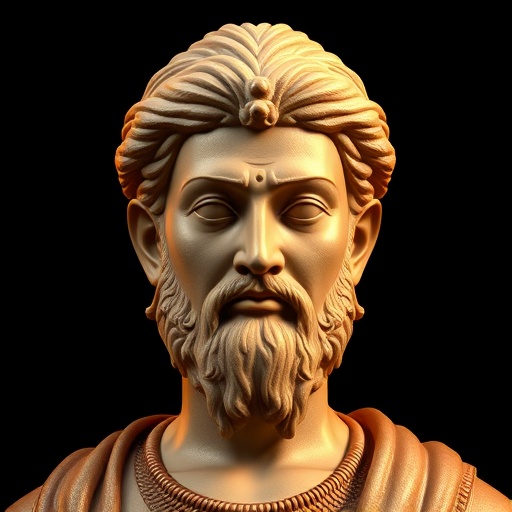
Mahavira — "The greatest victory is the victory over oneself."
The greatest victory is the victory over oneself.
The greatest victory is the victory over oneself.
Click any product to generate a realistic preview. Up to 3 at a time.
* Initial load can take up to 90 seconds — revising the preview in another color is nearly instant.
"Attachment and aversion are the root causes of Karma."
"The greatest wealth is health."
"The soul is the only thing that is permanent; everything else is impermanent."
"The soul is the perceiver, enjoyer, and doer of all actions."
"The highest spiritual state is to be free from all desires."
24th and last Tirthankara of Jainism, whose teachings of strict ahimsa (non-violence), aparigraha (non-attachment), and karma reshaped ancient Indian religion. Closely associated with The Buddha (near-contemporary moral revolutionary, also reacting against Vedic ritualism). For an intellectual contrast, see Vedic Brahmanical ritual sacrifice, the animal-sacrifice-centered Vedic religion of his era — Mahavira's ahimsa demanded total non-violence, including not eating root vegetables that kill the plant — a maximum-distance ethical move from the Vedic priestly tradition that ritually sacrificed cattle and horses. The two cleanest poles of ancient Indian religious ethics.
Found in 1 providers: grok
1 source checked
Conquering external enemies, accumulating wealth, or gaining power means little compared to mastering your own mind and impulses. True victory is defeating the inner forces — anger, greed, fear, and ego — that drive poor decisions and suffering. Most people never attempt this battle. The quote argues self-mastery is harder and more meaningful than any external achievement because it requires sustained, honest confrontation with your own weaknesses.
Mahavira lived this literally. Born a Kshatriya prince around 599 BCE, he renounced royalty at 30 to pursue extreme asceticism — 12 years of meditation, fasting, and silence without shelter or possessions. Jainism's core doctrine centers on conquering four inner passions — anger, pride, deceit, and greed — called kashaya. Achieving liberation requires purging these completely. His entire life demonstrated that self-conquest, not political or military power, defines the highest human achievement.
Mahavira lived in 6th–5th century BCE northeastern India during the Axial Age — a period of radical philosophical questioning across civilizations. Vedic brahminism dominated: ritual sacrifice, caste hierarchy, and priestly authority defined social order. Warrior culture glorified battlefield conquest as ultimate honor. Mahavira directly challenged both systems, arguing internal spiritual victory outranked military glory or ritual status — a message that resonated widely in a society questioning whether external power structures could explain suffering and liberation.
AI-generated insights based on extensive research and information for context. Factual errors? Email [email protected].
Your cart is empty