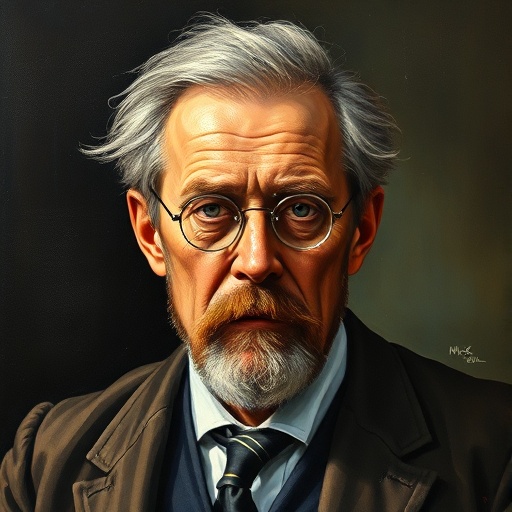
Max Planck — "The highest goal of all science is to understand the human mind."
The highest goal of all science is to understand the human mind.
The highest goal of all science is to understand the human mind.
Click any product to generate a realistic preview. Up to 3 at a time.
* Initial load can take up to 90 seconds — revising the preview in another color is nearly instant.
"A new scientific truth does not triumph by convincing its opponents and making them see the light, but rather because its opponents eventually die, and a new generation grows up that is familiar with …"
"The quantum of action plays a fundamental role in atomic theory."
"The highest aim of physics is to find the one all-embracing law which governs all natural phenomena."
"A scientific truth is not a truth that is true in all possible worlds, but a truth that is true in our world."
"My Führer! I am most deeply shaken by the message that my son Erwin has been sentenced to death by the People's Court. The acknowledgement for my achievements in service of our fatherland, which you, …"
Found in 1 providers: grok
1 source checked
Science's ultimate purpose is not just cataloging facts about nature, but grasping how our own consciousness and thinking work. Every discovery about atoms, light, or physics eventually circles back to the being doing the investigating. Understanding matter matters less than understanding the mind that perceives, reasons about, and assigns meaning to matter. The observer is the deepest puzzle any discipline can tackle.
Planck founded quantum theory in 1900 by proposing energy comes in discrete packets, yet he remained deeply philosophical, writing extensively on consciousness, free will, and religion. He believed matter derives from a conscious intelligent mind and rejected pure materialism. Having watched quantum mechanics force observers into physics itself, he recognized that the knower could not be separated from the known, making mind the ultimate frontier.
Planck worked during physics' revolutionary decades (1900-1947) when Newtonian certainty collapsed. Relativity, quantum mechanics, and the uncertainty principle dissolved clean lines between observer and observed. Freud was mapping the unconscious, behaviorism was rising, and two world wars raised urgent questions about human nature. Amid mechanistic reductionism, Planck insisted science must eventually confront consciousness itself, the one phenomenon producing all the theories.
AI-generated insights based on extensive research and information for context. Factual errors? Email [email protected].
Your cart is empty