Carl Linnaeus — "The knowledge of plants is a science, but the knowledge of their names is a plea…"
The knowledge of plants is a science, but the knowledge of their names is a pleasure.
The knowledge of plants is a science, but the knowledge of their names is a pleasure.
Click any product to generate a realistic preview. Up to 3 at a time.
* Initial load can take up to 90 seconds — revising the preview in another color is nearly instant.
"I have explored the whole world of nature."
"The greatest delight is to behold the earth, and to know what it is."
"I have not seen the genus Homo. I have seen many individuals."
"The African is lazy, crafty, negligent, and governed by caprice."
"Every plant is a book, which, if we want to understand, we must learn its language."
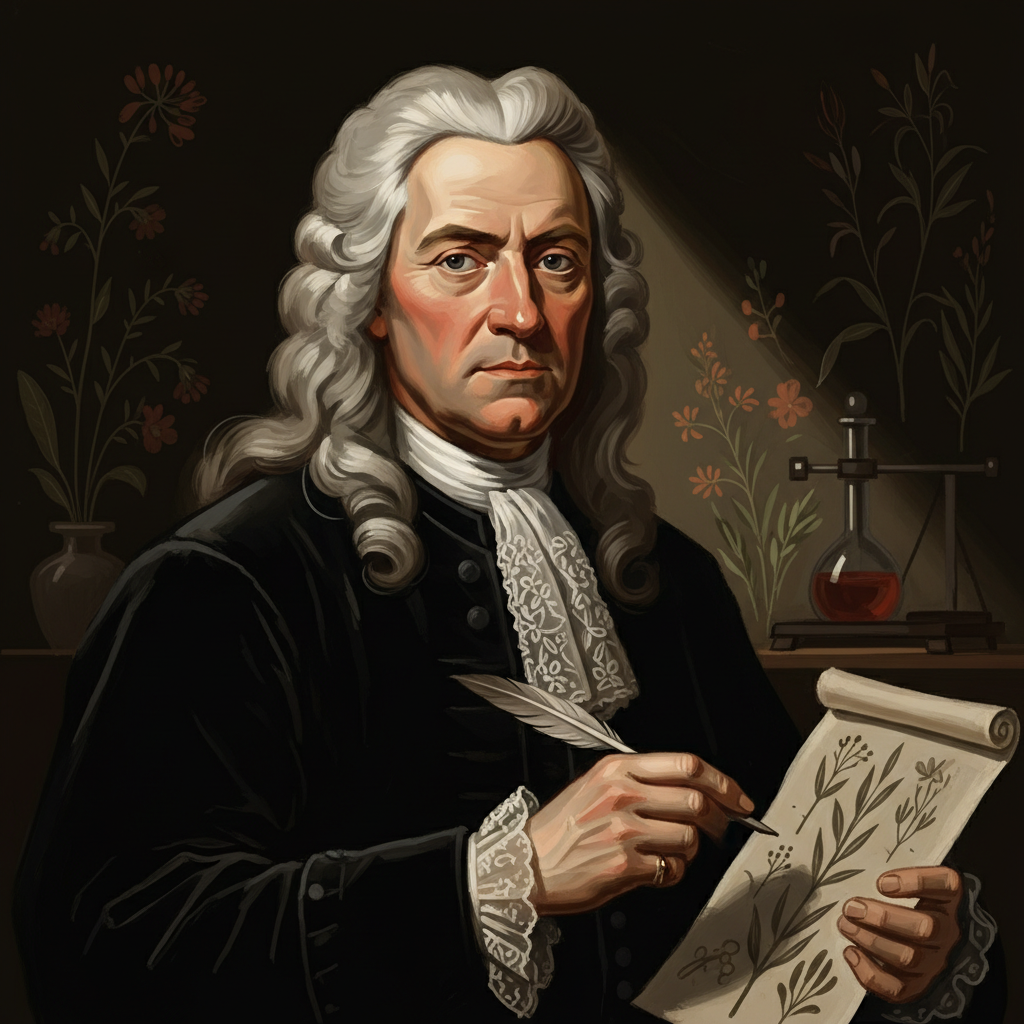
Swedish botanist and the father of modern taxonomy whose Systema Naturae (1735) introduced binomial nomenclature for naming all species. Closely associated with Joseph Banks (British naturalist who carried Linnaean classification on Cook's voyages). For an intellectual contrast, see Comte de Buffon, French naturalist and Histoire Naturelle author (1749-1788) — Buffon explicitly attacked Linnaean fixed-categories taxonomy as artificial and rejected the binomial system; his gradualist, environment-shaped natural history was the explicit alternative. Anticipates the fixed-species-vs-evolution debate Darwin would later resolve.
A nuanced distinction between scientific understanding and the aesthetic pleasure of naming.
Date: Uncertain (attributed)
EducationalFound in 1 providers: gemini
1 source checked
Understanding plants scientifically means grasping their biology, ecology, and relationships—demanding, systematic work. But learning their names carries a different quality: delight, recognition, the satisfaction of having a word for a living thing. Naming transforms the anonymous into the known. The quote honors both rigor and joy, suggesting taxonomy isn't purely austere discipline—it's also a pleasure, like learning the names of friends rather than merely studying human anatomy.
Linnaeus spent his life naming—he described over 8,000 plant species and created the binomial nomenclature system still standard today. He famously named species after rivals using unflattering plants and friends using beautiful ones, revealing genuine emotion in the act. His Species Plantarum and Systema Naturae weren't mere catalogs—they were expressions of a man who found real joy in imposing order on nature's overwhelming diversity through precise, lasting language.
The 18th-century Enlightenment triggered an explosion in natural history as explorers returned with thousands of unknown specimens. Without a universal naming system, the same plant carried a dozen different names across European nations, making scientific communication nearly impossible. Linnaeus worked directly in that chaos. His binomial system was revolutionary: naming became an intellectual and civilizational act—to name something was to claim knowledge of it and bring lasting clarity to nature's catalogue.
AI-generated insights based on extensive research and information for context. Factual errors? Email [email protected].
Your cart is empty