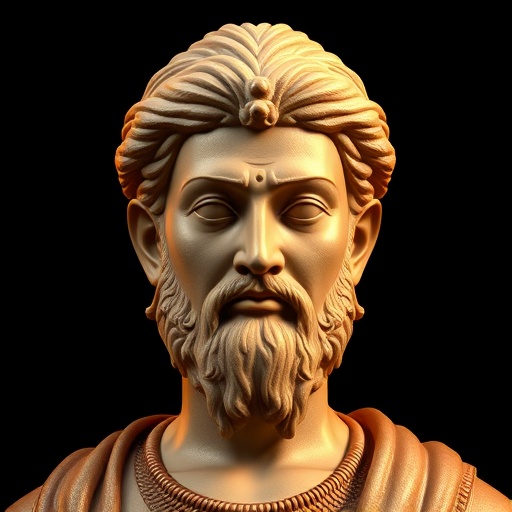
Mahavira — "What is the use of a lamp when the sun has risen?"
What is the use of a lamp when the sun has risen?
What is the use of a lamp when the sun has risen?
Click any product to generate a realistic preview. Up to 3 at a time.
* Initial load can take up to 90 seconds — revising the preview in another color is nearly instant.
"Man's true nature is divine."
"The wise man is he who knows the truth."
"The highest form of worship is to serve humanity."
"The greatest wisdom is to know oneself."
"The soul can be liberated from the cycle of birth and death through right faith, right knowledge, and right conduct."
24th and last Tirthankara of Jainism, whose teachings of strict ahimsa (non-violence), aparigraha (non-attachment), and karma reshaped ancient Indian religion. Closely associated with The Buddha (near-contemporary moral revolutionary, also reacting against Vedic ritualism). For an intellectual contrast, see Vedic Brahmanical ritual sacrifice, the animal-sacrifice-centered Vedic religion of his era — Mahavira's ahimsa demanded total non-violence, including not eating root vegetables that kill the plant — a maximum-distance ethical move from the Vedic priestly tradition that ritually sacrificed cattle and horses. The two cleanest poles of ancient Indian religious ethics.
Found in 1 providers: grok
1 source checked
Once you have access to something vastly superior, clinging to the lesser alternative is pointless. True enlightenment or ultimate knowledge renders partial, artificial substitutes obsolete. When direct perception of truth becomes available, secondary methods of understanding — rituals, external authority, scriptural interpretation — become unnecessary. The quote urges abandoning inferior supports once genuine wisdom is attained.
Mahavira achieved kevala jnana — omniscient, perfect knowledge — through twelve years of austere meditation. Having attained this complete spiritual illumination, he rejected Vedic rituals and priestly intermediaries as unnecessary lamps. His entire teaching framework emphasized direct inner realization over external religious apparatus, making this metaphor personally autobiographical and central to his revolutionary spiritual philosophy.
Sixth-century BCE India was dominated by Brahmanical ritual tradition, where priestly authority and sacrificial rites controlled religious life. Mahavira emerged alongside Buddha challenging this system, arguing that elaborate ceremonies were substitutes masking humanity's capacity for direct spiritual knowledge. In an era where lamp-tending temples symbolized religious power, dismissing the lamp itself was a radical, democratizing declaration of inner human potential.
AI-generated insights based on extensive research and information for context. Factual errors? Email [email protected].
Your cart is empty