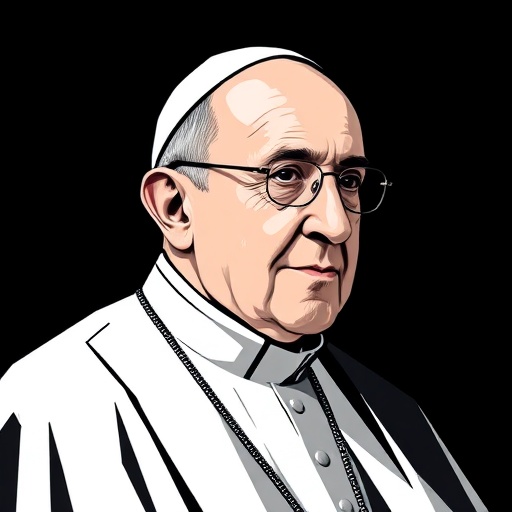
Pope Francis — "The Lord has redeemed all of us, all of us, with the Blood of Christ: all of us,…"
The Lord has redeemed all of us, all of us, with the Blood of Christ: all of us, not just Catholics. Everyone!
The Lord has redeemed all of us, all of us, with the Blood of Christ: all of us, not just Catholics. Everyone!
Click any product to generate a realistic preview. Up to 3 at a time.
* Initial load can take up to 90 seconds — revising the preview in another color is nearly instant.
"It is not a good thing when priests become rigid. Rigidity is a sign of something bad. It is a sign of a lack of freedom, and that is a sign of spiritual worldliness."
"The greatest revolution is the revolution of tenderness."
"Slander is worse than murder. Slander kills the reputation of a person. It is worse than murder because even if you kill, you can repent and go to heaven. But slander kills the soul of the person."
"The victims of abuse must be protected above all else."
"The internet is a gift from God."
First Latin American and Jesuit pope (2013-), who has steered the Catholic Church toward pastoral inclusion on LGBTQ pastoral care, divorced Catholics, and climate. Closely associated with Pope John XXIII (the Vatican II reformer pope) and Cardinal Walter Kasper (his theological ally on pastoral reform). For an intellectual contrast, see Cardinal Raymond Burke, American traditionalist cardinal, former head of the Vatican Apostolic Signatura — Burke is the public face of Catholic traditionalism that views Francis's pastoral approach as doctrinally dangerous — he has formally challenged Amoris Laetitia and other Francis reforms.
Found in 1 providers: deepseek
1 source checked
Salvation and redemption through Christ's sacrifice extends universally to every human being, regardless of religious affiliation, denomination, or background. This rejects the idea that only formal members of the Catholic Church are covered by divine grace. It is an inclusive theological statement asserting that God's redemptive act was not transactional or limited by institutional membership, but offered freely to all humanity without exception.
Pope Francis, born Jorge Mario Bergoglio in Buenos Aires, built his papacy around radical inclusion and mercy. As the first Jesuit pope and first from the Global South, he consistently challenged institutional gatekeeping within Catholicism. His pastoral work in Argentina among the poor shaped his conviction that God's love transcends church boundaries, reflecting the Jesuit emphasis on finding God in all people.
Francis made this statement early in his pontificate beginning 2013, amid global religious fragmentation, rising secularism, and interfaith tensions post-9/11. The Catholic Church faced declining membership in the West and internal debates over who belongs. His universalist framing directly countered exclusivist religious nationalism growing worldwide and signaled a deliberate pastoral shift away from doctrinal gatekeeping toward dialogue and common humanity.
AI-generated insights based on extensive research and information for context. Factual errors? Email [email protected].
Your cart is empty