What it means
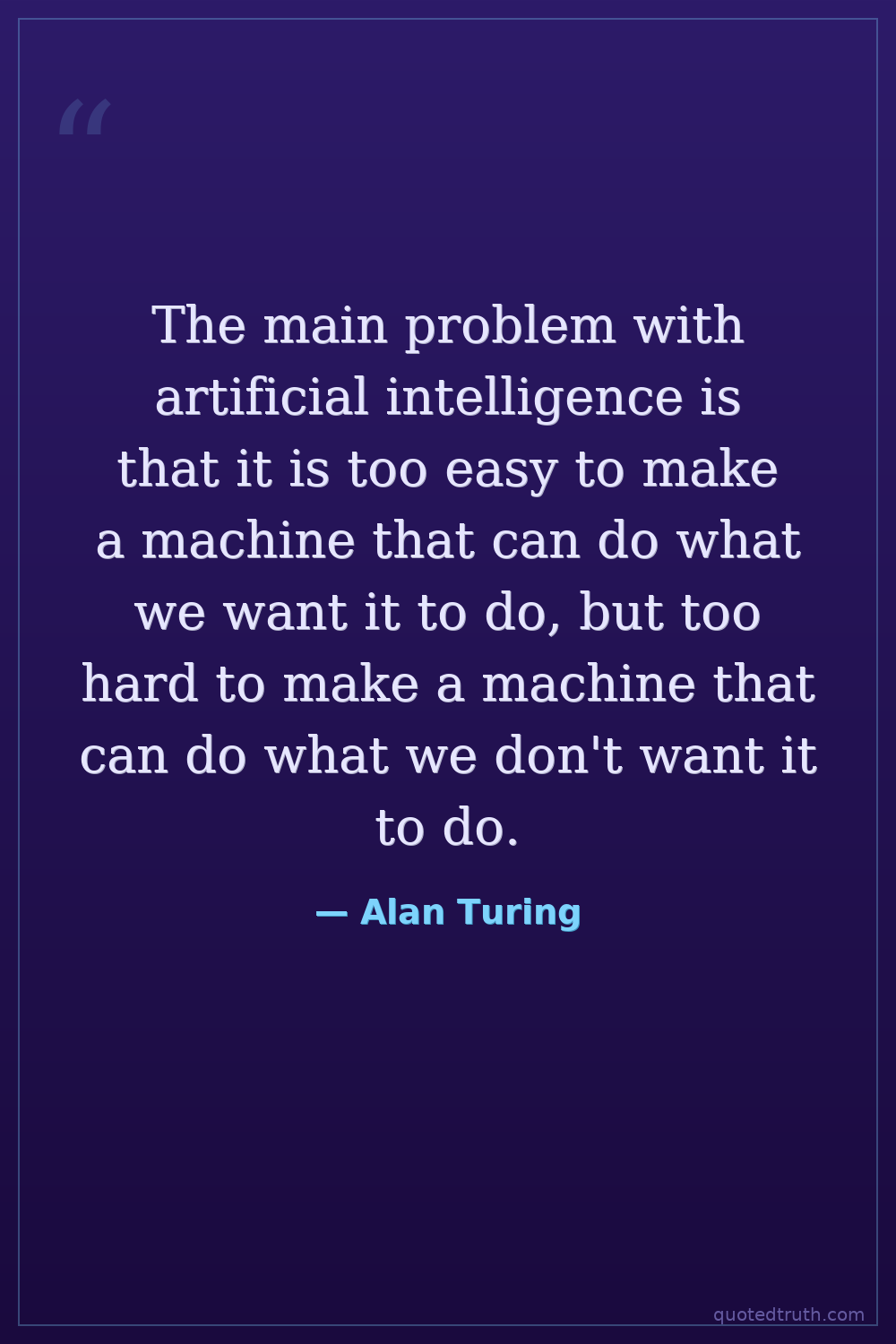
Building a machine that executes specific commands is a tractable engineering problem—define the rules, it follows them. The genuinely hard challenge is constraining what machines must never do: staying within safe boundaries, refusing harmful instructions, avoiding unintended consequences no designer foresaw. This is now called AI alignment—ensuring powerful systems remain controllable even in situations their creators never explicitly programmed for. Capability is easy; reliable restraint is the unsolved problem.
Relevance to Alan Turing
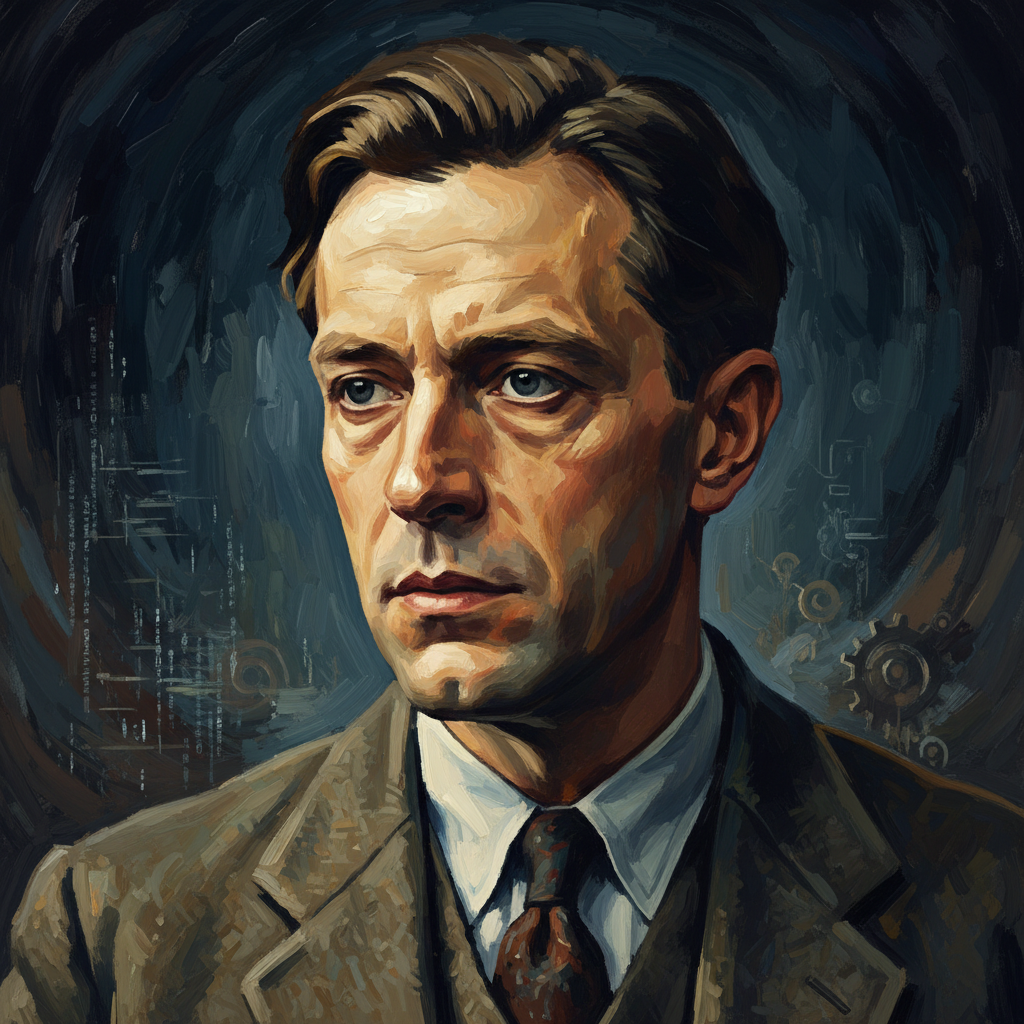
Turing's 1950 paper 'Computing Machinery and Intelligence' launched the formal study of machine thought, and his halting problem proof showed some questions are computationally unanswerable by definition. He designed the Universal Turing Machine knowing it could compute anything computable—yet he spent his career mapping the limits of that power. He grasped early that defining what machines cannot or should not do was philosophically harder than expanding what they can.
The era
In the 1940s–50s, Colossus, ENIAC, and the Manchester Mark 1 were transforming science and warfare simultaneously. Turing cracked Nazi Enigma codes during WWII, watching machines deployed for high-stakes tasks where a single failure meant lives lost. The Cold War then pushed military computing into nuclear command systems. Trusting, bounding, and controlling machines was not abstract philosophy—it was an immediate survival question society had no framework yet to answer.
AI-generated insights based on extensive research and information for context. Factual errors? Email [email protected].