What it means
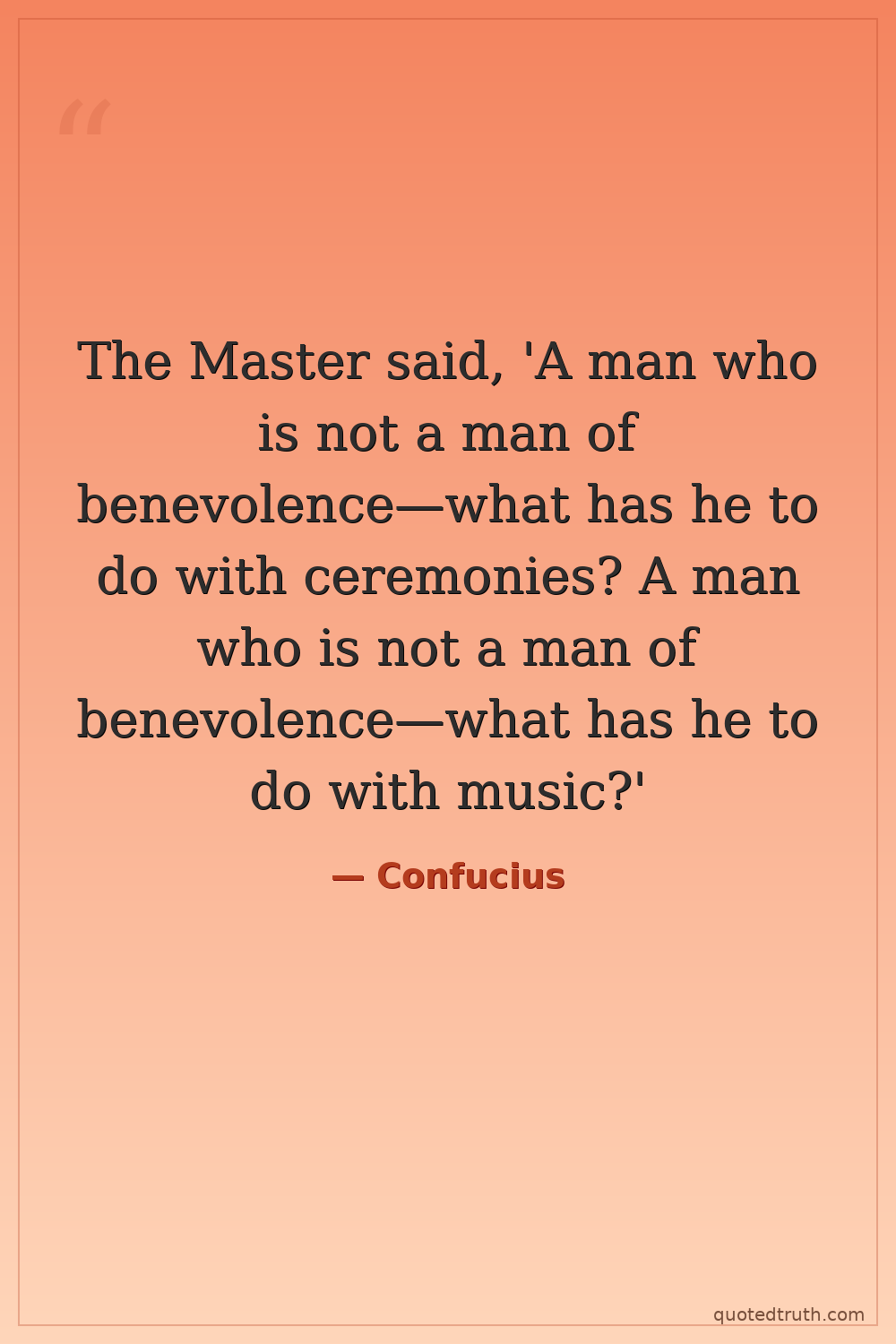
Confucius argues that outward rituals and refined arts are hollow without inner moral character. A person who lacks genuine kindness and humaneness cannot meaningfully perform ceremonies or make true music, because those practices are only valuable as expressions of a good heart. Strip away the virtue, and the forms become empty theater. Real benevolence must come first; the cultural polish is meant to channel it, not substitute for it.
Relevance to Confucius
Confucius spent his life teaching that ren, or humaneness, was the foundation of every other virtue and social practice. He was a ritual expert and lifelong student of music, yet he insisted these disciplines were worthless without moral grounding. As a teacher who trained officials for government service, he repeatedly warned against polished men who mastered forms while lacking character, seeing that hypocrisy as the deepest corruption of the Zhou cultural tradition he loved.
The era
Confucius lived during the late Spring and Autumn period around 500 BCE, when the Zhou dynasty was fracturing and rival states fought constantly. Aristocrats still performed elaborate court ceremonies and ritual music inherited from early Zhou kings, but many treated these as status displays while behaving ruthlessly. Confucius watched dukes usurp royal rites and warlords cloak ambition in tradition, which sharpened his conviction that ritual without virtue was a symptom of the age's moral collapse.
AI-generated insights based on extensive research and information for context. Factual errors? Email [email protected].