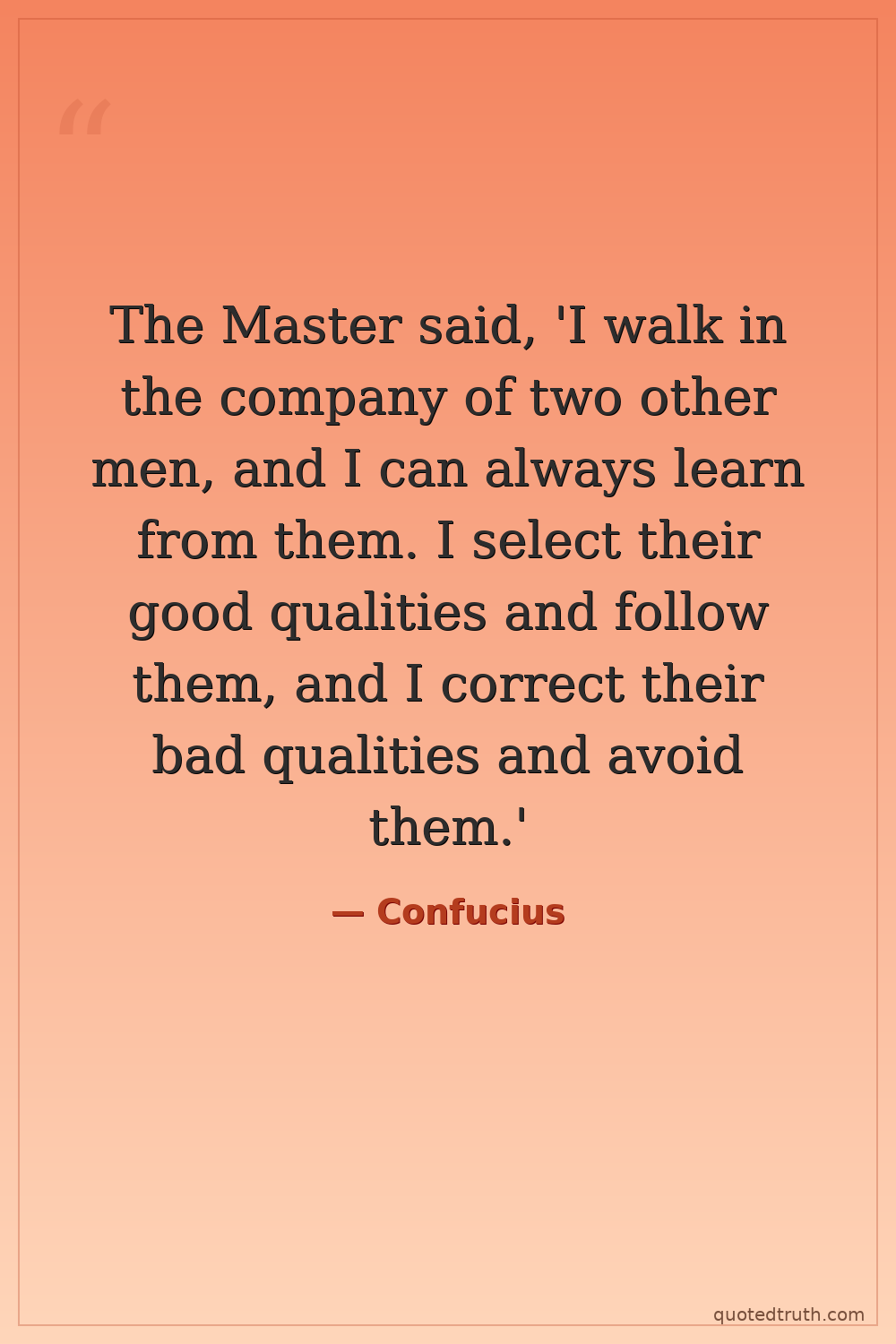
Confucius — "The Master said, 'I walk in the company of two other men, and I can always learn…"

The Master said, 'I walk in the company of two other men, and I can always learn from them. I select their good qualities and follow them, and I correct their bad qualities and avoid them.'
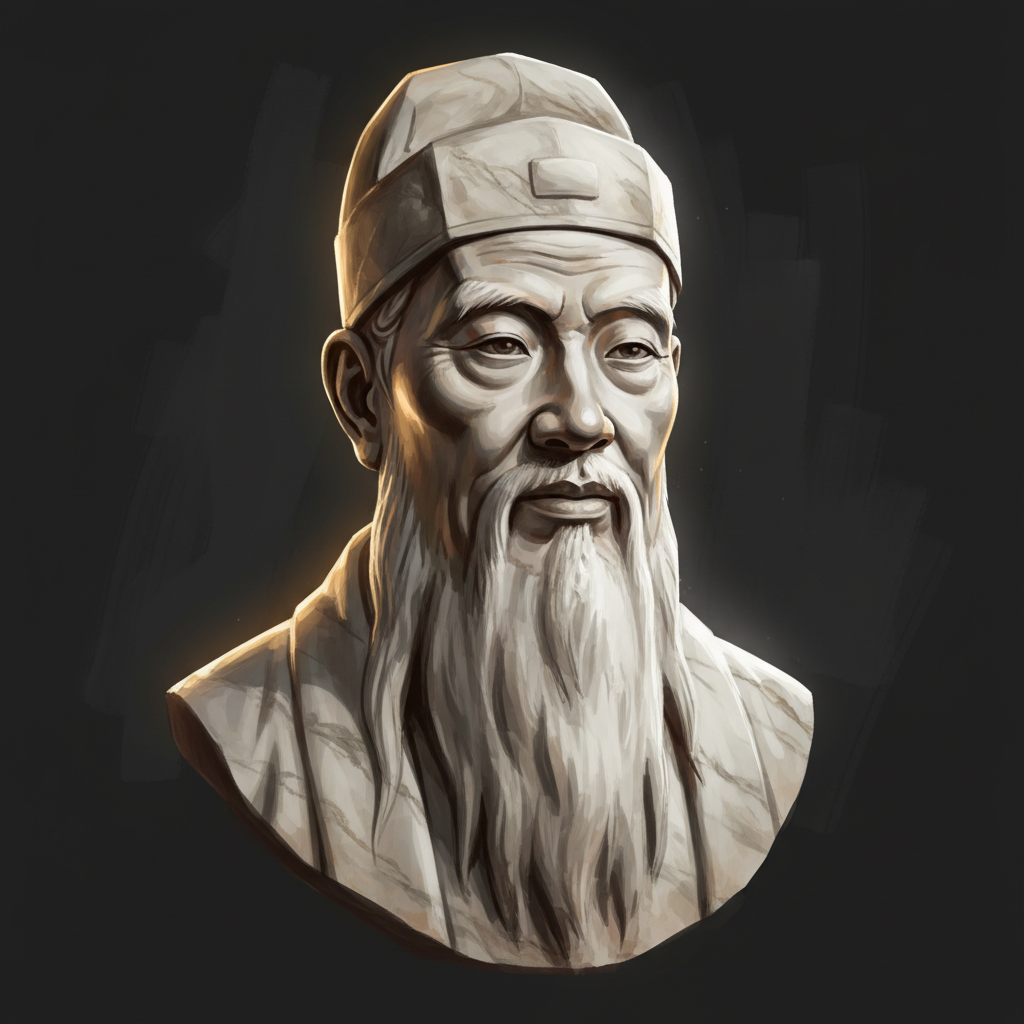
Confucius — Confucius Ancient · Chinese philosopher, founder of Confucianism

Get This Quote & Author's Image Illustrated On:

Click any product to generate a realistic preview. Up to 3 at a time.
* Initial load can take up to 90 seconds — revising the preview in another color is nearly instant.

Kitchen

Apparel

Other

About Confucius (551-479 BCE)

Chinese philosopher and teacher whose teachings (compiled by his students in the Analects) became the foundational ethical framework of East Asian civilization for 2,500 years. Closely associated with Mencius (his most-influential follower a century later). For an intellectual contrast, see Laozi, near-contemporary Chinese sage and Tao Te Ching author — Confucius systematized social order through ritual and family hierarchy; Laozi's Taoist effortless-action philosophy argued such systems were the disease, not the cure. The two founding poles of Chinese moral philosophy — every East Asian moral tradition since has positioned itself between them.

The standard scholarly entry points to Confucius's work: Philip J. Ivanhoe (Georgetown, Chinese philosophy) — Confucian Moral Self Cultivation (2000); Edward Slingerland (UBC, Asian Studies) — Effortless Action: Wu-wei as Conceptual Metaphor (2003); Tu Weiming (Harvard, Confucian scholar) — Confucian Thought: Selfhood as Creative Transformation (1985). These are the works graduate seminars cite when teaching Confucius.

Details

Analects, Book VII, Chapter 21

Date: c. 5th century BCE

Self-Deprecating

Verification

Unverifiable

Found in 1 providers: grok

1 source checked

Understanding this quote

What it means

Every person you encounter has something to teach you, good or bad. When you walk with others, observe carefully: copy the traits worth admiring and use the flaws you see as warnings about who you don't want to become. Learning isn't confined to classrooms or masters. Ordinary companions, even flawed ones, sharpen your character if you stay observant and willing to adjust yourself accordingly.

Relevance to Confucius

Confucius built his teaching around self-cultivation through constant reflection and social observation rather than divine revelation. He famously took students from any background and insisted he was a transmitter, not an originator, of wisdom. This saying captures his humility: even as a revered teacher, he positioned himself as a perpetual learner, treating every encounter as a mirror for moral improvement and shaping junzi (exemplary persons) through daily habit.

The era

Confucius lived during the Spring and Autumn period (roughly 551-479 BCE), when the Zhou dynasty's authority was collapsing and rival states waged constant war. Traditional rituals and social bonds were fraying. Against this disorder, Confucius argued that society could be repaired only if individuals cultivated virtue through relationships and learning. Formal schooling was rare and reserved for aristocrats, so his insistence that wisdom comes from ordinary companions was quietly radical.

AI-generated insights based on extensive research and information for context. Factual errors? Email [email protected].
Your Cart

Your cart is empty