Carl Linnaeus — "The method is the soul of science."
The method is the soul of science.
The method is the soul of science.
Click any product to generate a realistic preview. Up to 3 at a time.
* Initial load can take up to 90 seconds — revising the preview in another color is nearly instant.
"Natura non facit saltus. (Nature makes no leaps.)"
"The earth is a paradise, but men make it a hell."
"Without names, knowledge is lost."
"God's wisdom is as infinite as His power."
"Natural bodies are divided into three kingdoms of nature: viz. the mineral, vegetable, and animal kingdoms. Minerals grow, Plants grow and live, Animals grow, live, and have feeling."
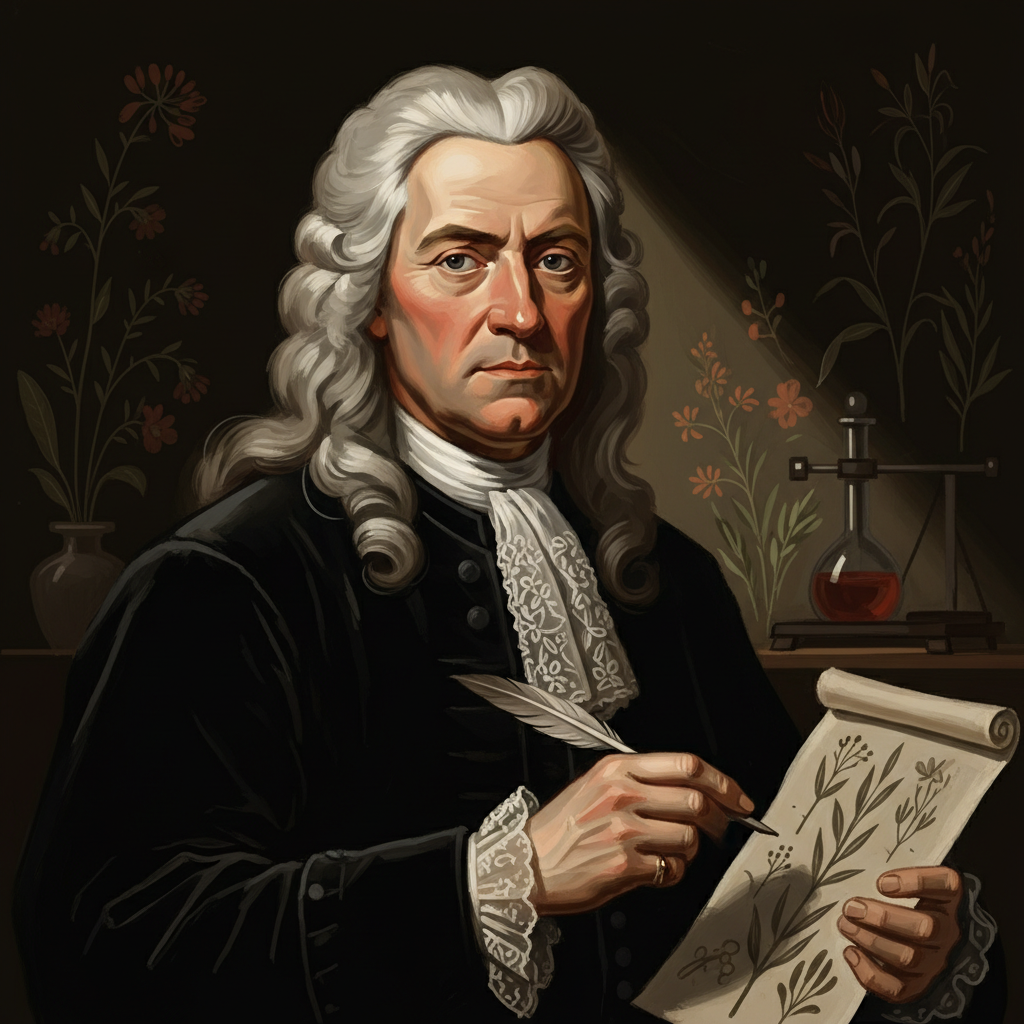
Swedish botanist and the father of modern taxonomy whose Systema Naturae (1735) introduced binomial nomenclature for naming all species. Closely associated with Joseph Banks (British naturalist who carried Linnaean classification on Cook's voyages). For an intellectual contrast, see Comte de Buffon, French naturalist and Histoire Naturelle author (1749-1788) — Buffon explicitly attacked Linnaean fixed-categories taxonomy as artificial and rejected the binomial system; his gradualist, environment-shaped natural history was the explicit alternative. Anticipates the fixed-species-vs-evolution debate Darwin would later resolve.
Found in 1 providers: grok
1 source checked
A scientific discipline without systematic method is merely a collection of random observations. Method transforms scattered facts into organized knowledge, giving science its power to explain, predict, and build upon itself. The approach you use to investigate nature is not secondary to the findings — it is the very thing that makes those findings trustworthy, reproducible, and meaningful to others.
Linnaeus dedicated his life to creating the binomial nomenclature system and hierarchical classification of living things — not discovering new species per se, but establishing the method by which all species could be named and related. His Systema Naturae was pure methodological architecture. He understood that without his taxonomic framework, natural history would remain chaotic. His legacy is entirely his method, not any single discovery.
The early modern period saw an explosion of global exploration bringing thousands of unknown plants and animals to European attention, creating overwhelming descriptive chaos. Natural philosophers desperately needed organizing principles. Simultaneously, the Scientific Revolution was establishing that repeatable, systematic inquiry outperformed ancient authority. Linnaeus emerged precisely when naturalists needed a universal language — his methodological contribution unified a fractured, polyglot scientific community across national boundaries.
AI-generated insights based on extensive research and information for context. Factual errors? Email [email protected].
Your cart is empty