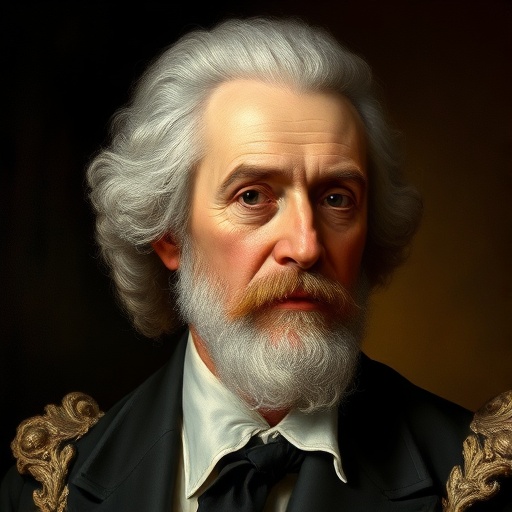
Antoine Lavoisier — "The more we know, the more we admire."
The more we know, the more we admire.
The more we know, the more we admire.
Click any product to generate a realistic preview. Up to 3 at a time.
* Initial load can take up to 90 seconds — revising the preview in another color is nearly instant.
"The art of drawing conclusions from experiments and observations consists in evaluating probabilities and in judging if they are great enough to constitute proofs."
"The imagination is a dangerous guide in science, but it can be a useful servant."
"I have always regarded the study of nature as the most noble and elevated of pursuits."
"Nothing is created, either in the operations of art, or in those of nature; and it may be considered as a general principle that in every operation there exists an equal quantity of matter before and …"
"The more exact the science, the more difficult it is to make progress."
Found in 1 providers: grok
1 source checked
Knowledge doesn't diminish wonder—it deepens it. The more you understand about how something works, the more you recognize its complexity and elegance. Familiarity breeds appreciation, not contempt. Each answer uncovers new questions, and each discovery reveals a more intricate system than you expected. This pushes back against the idea that science kills mystery; instead, rigorous investigation generates greater awe at nature's underlying order and design.
Lavoisier built modern chemistry through obsessive, quantitative experimentation—weighing gases before and after combustion, dismantling phlogiston theory, naming oxygen and hydrogen. Each breakthrough opened deeper questions about matter and energy. His law of conservation of mass emerged from relentless precision, not guesswork. For him, science wasn't about reducing nature to mundane mechanics but discovering its elegant architecture. The quote captures his lived experience: rigorous investigation consistently rewarded him with deeper admiration for nature's systematic order.
Lavoisier worked during the Enlightenment, when Europe was replacing alchemical mysticism and phlogiston theory with systematic, evidence-based natural philosophy. The Encyclopédie was cataloging human knowledge; scientists believed reason could decode the universe. Yet many feared science would strip nature of wonder. Lavoisier's career demonstrated the opposite—careful measurement revealed laws governing combustion and respiration that were more elegant than superstition ever imagined. His execution by guillotine in 1794 cut short science's most productive rationalist era.
AI-generated insights based on extensive research and information for context. Factual errors? Email [email protected].
Your cart is empty