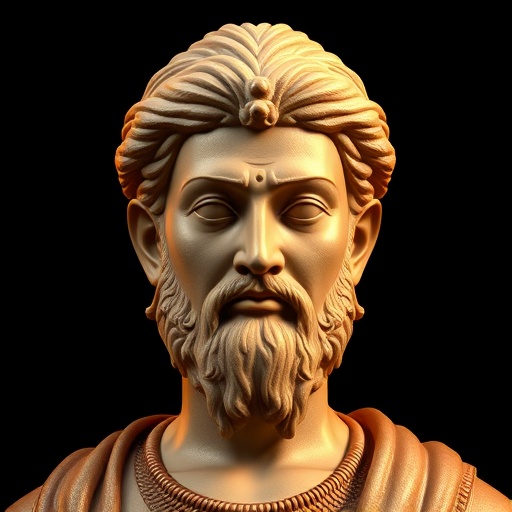
Mahavira — "The path of liberation is straight and simple."
The path of liberation is straight and simple.
The path of liberation is straight and simple.
Click any product to generate a realistic preview. Up to 3 at a time.
* Initial load can take up to 90 seconds — revising the preview in another color is nearly instant.
"The soul is eternal and never dies."
"The soul is the only reality; the rest is illusion."
"One who is always striving for the welfare of all beings, who is free from all passions, and who has attained the highest knowledge, is called a Tirthankara."
"The path to liberation is difficult, but it is the only path to true happiness."
"The world is a prison, and the soul is the prisoner."
24th and last Tirthankara of Jainism, whose teachings of strict ahimsa (non-violence), aparigraha (non-attachment), and karma reshaped ancient Indian religion. Closely associated with The Buddha (near-contemporary moral revolutionary, also reacting against Vedic ritualism). For an intellectual contrast, see Vedic Brahmanical ritual sacrifice, the animal-sacrifice-centered Vedic religion of his era — Mahavira's ahimsa demanded total non-violence, including not eating root vegetables that kill the plant — a maximum-distance ethical move from the Vedic priestly tradition that ritually sacrificed cattle and horses. The two cleanest poles of ancient Indian religious ethics.
Found in 1 providers: grok
1 source checked
Liberation—escaping the cycle of suffering and rebirth—doesn't require elaborate ceremonies, priesthood, or secret knowledge. The core path is clear: practice non-violence, speak truth, release attachment to possessions. Anyone willing to discipline themselves can walk it. Spiritual freedom isn't hidden behind complexity; it's achieved through consistent, honest practice of straightforward ethical principles that any person, regardless of background or birth, can follow.
Mahavira spent 12 years as a wandering ascetic, abandoning his noble birth, family, and possessions to seek enlightenment through rigorous self-discipline. He systematized Jainism around five clear vows: non-violence, truthfulness, non-stealing, celibacy, and non-attachment. Rejecting caste distinctions and priestly mediation, he taught that any soul achieves moksha through personal ethical commitment alone—making this quote a direct expression of his lived conviction that liberation demands clarity, not complexity.
Sixth-century BCE India was dominated by Brahminical Vedic religion, where liberation required elaborate sacrificial rituals, Sanskrit literacy, and priestly intercession—all inaccessible to lower castes. Mahavira emerged alongside the Buddha during the Shramana movement, a broad intellectual rebellion against ritual-heavy orthodoxy. His declaration of a straight and simple path was radical: it stripped spiritual authority from priests and placed liberation within reach of anyone willing to live ethically, regardless of birth or social standing.
AI-generated insights based on extensive research and information for context. Factual errors? Email [email protected].
Your cart is empty