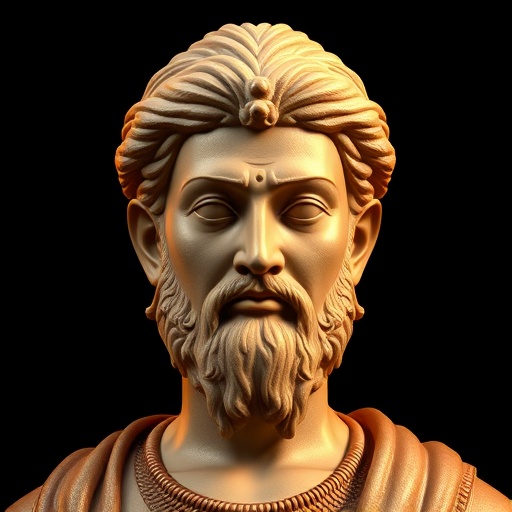
Mahavira — "The real spiritual path is not in rituals, but in inner purity."
The real spiritual path is not in rituals, but in inner purity.
The real spiritual path is not in rituals, but in inner purity.
Click any product to generate a realistic preview. Up to 3 at a time.
* Initial load can take up to 90 seconds — revising the preview in another color is nearly instant.
"The self is the friend and enemy of the self."
"Do not injure, abuse, oppress, enslave, insult, torment, torture, or kill any creature or living being."
"Purity of mind is the supreme dharma."
"The greatest penance is to bear all sufferings cheerfully."
"The true happiness lies in detachment."
24th and last Tirthankara of Jainism, whose teachings of strict ahimsa (non-violence), aparigraha (non-attachment), and karma reshaped ancient Indian religion. Closely associated with The Buddha (near-contemporary moral revolutionary, also reacting against Vedic ritualism). For an intellectual contrast, see Vedic Brahmanical ritual sacrifice, the animal-sacrifice-centered Vedic religion of his era — Mahavira's ahimsa demanded total non-violence, including not eating root vegetables that kill the plant — a maximum-distance ethical move from the Vedic priestly tradition that ritually sacrificed cattle and horses. The two cleanest poles of ancient Indian religious ethics.
Found in 1 providers: grok
1 source checked
True spiritual progress comes from cultivating a clean conscience, honest intentions, and genuine virtue — not from performing religious ceremonies or external acts. Rituals without inner transformation are hollow. What actually matters is who you are on the inside: free from greed, hatred, and deception. Authentic spirituality is a private, internal discipline, not a public performance.
Mahavira renounced his royal life, wealth, and family at age 30 to pursue rigorous asceticism and self-purification. He taught that karma is accumulated through thoughts and intentions, not just actions. His entire philosophy centered on ahimsa, truthfulness, and conquering inner passions — he was called 'Jina' (conqueror) for mastering his own desires, not external enemies.
In 6th century BCE India, Brahmanical religion dominated through elaborate ritual sacrifices requiring priestly intermediaries and expensive ceremonies that ordinary people could not access. Mahavira and the Buddha both challenged this orthodoxy. Jainism emerged as a radical democratic alternative, asserting that spiritual liberation required personal discipline rather than ritual compliance — a revolutionary stance in ancient South Asia.
AI-generated insights based on extensive research and information for context. Factual errors? Email [email protected].
Your cart is empty