What it means
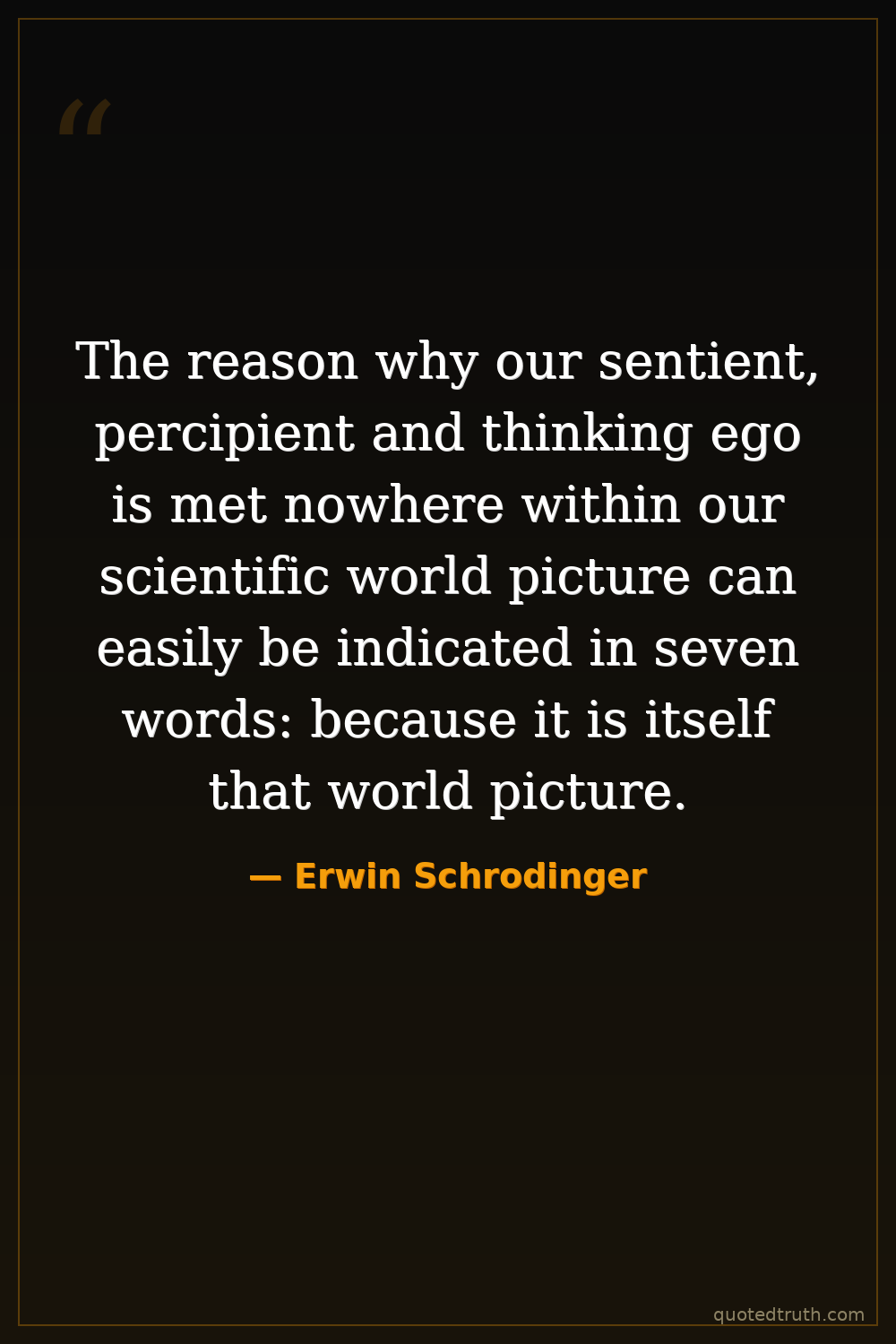
The scientific worldview — atoms, forces, neurons, galaxies — is built entirely by the conscious mind observing and interpreting. Because consciousness is the builder of that picture, not an object within it, it won't appear anywhere in the finished map. You cannot find the eye by looking through the eye. Consciousness is the precondition for science, not something science can locate, explain, or contain within its own framework.
Relevance to Erwin Schrodinger
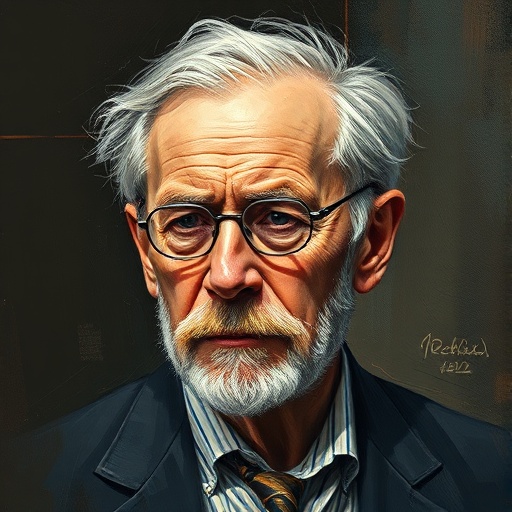
Schrödinger spent decades bridging physics and philosophy, most visibly in 'What is Life?' and 'Mind and Matter.' His wave mechanics placed the observer at the center of quantum reality — yet physics could never account for the observer itself. Deeply shaped by Vedantic philosophy, he believed individual consciousness and universal reality were identical. This quote crystallizes that conviction: the observer and the observed are ultimately the same thing, a view radical for a working physicist.
The era
Written mid-20th century, after quantum mechanics had shattered classical determinism and made the observer indispensable to physics. Simultaneously, materialist neuroscience was claiming consciousness was merely neural firing — reducible, eliminable. Schrödinger wrote amid this contradiction: science growing vastly powerful yet unable to account for the experience doing the science. Post-WWII existentialism and rising Western interest in Eastern philosophy made questions about self, consciousness, and the limits of objective knowledge culturally urgent.
AI-generated insights based on extensive research and information for context. Factual errors? Email [email protected].