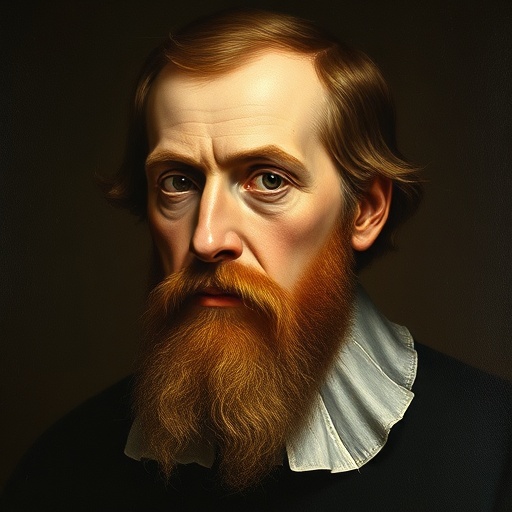
John Calvin — "The reprobate are not able to resist the will of God, but are forced to obey it."
The reprobate are not able to resist the will of God, but are forced to obey it.
The reprobate are not able to resist the will of God, but are forced to obey it.
Click any product to generate a realistic preview. Up to 3 at a time.
* Initial load can take up to 90 seconds — revising the preview in another color is nearly instant.
"Whoever shall maintain that wrong is done to heretics and blasphemers in punishing them makes himself an accomplice in their crime."
"The salvation of the elect depends on the free election of God."
"We frankly confess that God has ordained to death those whom he has not deemed worthy of life."
"God blinds the minds of the reprobate, and hardens their hearts, that they may not believe."
"God's providence extends to all things, even to the least of them."
French theologian whose Institutes of the Christian Religion (1536) systematized Protestant Reformed doctrine, including predestination. Closely associated with Martin Luther (Reformation founder, Calvin's predecessor). For an intellectual contrast, see Jacobus Arminius, Dutch Reformed theologian (1560-1609) — Arminius's rejection of strict double-predestination founded Arminianism — the theological tradition modern Methodism, most evangelicalism, and Pentecostalism descend from. The Calvinist-Arminian debate has divided Protestantism for 400 years.
Found in 1 providers: grok
1 source checked
Calvin asserts that God's will is absolute and cannot be resisted — not even by those condemned to damnation. The reprobate, those predestined for hell, have no power to defy God's decree; their very disobedience serves divine purposes, making them unwilling instruments of God's plan. Human agency is entirely subordinate to divine sovereignty, and even rebellion against God paradoxically fulfills his will rather than defeating it.
Calvin, a French-born lawyer turned Geneva's dominant theologian, built his entire system on God's absolute sovereignty. His Institutes of the Christian Religion (1536, expanded through 1559) made double predestination central to Reformed Christianity. As Geneva's chief pastor enforcing strict moral discipline, he believed human will was wholly corrupted by sin. This quote captures his defining conviction: divine sovereignty governs all human destiny without exception, leaving no space for autonomous choice or resistance.
The 16th-century Reformation ignited fierce debate over free will versus divine sovereignty. Luther's confrontation with Erasmus over free will in 1524–1525 set the stage; Calvin radicalized that position, insisting God predestines both salvation and damnation absolutely. This directly challenged Catholic teaching on merit and sacramental grace, provoking the Council of Trent's counter-response. It also carried political weight — if God's will was irresistible, questions arose about whether subjects could legitimately resist rulers claiming divine sanction.
AI-generated insights based on extensive research and information for context. Factual errors? Email [email protected].
Your cart is empty