What it means
The best leaders work so quietly and effectively that people barely notice them, believing they accomplished things themselves. A step down is the leader everyone adores, then the one ruled by fear. The absolute failure is the leader who earns contempt. True authority operates invisibly, letting outcomes speak rather than demanding attention, loyalty, or submission from those being led.
Relevance to Laozi
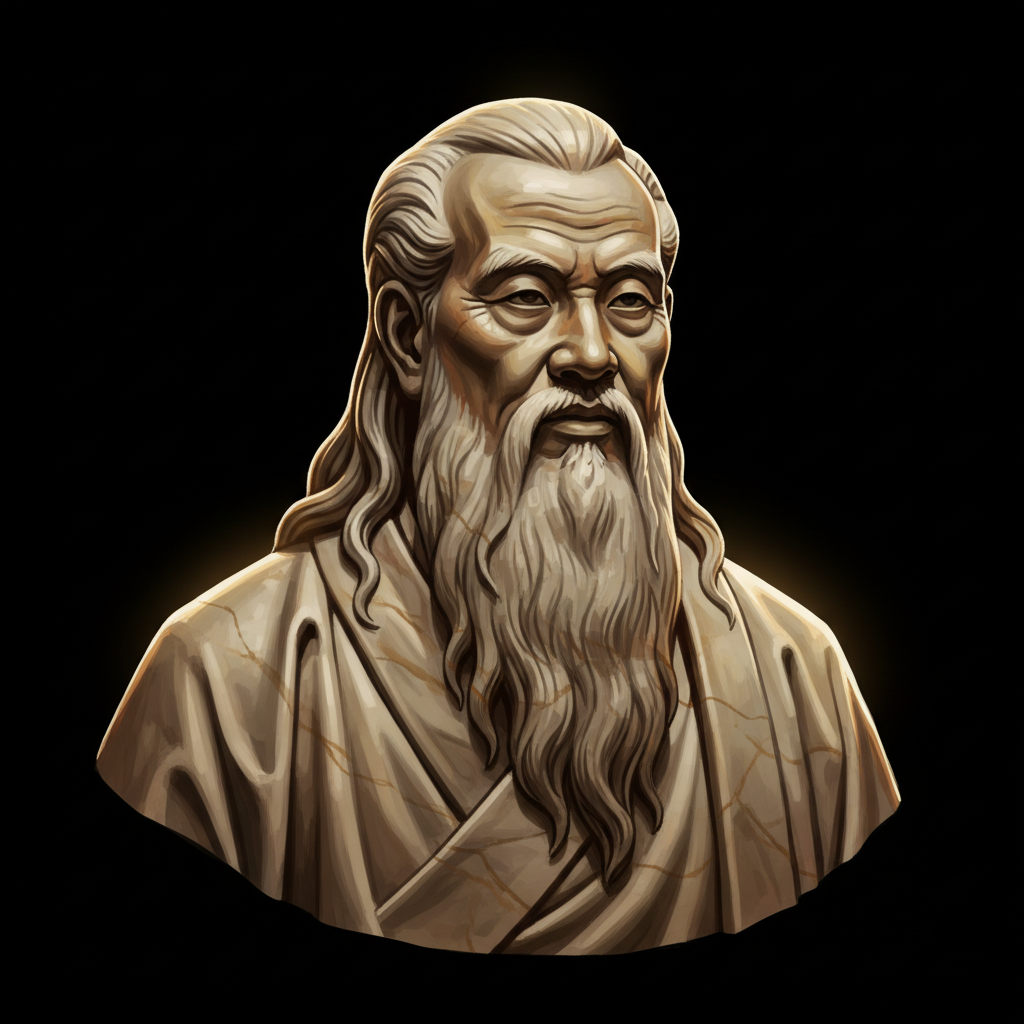
Laozi, credited as Taoism's founder and author of the Tao Te Ching, championed wu wei, or effortless action, and distrusted ostentatious power. Legend holds he served as an archivist in the Zhou court before retreating from political corruption. His preference for the invisible sage-ruler mirrors his own reclusive temperament and his conviction that forcing outcomes breeds resistance while yielding leadership produces harmony.
The era
Laozi lived during the late Zhou dynasty, around the 6th century BCE, as centralized authority decayed and warring states jockeyed for dominance. Rulers imposed heavy taxes, conscription, and harsh Legalist codes on exhausted peasants. Competing schools, including Confucians advocating ritual virtue, debated how to restore order. Laozi's quiet-governance ideal was a direct rebuke to the interventionist, militarized rulers whose despised reigns were destabilizing Chinese society.
AI-generated insights based on extensive research and information for context. Factual errors? Email [email protected].