What it means
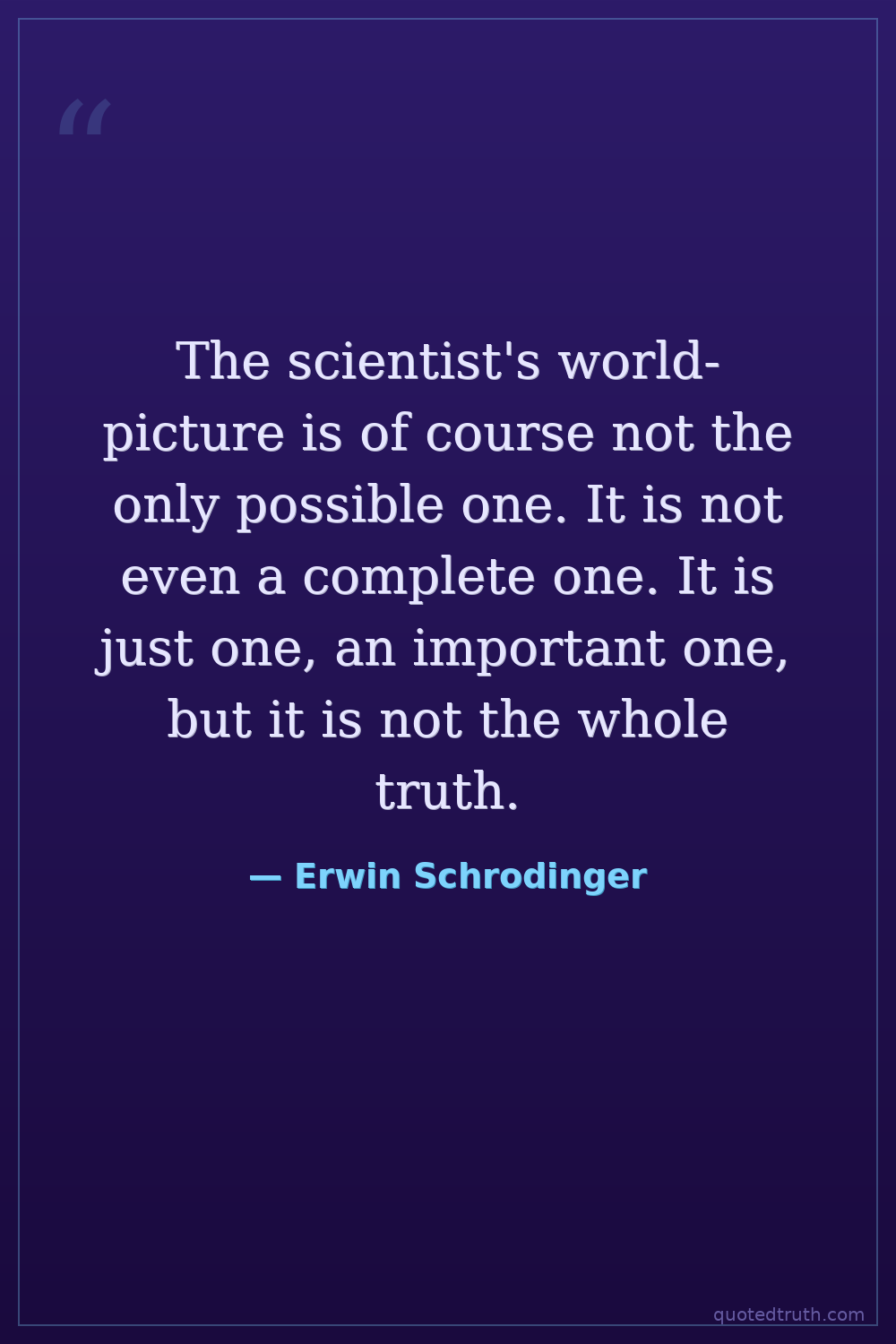
Science gives us a powerful lens for understanding reality, but it doesn't capture everything. The scientific worldview is one valid perspective among several — valuable and rigorous, but not the sole arbiter of truth. Other ways of knowing, whether philosophical, spiritual, or experiential, address dimensions of existence that equations and experiments cannot fully reach or exhaust.
Relevance to Erwin Schrodinger
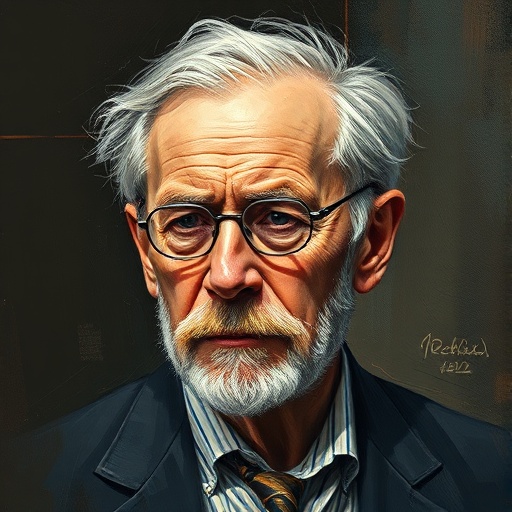
Schrödinger was a quantum physicist who founded wave mechanics, yet he spent decades wrestling with consciousness, perception, and the limits of scientific knowledge. His book 'What is Life?' and 'Mind and Matter' show he believed physics alone couldn't explain subjective experience or consciousness — making this humility about science's scope deeply autobiographical and central to his mature philosophical outlook.
The era
In the mid-20th century, science commanded extraordinary cultural authority following atomic energy, quantum mechanics, and relativity revolutions. Scientism — the belief that science explains everything — was rising. Schrödinger, living through two world wars and the atomic bomb's consequences, understood that raw scientific power without broader wisdom was dangerous, making his caution about science's completeness both timely and urgent.
AI-generated insights based on extensive research and information for context. Factual errors? Email [email protected].