What it means
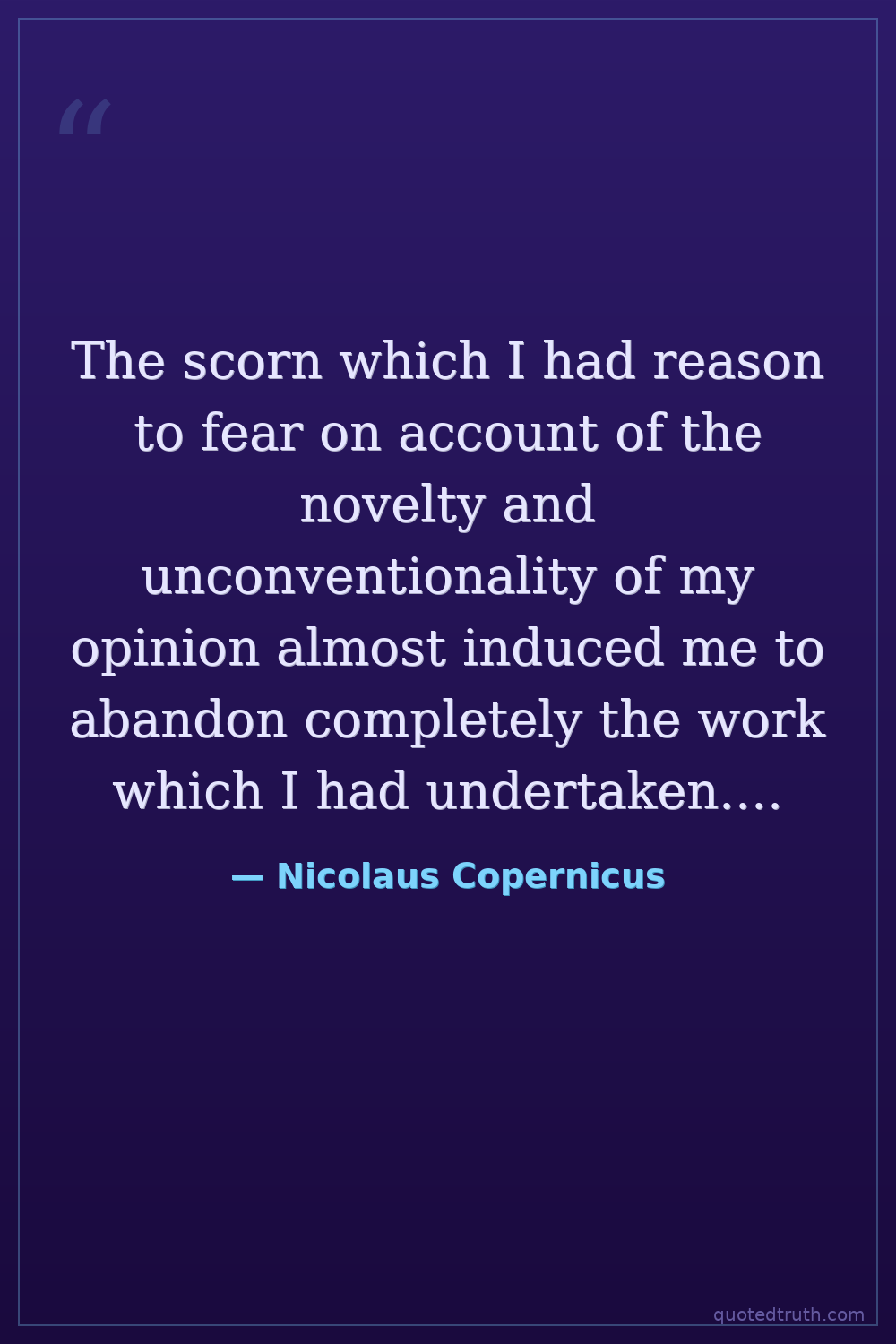
The quote captures the weight of anticipated ridicule that nearly prevented a groundbreaking idea from reaching the world. Copernicus feared colleagues and authorities would dismiss his heliocentric model as absurd, and that social pressure almost caused him to abandon thirty years of work. It speaks to the courage required to publish a truth that contradicts established consensus — and how close the world came to never hearing it.
Relevance to Nicolaus Copernicus
Copernicus spent roughly thirty years developing heliocentrism before publishing De revolutionibus in 1543 — the year he died. A canon of the Catholic Church in Poland, he was acutely aware that contradicting Ptolemaic geocentrism threatened his standing with both Church and academic peers. His caution was not cowardice but strategic: he delayed, refined, and sought endorsement from Rome before releasing work he knew would reshape humanity's understanding of the cosmos.
The era
In early sixteenth-century Europe, Earth's centrality in the cosmos was both scientific consensus and theological doctrine — humanity's special place in creation depended on it. Ptolemaic astronomy, endorsed by the Church and Aristotelian tradition, had stood for over a thousand years. The Protestant Reformation was simultaneously fracturing religious authority. Challenging cosmological orthodoxy risked intellectual condemnation and social exile, making publication of a sun-centered universe an act requiring extraordinary personal courage.
AI-generated insights based on extensive research and information for context. Factual errors? Email [email protected].