Mahavira — "Live and allow others to live. Hurt neither yourself nor others."
Live and allow others to live. Hurt neither yourself nor others.
Live and allow others to live. Hurt neither yourself nor others.
Click any product to generate a realistic preview. Up to 3 at a time.
* Initial load can take up to 90 seconds — revising the preview in another color is nearly instant.
"Purity of mind is the supreme dharma."
"A man who is averse from harming even the wind knows the sorrow of all things living."
"The purpose of life is to realize one's true self."
"Look at the birds, how they live in the present, with no thought for the morrow."
"The path to liberation is difficult, but it is worth pursuing."
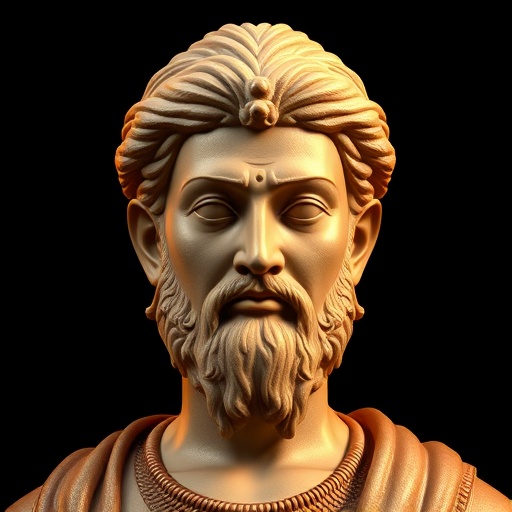
24th and last Tirthankara of Jainism, whose teachings of strict ahimsa (non-violence), aparigraha (non-attachment), and karma reshaped ancient Indian religion. Closely associated with The Buddha (near-contemporary moral revolutionary, also reacting against Vedic ritualism). For an intellectual contrast, see Vedic Brahmanical ritual sacrifice, the animal-sacrifice-centered Vedic religion of his era — Mahavira's ahimsa demanded total non-violence, including not eating root vegetables that kill the plant — a maximum-distance ethical move from the Vedic priestly tradition that ritually sacrificed cattle and horses. The two cleanest poles of ancient Indian religious ethics.
Found in 1 providers: grok
1 source checked
Treat your own life as valuable while respecting every other life equally. Avoid causing harm through action, speech, or thought—both to yourself through reckless choices and to others through violence or cruelty. Coexistence requires active restraint: not merely tolerating others but genuinely protecting their right to exist undisturbed, recognizing that your freedom ends where another's wellbeing begins.
Mahavira renounced his royal Kshatriya life at 30, became an ascetic, and spent 12 years in deep meditation before attaining enlightenment. Ahimsa—nonviolence—was his supreme ethical principle. He walked barefoot to avoid crushing insects, filtered water before drinking, and wore cloth over his mouth. This quote is essentially his entire philosophy distilled: reverence for all living beings without exception.
6th-century BCE India was an era of intense philosophical ferment—the Axial Age—when Hinduism's Vedic ritualism dominated and animal sacrifice was routine religious practice. Mahavira emerged alongside the Buddha challenging this orthodoxy. Caste violence, warfare between rival kingdoms, and the sacrifice of animals for priestly merit were commonplace. Proclaiming equal sanctity for all life, including insects and enemies, was genuinely radical and countercultural.
AI-generated insights based on extensive research and information for context. Factual errors? Email [email protected].
Your cart is empty