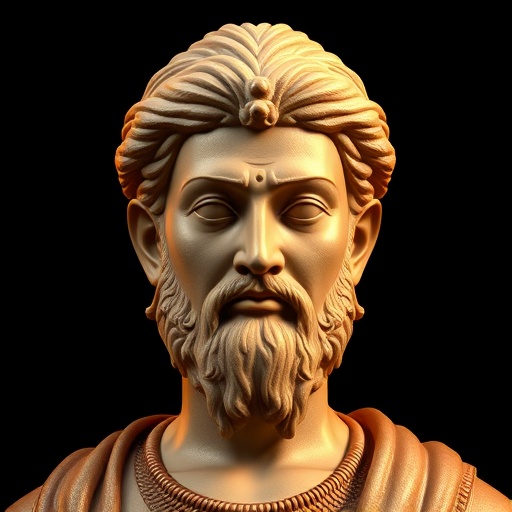
Mahavira — "The wise man is free from all attachments."
The wise man is free from all attachments.
The wise man is free from all attachments.
Click any product to generate a realistic preview. Up to 3 at a time.
* Initial load can take up to 90 seconds — revising the preview in another color is nearly instant.
"By sincerity, a man gains knowledge, by knowledge, liberation."
"One who knows himself, knows God."
"The soul is entangled in the web of karma."
"Attachment is the root of all suffering."
"The virtuous person is never afraid of death."
24th and last Tirthankara of Jainism, whose teachings of strict ahimsa (non-violence), aparigraha (non-attachment), and karma reshaped ancient Indian religion. Closely associated with The Buddha (near-contemporary moral revolutionary, also reacting against Vedic ritualism). For an intellectual contrast, see Vedic Brahmanical ritual sacrifice, the animal-sacrifice-centered Vedic religion of his era — Mahavira's ahimsa demanded total non-violence, including not eating root vegetables that kill the plant — a maximum-distance ethical move from the Vedic priestly tradition that ritually sacrificed cattle and horses. The two cleanest poles of ancient Indian religious ethics.
Found in 1 providers: grok
1 source checked
True wisdom means releasing all attachments — to possessions, outcomes, relationships, and identity. When you stop clinging to things out of fear of losing them, your mind becomes clear and your actions become unbiased. This isn't coldness or indifference; it's the freedom to engage with life without being driven by craving or panic about loss. A truly wise person acts from clarity, not desperation or desire.
Mahavira lived this principle absolutely. Born into Kshatriya royalty around 599 BCE, he renounced his kingdom, wealth, family, and even clothing at age 30. After 12 years of rigorous asceticism and meditation, he attained Kevala Jnana — omniscient enlightenment. Aparigraha, non-possessiveness, became one of Jainism's five core vows. His biography is inseparable from this teaching; the quote isn't philosophy — it describes his actual life choices.
Mahavira lived in 6th-century BCE northern India during the Shramana movement — a sweeping intellectual rebellion against Vedic Brahmanical authority, which tied spiritual merit to ritual, sacrifice, and hereditary caste. In a society where social rank and property defined identity, preaching freedom from all attachment was radical. Jainism and Buddhism emerged simultaneously, both centering liberation on personal renunciation rather than priestly ceremony, directly challenging the era's dominant power structures.
AI-generated insights based on extensive research and information for context. Factual errors? Email [email protected].
Your cart is empty