What it means
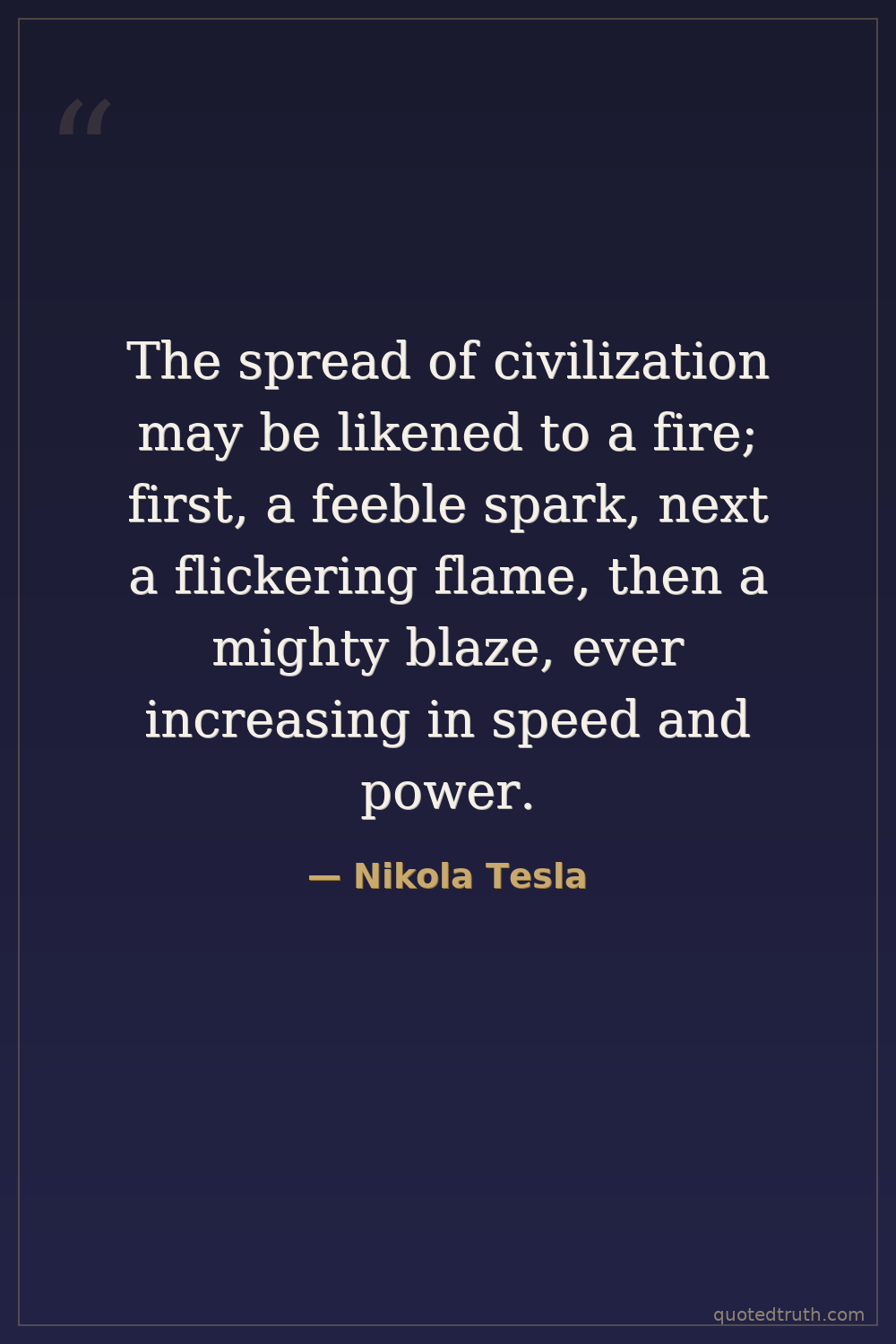
Civilization's growth follows an exponential pattern — it begins slowly, almost imperceptibly, then accelerates beyond what anyone initially imagined possible. Progress builds on itself: each advance creates conditions for faster advances. What starts as a fragile, uncertain beginning eventually becomes an unstoppable, self-sustaining force transforming everything in its path at breathtaking speed.
Relevance to Nikola Tesla
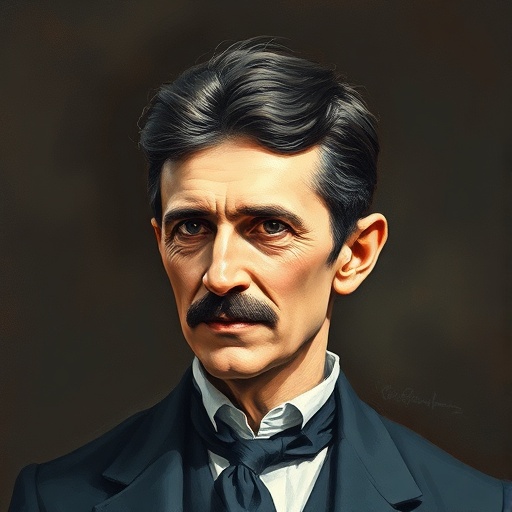
Tesla lived this metaphor. His AC power system started as one man's contested idea against Edison's entrenched DC empire — a feeble spark. Within decades it electrified continents. He understood electricity literally as civilization's fire, and dedicated his life to accelerating that blaze through invention, often sacrificing personal wealth for broader human progress.
The era
Tesla worked during the Second Industrial Revolution (1870s–1914), when electricity, steel, railroads, and telecommunications were transforming society at unprecedented speed. Cities went from candlelight to electric streetlamps within a single generation. This era proved his metaphor viscerally true — technological change was visibly accelerating, and thinkers like Tesla saw themselves as stoking civilization's flame.
AI-generated insights based on extensive research and information for context. Factual errors? Email [email protected].