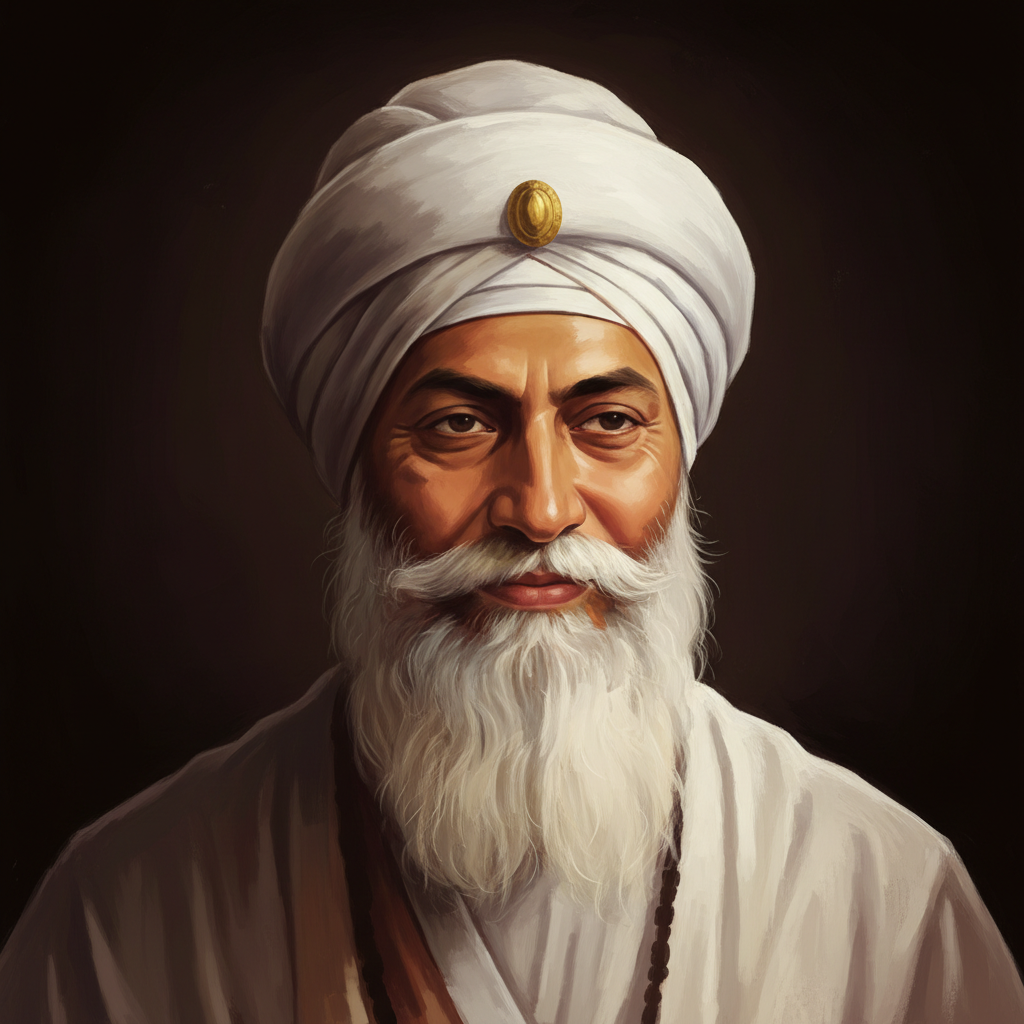
Guru Nanak — "The true devotion is to serve humanity."
The true devotion is to serve humanity.
The true devotion is to serve humanity.
Click any product to generate a realistic preview. Up to 3 at a time.
* Initial load can take up to 90 seconds — revising the preview in another color is nearly instant.
"The body is the field of karma in this age; whatever you plant, you shall harvest."
"Speak the truth, live the truth, and practice the truth."
"Only fools argue whether to eat meat or not. They don't understand truth nor do they meditate on it."
"What is the use of bathing at sacred shrines, if the mind is full of impurity?"
"The greatest wealth is to be without desires."
Founder of Sikhism and the first of the Ten Sikh Gurus, whose teachings of one universal God and rejection of caste shaped Punjab. Closely associated with Kabir (mystical poet whose verses appear in the Sikh Guru Granth Sahib). For an intellectual contrast, see Brahmanical orthodoxy, the Hindu caste-and-ritual establishment of his era — Sikhism was founded as a deliberate alternative to both Hindu ritual hierarchy and Islamic exclusivism — Nanak's universalism was a structural rejection of caste and priestly mediation.
Rag Dhanasari, Ang 684, Guru Granth Sahib (interpretation)
Date: c. 15th-16th century CE
Love & RelationshipsFound in 1 providers: gemini
1 source checked
Real spiritual commitment is not measured by rituals, prayers, or withdrawal from the world, but by active service to other people. Worship expressed only through ceremony is hollow; worship expressed through feeding the hungry, helping the poor, and treating every person with dignity is genuine. The quote redirects religion from performance to practice, saying that loving God and serving humanity are the same act, not two separate duties.
Guru Nanak built Sikhism around seva (selfless service), exemplified by langar, the free community kitchen he established where people of any caste, religion, gender, or class eat together as equals. He rejected priestly ritualism, caste hierarchy, and empty pilgrimage, teaching the householder's path of honest work, remembering God, and sharing with others. This saying distills his lifelong insistence that devotion without compassionate action toward fellow humans is meaningless.
Guru Nanak (1469–1539) lived in Punjab during the early Mughal era, amid sharp Hindu–Muslim tension, rigid caste stratification, and competing claims to religious authority by Brahmin pandits and Muslim qazis. Ordinary people were taxed, excluded from temples or mosques by caste or creed, and told salvation required ritual purity. By declaring service to humanity the true devotion, Nanak cut through sectarian walls and priestly gatekeeping, offering a practical, egalitarian spirituality accessible to farmers, laborers, women, and outcastes alike.
AI-generated insights based on extensive research and information for context. Factual errors? Email [email protected].
Your cart is empty