What it means
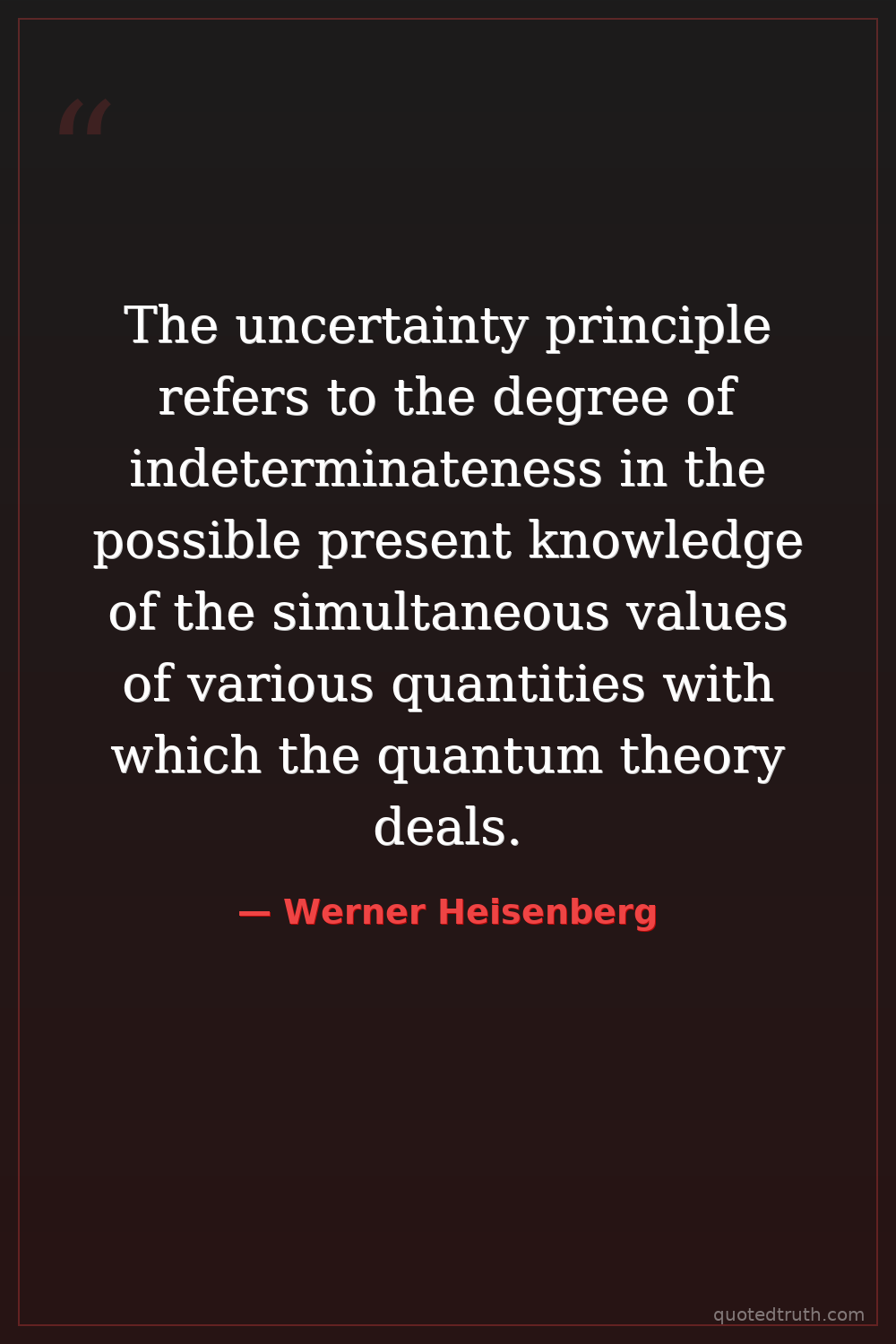
You cannot know everything about a tiny particle at the same time. If you pin down exactly where it is, you lose track of how fast it is moving, and the other way around. This isn't a flaw in our instruments; it is a built-in limit of reality itself at the smallest scales. The more precisely you measure one property, the fuzzier the paired property necessarily becomes.
Relevance to Werner Heisenberg
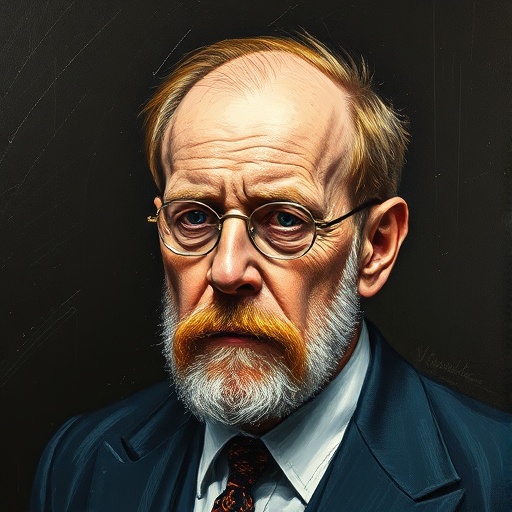
Heisenberg formulated this principle in 1927 at age 25, reshaping physics forever. Working under Niels Bohr in Copenhagen, he realized classical certainty collapses at atomic scales. He won the 1932 Nobel Prize for creating matrix mechanics. His careful phrasing here, avoiding 'impossible' in favor of 'indeterminateness', reflects his philosophical rigor and lifelong effort to defend quantum theory against Einstein's objection that 'God does not play dice'.
The era
The 1920s and 1930s saw physics torn apart and rebuilt. Einstein's relativity had just overthrown Newton, and now quantum mechanics was dismantling determinism itself. Heisenberg worked amid fierce debates between Copenhagen (Bohr, Born) and Berlin (Einstein, Schrodinger) schools. World War I had shattered European faith in rational order, making physics' embrace of fundamental uncertainty feel culturally resonant, even as Nazism rose and would soon scatter the field's greatest minds.
AI-generated insights based on extensive research and information for context. Factual errors? Email [email protected].