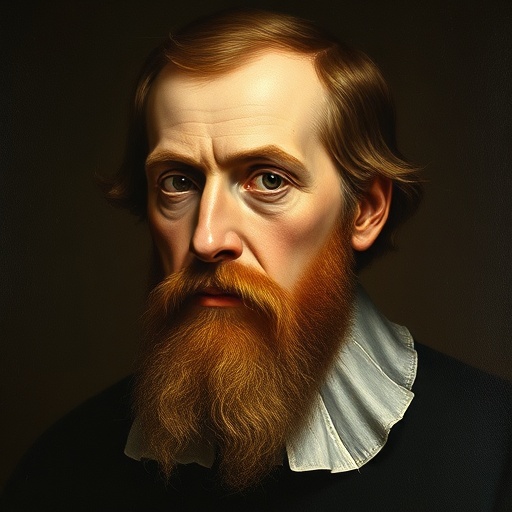
John Calvin — "The will of God is the supreme rule of righteousness."
The will of God is the supreme rule of righteousness.
The will of God is the supreme rule of righteousness.
Click any product to generate a realistic preview. Up to 3 at a time.
* Initial load can take up to 90 seconds — revising the preview in another color is nearly instant.
"The knowledge of God without the knowledge of ourselves is vain."
"The most perfect way of worshiping God is to live a holy life."
"We are not our own; we are God's."
"We are debtors to God, and can never pay the debt."
"It would be indeed better to grant license to thieves and sorcerers and adulterers, than to suffer the blasphemies which the ungodly utter against God, to prevail without any punishment and without an…"
French theologian whose Institutes of the Christian Religion (1536) systematized Protestant Reformed doctrine, including predestination. Closely associated with Martin Luther (Reformation founder, Calvin's predecessor). For an intellectual contrast, see Jacobus Arminius, Dutch Reformed theologian (1560-1609) — Arminius's rejection of strict double-predestination founded Arminianism — the theological tradition modern Methodism, most evangelicalism, and Pentecostalism descend from. The Calvinist-Arminian debate has divided Protestantism for 400 years.
Found in 1 providers: grok
1 source checked
Moral rightness isn't determined by human reason, tradition, or institutional authority—God's will is the ultimate standard by which all actions are judged right or wrong. Whatever God wills is just by definition; human ethics must submit to divine command. It rejects relativism and human-centered morality, placing absolute moral authority in God's sovereign decree rather than any earthly system, council, or philosophical framework humans construct.
Calvin's entire theological project centered on God's absolute sovereignty. As Geneva's reformer, he restructured civil and church governance around Scripture as divine will made manifest. His Institutes of the Christian Religion built systematic theology on this principle. It explains his break from Rome—if papal decrees contradicted God's will, they were simply wrong. His predestination doctrine flows from the same logic: God's sovereign will precedes and overrides all human moral intuition or institutional authority.
The 16th-century Reformation shattered the Catholic Church's monopoly on defining moral and spiritual authority. Competing claims—papal, conciliar, royal, and Protestant—left Europeans uncertain who determined righteousness. Calvin wrote amid religious wars, the Council of Trent's Counter-Reformation, and the collapse of unified Christendom. Grounding morality in God's sovereign will rather than Rome's hierarchy gave Reformed communities a stable foundation independent of any human institution, which was politically and spiritually essential during this period of fracture.
AI-generated insights based on extensive research and information for context. Factual errors? Email [email protected].
Your cart is empty