Martin Luther — "The world is like a drunken peasant. If you help him to mount on one side of his…"
The world is like a drunken peasant. If you help him to mount on one side of his horse, he tumbles off on the other.
The world is like a drunken peasant. If you help him to mount on one side of his horse, he tumbles off on the other.
Click any product to generate a realistic preview. Up to 3 at a time.
* Initial load can take up to 90 seconds — revising the preview in another color is nearly instant.
"True humility does not know that it is humble. If it did, it would be proud from the contemplation of so fine a virtue."
"The Bible is alive, it speaks to me; it has feet, it runs after me; it has hands, it lays hold on me."
"Secondly, their homes also should be razed and destroyed. For they pursue the same aims in them as in their synagogues. Instead they might be lodged under a roof or in a barn, like the gypsies, in ord…"
"Be a sinner and sin boldly, but believe and rejoice in Christ even more boldly, for he is victorious over sin, death, and the world."
"It is a sin to be sad."
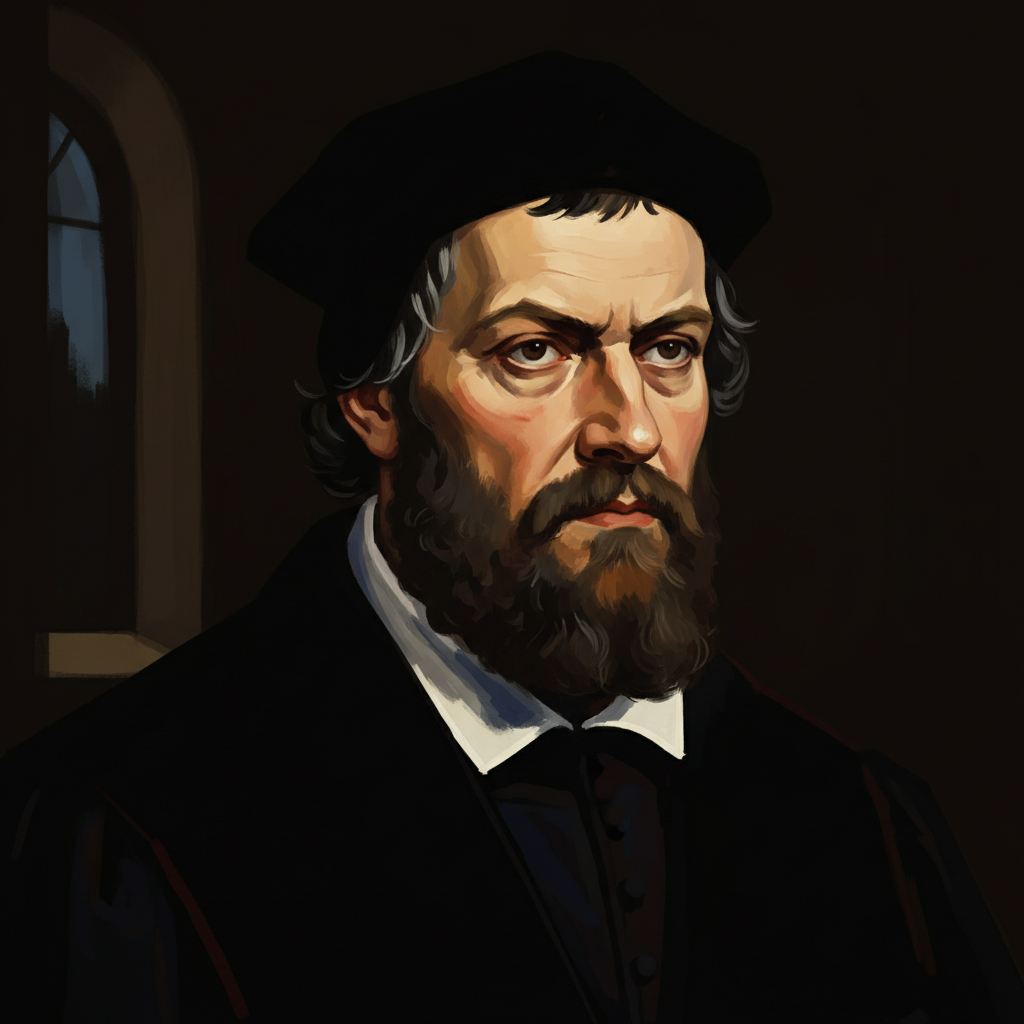
German theologian whose 95 Theses (1517) launched the Protestant Reformation and broke the Catholic Church's monopoly on Western Christianity. Closely associated with Philipp Melanchthon (Lutheran systematizer) and John Calvin (later Reformer who built on Luther's break). For an intellectual contrast, see Pope Leo X, Renaissance pope (1513-1521) — Leo X's indulgence sales triggered Luther's break and Leo excommunicated him in 1521 — Luther's entire Reformation is structured as a direct answer to the indulgence-funded Vatican Leo represented.
Found in 2 providers: gemini,grok
2 sources checked
People and societies rarely find balance. Push them to fix one extreme and they overcorrect into the opposite problem. You can guide someone away from one error, but they'll often stumble straight into a different one. Reform is messy because human nature resists moderation, lurching from excess to excess instead of settling into steady judgment. Progress in one direction tends to breed a new failure on the other side.
Luther watched his own Reformation produce exactly this pattern. He pried Christians away from papal authority only to see them swing into radical sects, peasant revolts, and iconoclasm he condemned. A blunt former monk fluent in earthy peasant imagery, he distrusted human nature's ability to hold a middle path, which is why he insisted salvation came by grace rather than human effort or moral balance.
Early modern Europe was destabilizing fast. The 1525 German Peasants' War killed perhaps 100,000 after commoners stretched Luther's reform language into armed uprising. Anabaptists, iconoclasts, and competing princes splintered Christendom while the printing press accelerated every quarrel. Luther watched a continent lurch from medieval Catholic uniformity into chaotic religious factionalism, confirming his sense that loosening one constraint simply unleashed the opposite excess across society.
AI-generated insights based on extensive research and information for context. Factual errors? Email [email protected].
Your cart is empty