Martin Luther — "True humility does not know that it is humble. If it did, it would be proud from…"
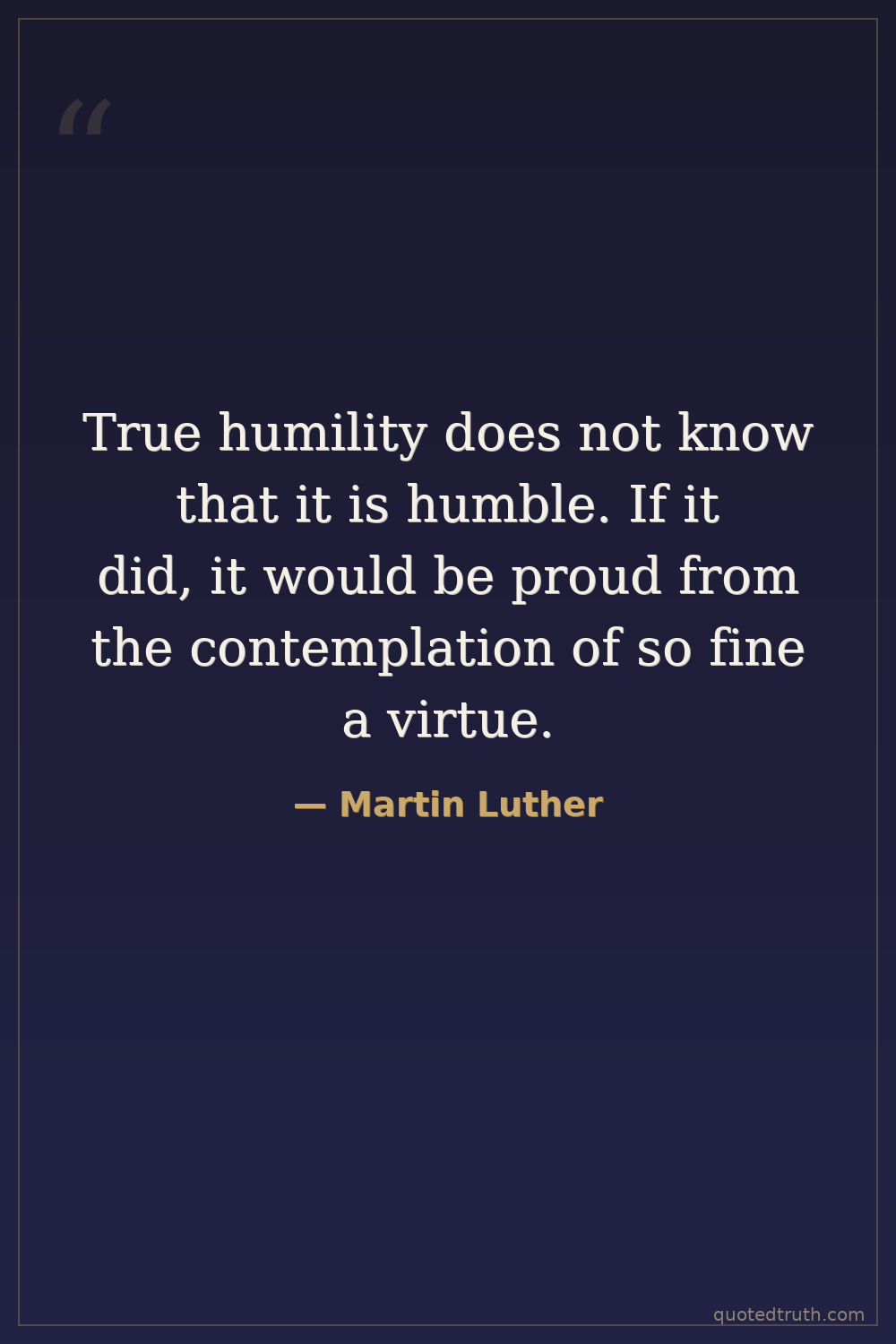
True humility does not know that it is humble. If it did, it would be proud from the contemplation of so fine a virtue.
True humility does not know that it is humble. If it did, it would be proud from the contemplation of so fine a virtue.
Click any product to generate a realistic preview. Up to 3 at a time.
* Initial load can take up to 90 seconds — revising the preview in another color is nearly instant.
"The greatest blessing of God is a virtuous and pious wife, who fears God and loves her husband."
"First, to set fire to their synagogues or schools and to bury and cover with dirt whatever will not burn, so that no man will ever again see a stone or cinder of them. This is to be done in honor of o…"
"You must say my sins are not mine; they are not in me at all; they are the sins of another; they are Christ's and none of my business."
"I have to confess that I have no desire to be a martyr."
"My conscience is captive to the Word of God."
German theologian whose 95 Theses (1517) launched the Protestant Reformation and broke the Catholic Church's monopoly on Western Christianity. Closely associated with Philipp Melanchthon (Lutheran systematizer) and John Calvin (later Reformer who built on Luther's break). For an intellectual contrast, see Pope Leo X, Renaissance pope (1513-1521) — Leo X's indulgence sales triggered Luther's break and Leo excommunicated him in 1521 — Luther's entire Reformation is structured as a direct answer to the indulgence-funded Vatican Leo represented.
Found in 1 providers: gemini
1 source checked
Genuine humility is unconscious of itself. The moment someone recognizes and admires their own humble nature, that self-awareness transforms into pride, because they are congratulating themselves on possessing a virtue. Real humility operates silently, without the person tracking or celebrating it. Claiming to be humble or feeling satisfied about being modest contradicts the very quality itself, turning it into quiet arrogance dressed in modest clothing.
Luther wrestled constantly with pride, sin, and self-examination, famously tormented by scrupulous conscience as an Augustinian monk before his Reformation breakthrough. His theology emphasized human depravity and total reliance on grace rather than personal virtue. This saying reflects his suspicion of works-righteousness and spiritual self-congratulation, which he saw in medieval monasticism. For Luther, claiming humility was itself evidence of the hidden pride he believed corrupted every human effort at holiness apart from Christ.
In early modern Europe, the Catholic Church promoted outward acts of piety, penance, and monastic humility as paths to salvation. Luther's 1517 Ninety-Five Theses challenged indulgences and performative virtue, igniting the Reformation. Renaissance humanism also celebrated human dignity and achievement, creating tension with Christian humility. Against this backdrop, Luther critiqued showy religious practices and self-aware holiness, insisting authentic faith produced quiet, unselfconscious virtue rather than the visible displays rewarded by church hierarchy and social status.
AI-generated insights based on extensive research and information for context. Factual errors? Email [email protected].
Your cart is empty