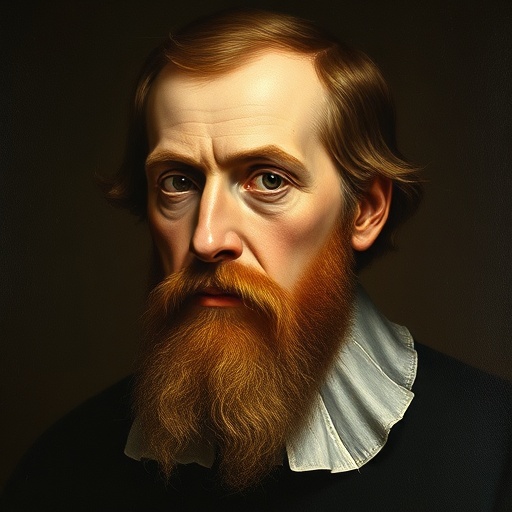
John Calvin — "There is no more dangerous illusion than to believe that we are not tempted."
There is no more dangerous illusion than to believe that we are not tempted.
There is no more dangerous illusion than to believe that we are not tempted.
Click any product to generate a realistic preview. Up to 3 at a time.
* Initial load can take up to 90 seconds — revising the preview in another color is nearly instant.
"It is not in our power to believe or not to believe."
"All true knowledge of God is born of obedience."
"The eternal counsel of God is the cause of election and reprobation."
"God, by a just and irreprehensible, but incomprehensible judgment, has predestinated some to eternal life, and others to eternal death."
"For we do not say that man is dragged unwillingly into sinning, but that because his will is corrupt he is held captive under the yoke of sin and therefore of necessity wills in an evil way."
French theologian whose Institutes of the Christian Religion (1536) systematized Protestant Reformed doctrine, including predestination. Closely associated with Martin Luther (Reformation founder, Calvin's predecessor). For an intellectual contrast, see Jacobus Arminius, Dutch Reformed theologian (1560-1609) — Arminius's rejection of strict double-predestination founded Arminianism — the theological tradition modern Methodism, most evangelicalism, and Pentecostalism descend from. The Calvinist-Arminian debate has divided Protestantism for 400 years.
Found in 1 providers: grok
1 source checked
People who believe themselves immune to temptation are actually in the greatest danger. Self-perceived moral superiority creates a blind spot where sin enters unnoticed. True wisdom requires constant vigilance and humility about one's own weaknesses, because the moment you stop watching for temptation is precisely when it overwhelms you most completely and catastrophically.
Calvin's entire theological system centered on total depravity and humanity's radical sinfulness before God. As Geneva's chief reformer, he disciplined citizens and clergy alike, having witnessed respected leaders fall to pride and moral compromise. His doctrine of predestination and sanctification demanded lifelong spiritual vigilance, making self-deception about one's righteousness a central pastoral and theological concern.
The Reformation era challenged Catholic notions of earned righteousness through works and indulgences, exposing institutional corruption within the Church. Calvin wrote amid religious wars, political intrigue, and doctrinal battles where leaders regularly fell to pride, ambition, and moral failure. The collapse of trusted religious authority made warnings against spiritual self-deception urgently practical, not merely theoretical.
AI-generated insights based on extensive research and information for context. Factual errors? Email [email protected].
Your cart is empty