Laozi — "Those who have the courage to dare will perish. Those who have the courage not t…"
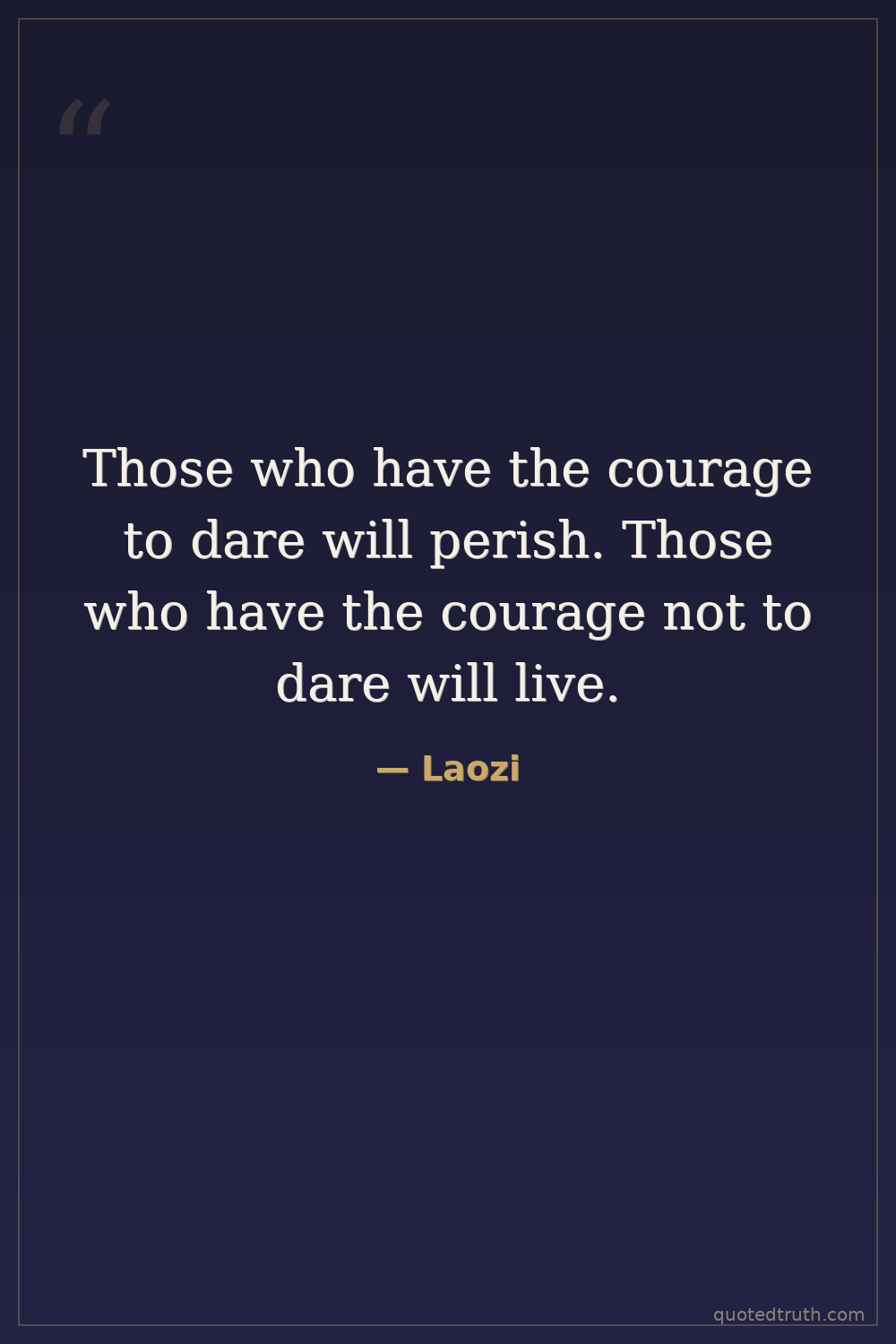
Those who have the courage to dare will perish. Those who have the courage not to dare will live.
Those who have the courage to dare will perish. Those who have the courage not to dare will live.
Click any product to generate a realistic preview. Up to 3 at a time.
* Initial load can take up to 90 seconds — revising the preview in another color is nearly instant.
"Therefore even the sage treats some things as difficult. That is why in the end no difficulties can get the better of him."
"When the great Tao is abandoned, there is humanity and righteousness. When wisdom and intelligence appear, there is great hypocrisy."
"The greatest paradox of life is that death is the ultimate goal."
"The best ruler is one whose existence is merely known by the people. The next best is one who is loved and praised. The next is one who is feared. The next is one who is despised."
"The highest good is like water. It nourishes all things without trying to."
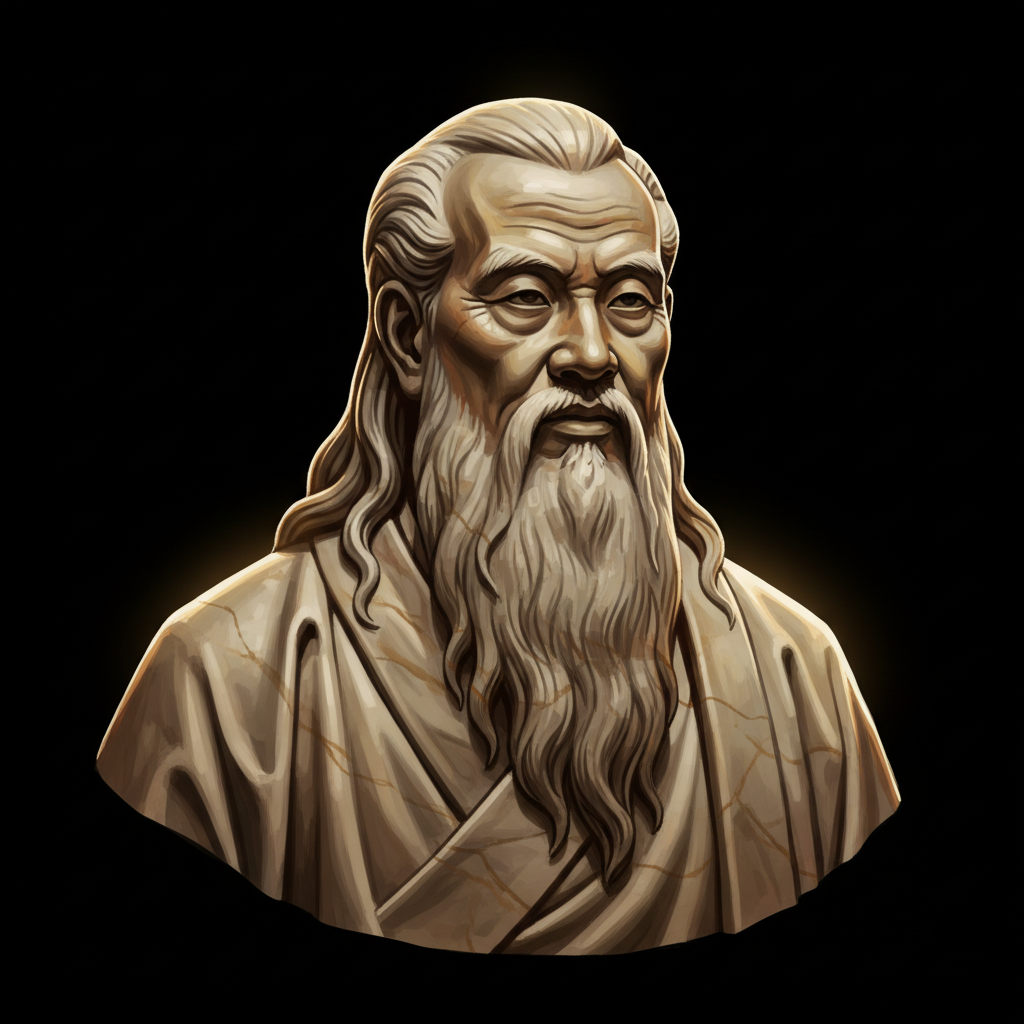
Reputed founder of Taoism and author of the Tao Te Ching, whose wu wei (effortless action) shaped East Asian philosophy. Closely associated with Zhuangzi (later Taoist who extended Laozi's framework). For an intellectual contrast, see Confucius, near-contemporary Chinese sage of social ritual and duty — Confucius systematized social order through ritual and hierarchy; Laozi argued that all such systems were the disease, not the cure — the two founding poles of Chinese moral philosophy.
Found in 1 providers: gemini
1 source checked
Boldness and aggression often lead to destruction, while restraint and caution preserve life. The person who rushes to act, confront, or dominate frequently meets disaster, while the one who holds back, yields, and chooses not to force outcomes survives and endures. True strength lies not in taking action but in knowing when action is reckless. Self-preservation comes through humility and restraint, not through reckless displays of courage.
Laozi centered his philosophy on wu wei, or effortless non-action, teaching that yielding defeats force and softness outlasts hardness. As the legendary keeper of Zhou archives, he observed court ambition destroy officials who grasped for power. He reportedly left civilization on a water buffalo rather than fight political decay. This saying distills his belief that the sage survives by refusing to compete, embodying his famous image of water wearing down stone through passive persistence.
Laozi lived during the late Zhou dynasty, an era sliding toward the Warring States period when feudal lords waged constant brutal wars and ambitious ministers were routinely executed in court intrigues. Bold generals, assassins, and power-grabbing officials filled the age, and their lives were typically short. Against this bloodshed, Taoism offered a radical counter-message: withdraw, yield, refuse ambition. The saying directly warned listeners that the reckless courage celebrated by warriors was actually a death sentence.
AI-generated insights based on extensive research and information for context. Factual errors? Email [email protected].
Your cart is empty