Laozi — "When the great Tao is abandoned, there is humanity and righteousness. When wisdo…"
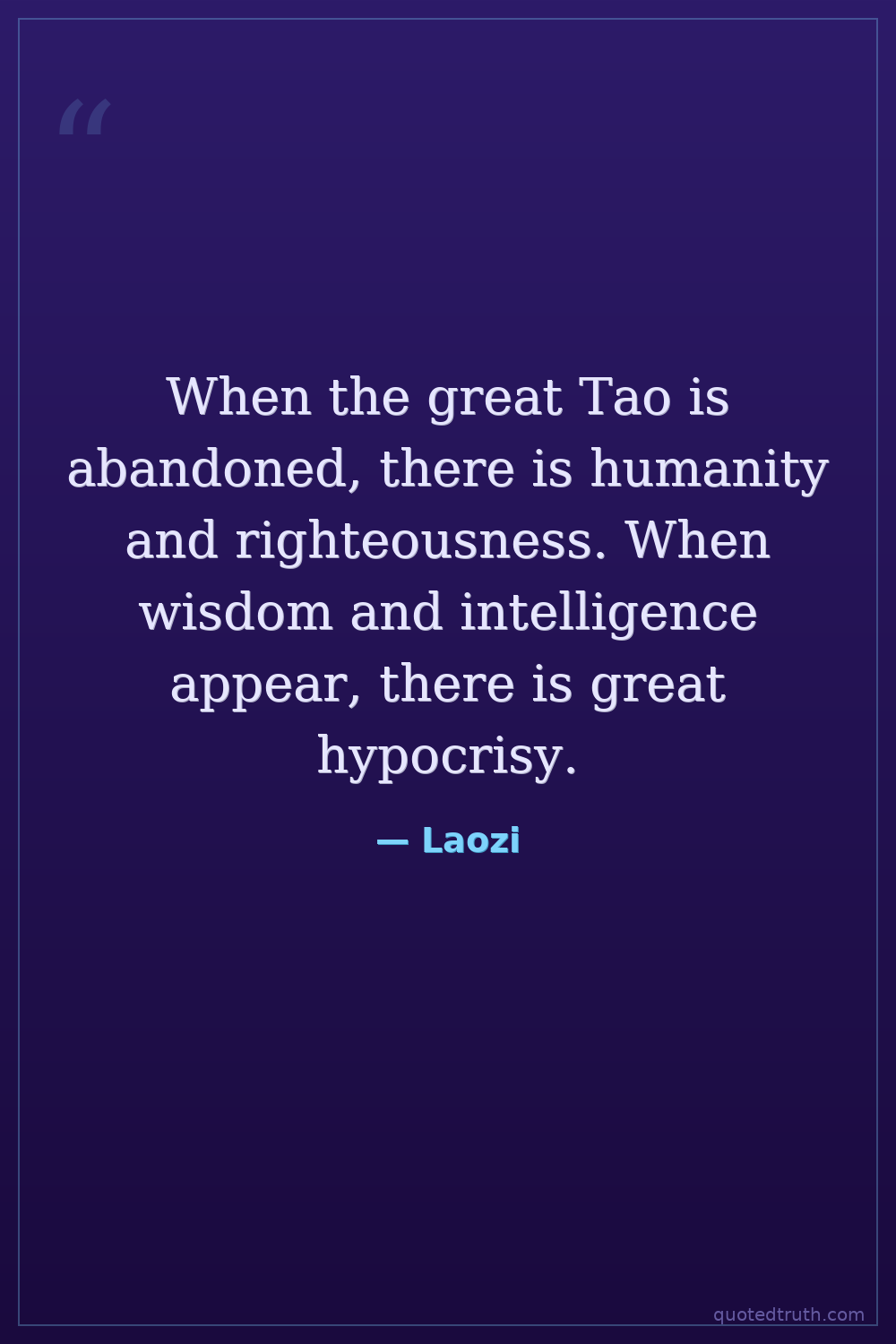
When the great Tao is abandoned, there is humanity and righteousness. When wisdom and intelligence appear, there is great hypocrisy.
When the great Tao is abandoned, there is humanity and righteousness. When wisdom and intelligence appear, there is great hypocrisy.
Click any product to generate a realistic preview. Up to 3 at a time.
* Initial load can take up to 90 seconds — revising the preview in another color is nearly instant.
"Deal with the small as with the large."
"Fame or integrity: which is more important? Money or happiness: which is more precious?"
"Those who have the courage to dare will perish. Those who have the courage not to dare will live."
"The Way is ever without action, yet nothing is left undone."
"Seal the openings, shut the doors, and until your last day you will not be exhausted. Widen the openings, interfere, and until your last day you will not be safe."
Reputed founder of Taoism and author of the Tao Te Ching, whose wu wei (effortless action) shaped East Asian philosophy. Closely associated with Zhuangzi (later Taoist who extended Laozi's framework). For an intellectual contrast, see Confucius, near-contemporary Chinese sage of social ritual and duty — Confucius systematized social order through ritual and hierarchy; Laozi argued that all such systems were the disease, not the cure — the two founding poles of Chinese moral philosophy.
Found in 1 providers: gemini
1 source checked
When people lose their natural, spontaneous connection to the underlying order of things, they start needing codified rules about kindness and fairness to fill the gap. The very existence of loud moral preaching signals that genuine goodness has already faded. Likewise, when cleverness and showy intellect rise to prominence, deception follows closely behind, because sharp minds learn to manipulate appearances. Virtue talked about constantly is virtue no longer lived.
Laozi was a reclusive archivist in the Zhou court who reportedly grew disillusioned with the empty ceremony and scholarly posturing he witnessed in government. Before leaving civilization westward on a water buffalo, he supposedly distilled his thinking into the Dao De Jing. This verse captures his signature move: distrust of performative virtue, preference for wu wei (effortless action), and belief that naming and codifying things corrupts them.
Laozi lived during the late Zhou dynasty, an age of collapsing feudal order and near-constant warfare between rival states. Competing philosophical schools, especially Confucians, pushed elaborate ritual, hierarchy, and codified ethics as the cure for social chaos. Laozi's counterpunch argued the opposite: that loudly prescribed morality was itself a symptom of decay, and that scheming court intellectuals were making things worse, not better, through their clever interventions.
AI-generated insights based on extensive research and information for context. Factual errors? Email [email protected].
Your cart is empty