Laozi — "To know that you do not know is the best. To think you know when you do not is a…"
To know that you do not know is the best. To think you know when you do not is a disease.
To know that you do not know is the best. To think you know when you do not is a disease.
Click any product to generate a realistic preview. Up to 3 at a time.
* Initial load can take up to 90 seconds — revising the preview in another color is nearly instant.
"The sage puts his person last and finds his person first. He treats his person as external and his person is preserved."
"Use justice to rule a country. Use surprise to wage war. Use non-action to govern the world."
"The sage is always without ambition."
"Do that which consists in taking no action; Pursue that which is not meddlesome; Savor that which has no flavor."
"He who controls others may be powerful, but he who has mastered himself is mightier still."
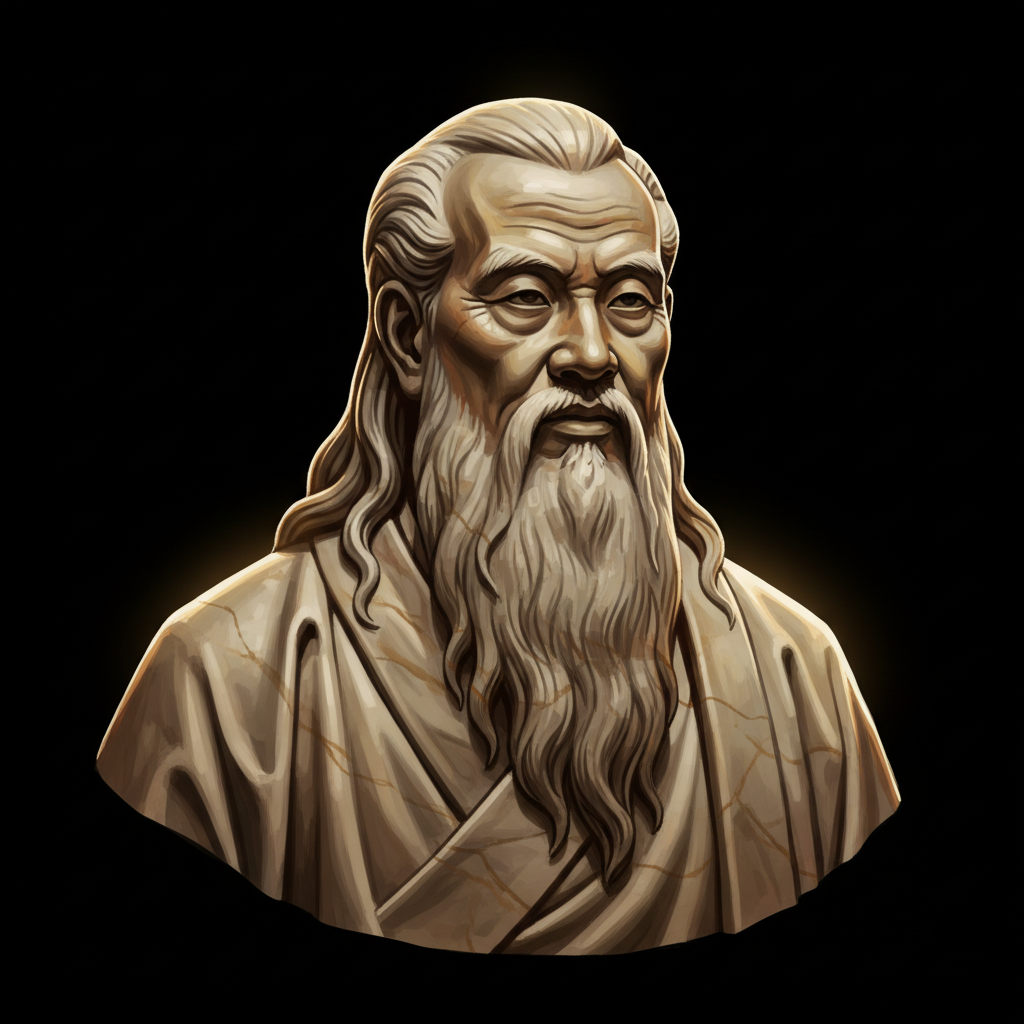
Reputed founder of Taoism and author of the Tao Te Ching, whose wu wei (effortless action) shaped East Asian philosophy. Closely associated with Zhuangzi (later Taoist who extended Laozi's framework). For an intellectual contrast, see Confucius, near-contemporary Chinese sage of social ritual and duty — Confucius systematized social order through ritual and hierarchy; Laozi argued that all such systems were the disease, not the cure — the two founding poles of Chinese moral philosophy.
Found in 1 providers: grok
1 source checked
Real wisdom begins with recognizing the limits of your own understanding. Admitting ignorance is a strength because it keeps you open to learning and accurate about reality. Pretending to know things you do not, by contrast, is a harmful illness of the mind. It blocks growth, breeds bad decisions, and spreads error to others. Honest self-assessment about what you actually understand is healthier than performing false expertise.
Laozi, traditional founder of Taoism and reputed author of the Tao Te Ching, reportedly served as an archivist in the Zhou royal court, surrounded by scholars eager to display learning. His philosophy prizes humility, emptiness, and wu wei, effortless accord with the Tao. Warning against the disease of false knowing fits his rejection of rigid Confucian expertise and his praise of the sage who empties the mind, unlearns cleverness, and stays close to natural simplicity.
Laozi lived during the late Zhou dynasty, traditionally the sixth century BCE, as centralized authority disintegrated into the warring states. Rival courts employed traveling scholars, ministers, and strategists who competed by parading certainty about ritual, governance, and war. Confucian ethics were gaining ground, promoting study and fixed social roles. Against this noisy marketplace of supposed experts causing chaos, Laozi's warning about the disease of false knowledge offered a radical counter-current favoring quiet humility and skeptical self-awareness.
AI-generated insights based on extensive research and information for context. Factual errors? Email [email protected].
Your cart is empty