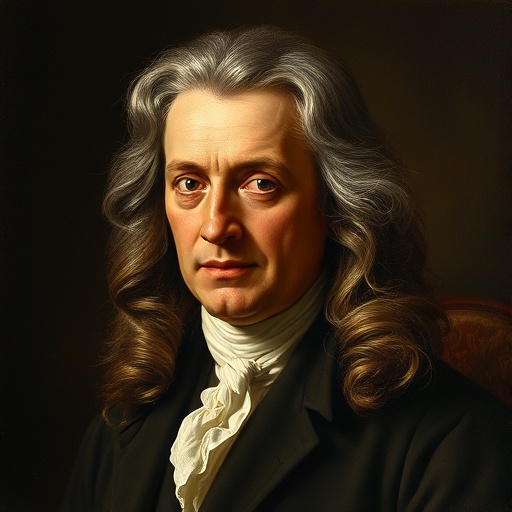
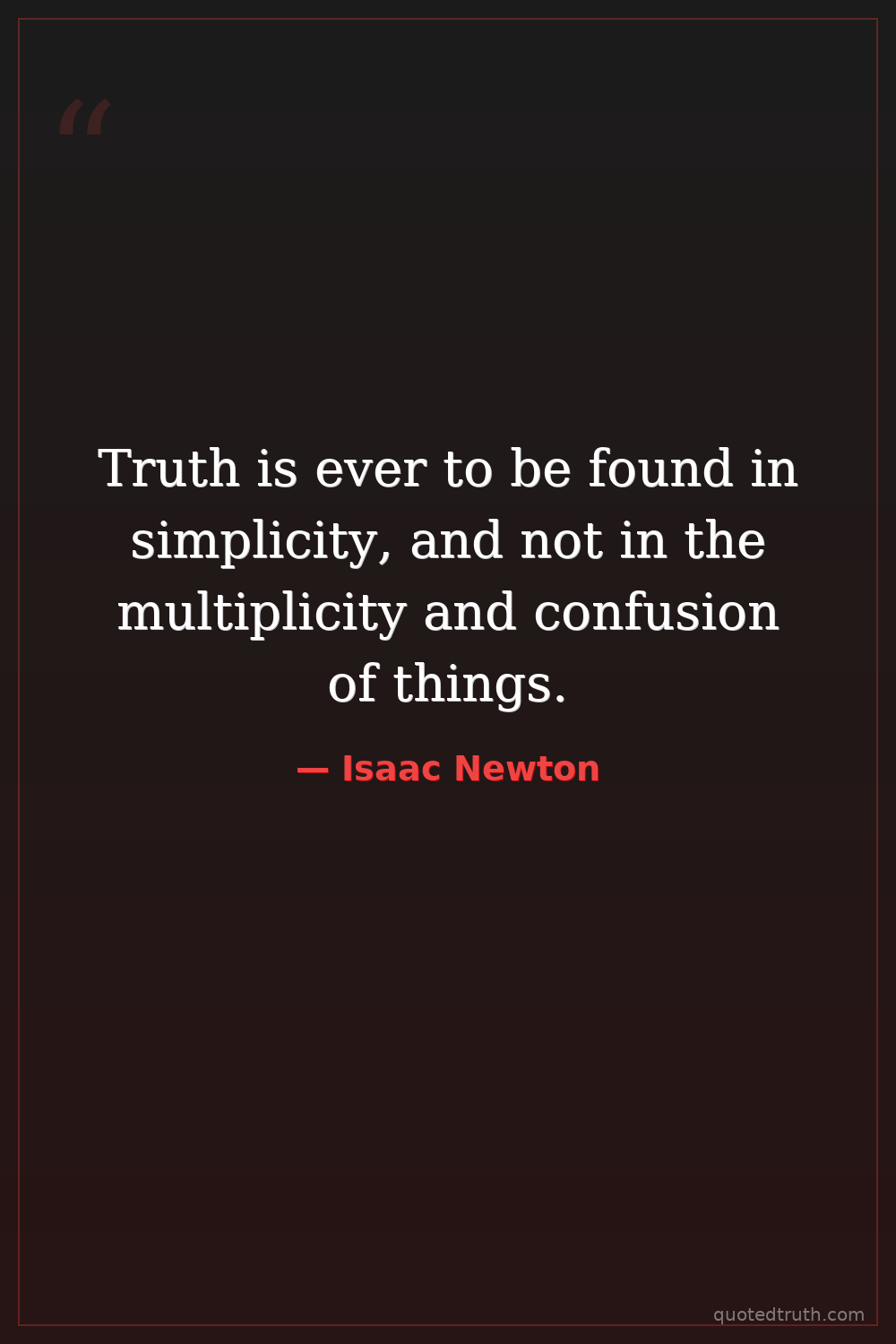
Isaac Newton — "Truth is ever to be found in simplicity, and not in the multiplicity and confusi…"
Truth is ever to be found in simplicity, and not in the multiplicity and confusion of things.
Truth is ever to be found in simplicity, and not in the multiplicity and confusion of things.
Click any product to generate a realistic preview. Up to 3 at a time.
* Initial load can take up to 90 seconds — revising the preview in another color is nearly instant.
"The whole difficulty of philosophy seems to consist in this—from the phenomena of motions to investigate the forces of nature, and then from these forces to demonstrate the other phenomena."
"A man may imagine things that are false, but he can only understand things that are true, for if the things be false, the apprehension of them is not understanding."
"He who thinks half-heartedly will not believe in God; but he who thinks seriously will believe in God, and will not doubt that God is the author of the world."
"For the best and safest way of philosophizing seems to be, first to inquire diligently into the properties of things, and of establishing them by experiment, and then to proceed more slowly to hypothe…"
"I consider my experiments as a kind of play."
Found in 1 providers: deepseek
1 source checked
Underlying reality is fundamentally simple — when explanations grow cluttered and contradictory, you've likely lost the thread. Strip away noise and you find clean, universal principles. This is essentially Occam's Razor: the simplest explanation consistent with all evidence is usually correct. Sophistication isn't the same as complexity. Real insight condenses what seemed chaotic into something a child could grasp in outline, even if the mathematics runs deep.
Newton's entire career demonstrated this conviction. His three laws of motion and universal gravitation condensed the behavior of every object — apple to planet — into four compact statements. He resisted inventing explanations beyond what data required, famously declaring 'Hypotheses non fingo.' A devout Protestant, he believed God designed creation with elegant economy. Even his calculus was built to reveal continuous change through the simplest possible formal machinery, collapsing complexity into irreducible principle.
Newton worked during the Scientific Revolution, when scholars were dismantling centuries of Aristotelian complexity — epicycles, humoral medicine, scholastic hair-splitting. The intellectual landscape remained cluttered: Descartes proposed vast mechanical vortices to explain planetary motion; alchemists layered esoteric symbolism onto chemistry. Against this backdrop, Newton's insistence on simplicity was radical. His Principia demonstrated that a single gravitational law governed both a falling apple and the Moon's orbit, collapsing two apparently different phenomena into one astonishing economy.
AI-generated insights based on extensive research and information for context. Factual errors? Email [email protected].
Your cart is empty