What it means
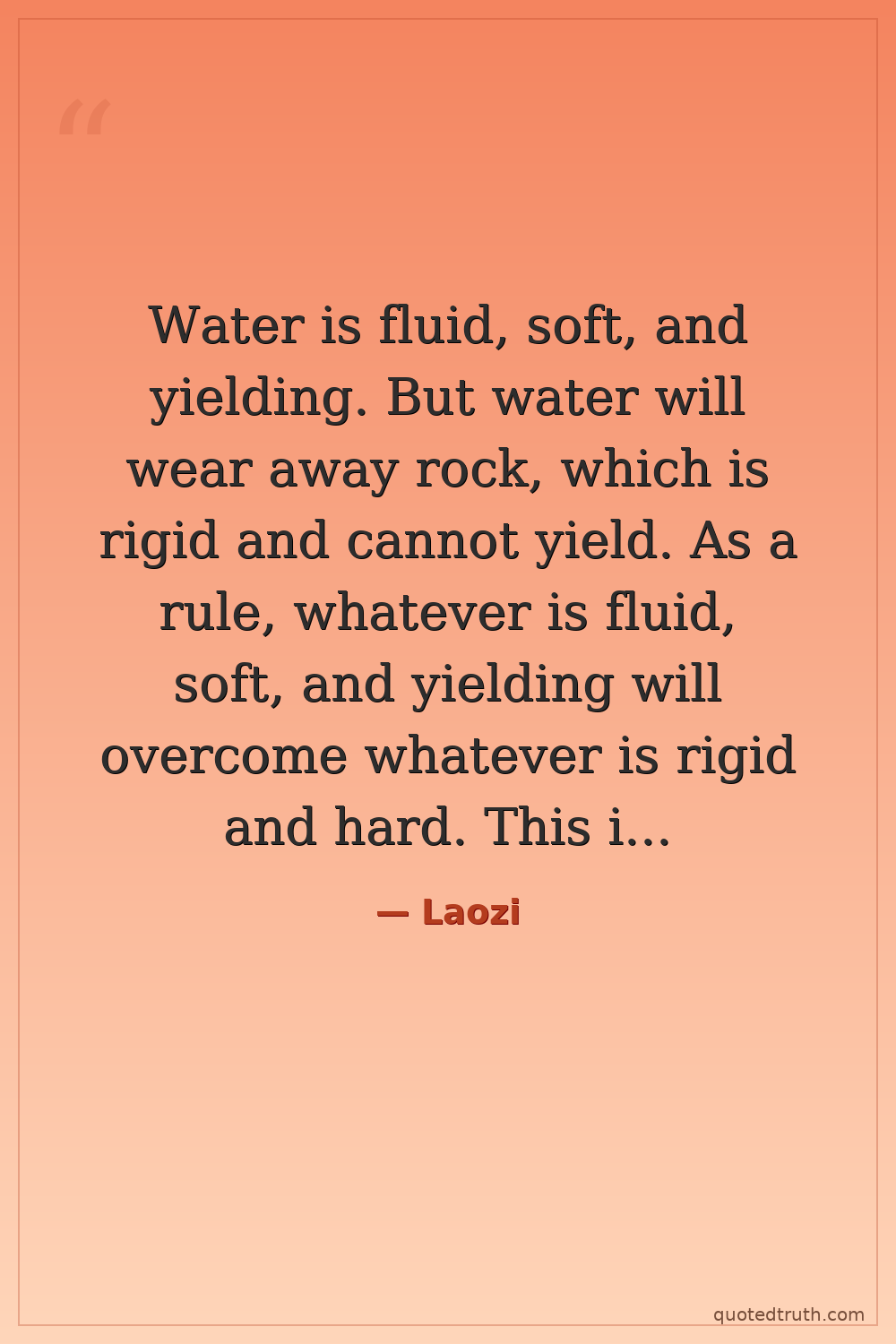
Gentleness and flexibility defeat force and rigidity over time. Water seems weak compared to stone, yet it carves canyons because it adapts and persists. Hard things break; soft things bend and endure. The lesson: don't confuse stiffness with strength or yielding with weakness. Patient, adaptive effort outlasts brute resistance. In conflict, relationships, or work, the person who stays flexible and keeps flowing usually outlasts the one who refuses to bend.
Relevance to Laozi
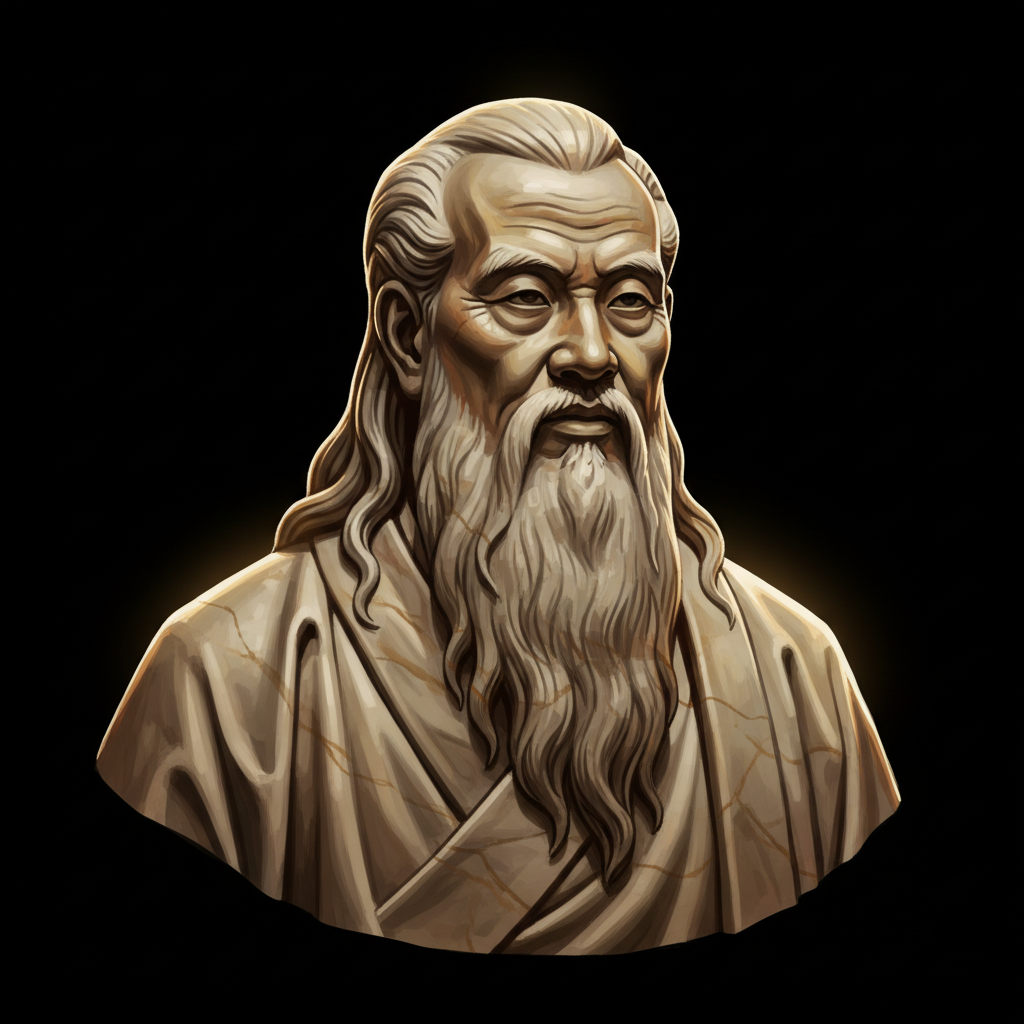
Laozi built Taoism on exactly this inversion of common sense, and water is his signature metaphor throughout the Tao Te Ching. Traditionally a quiet archivist in the Zhou court, he valued withdrawal, humility, and wu wei—effortless action—over ambition and force. Legend says he left society rather than fight its rigidity. Celebrating softness as strength mirrors his own life choice: avoid confrontation, yield to the Tao, and let natural persistence accomplish what striving cannot.
The era
Laozi lived during the late Zhou dynasty, around the 6th century BCE, as centralized authority collapsed into the constant warfare of the Spring and Autumn and Warring States periods. Rulers glorified hard power, rigid laws, and military conquest, while Confucians pushed strict social hierarchy. Against this backdrop of brittle institutions and endless violence, praising softness, yielding, and water-like humility was radical. It offered exhausted people an alternative path: survival and influence through adaptability rather than force.
AI-generated insights based on extensive research and information for context. Factual errors? Email [email protected].