Wright Brothers (Orville & Wilbur) — "We kept at it, and we kept on learning."
We kept at it, and we kept on learning.
We kept at it, and we kept on learning.
Click any product to generate a realistic preview. Up to 3 at a time.
* Initial load can take up to 90 seconds — revising the preview in another color is nearly instant.
"We worked together and we thought together."
"The aeroplane is not an invention, but a discovery."
"Our confidence in the ability of men to fly has not been shaken."
"No airship will ever fly from New York to Paris. That seems to me to be impossible. What limits the flight is the motor. No known motor can run at the requisite speed for four days without stopping, a…"
"Learning the secret of flight from a bird was a good deal like learning the secret of magic from a magician—something the magician won't tell, and the bird can't tell."
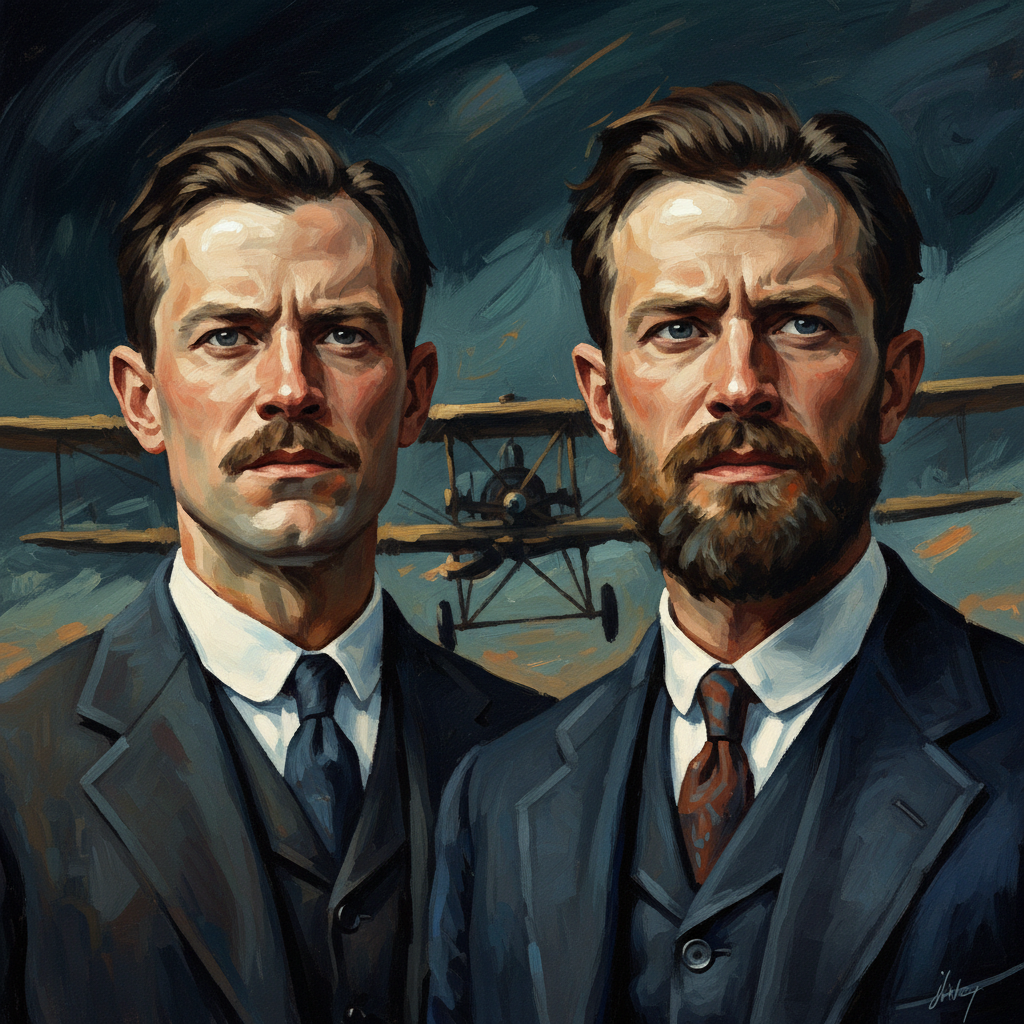
American aviation pioneers who achieved the first sustained powered controlled airplane flight at Kitty Hawk, NC, on December 17, 1903. Closely associated with Octave Chanute (their gliding mentor and aeronautical correspondent). For an intellectual contrast, see Samuel Pierpont Langley, Smithsonian Institution Secretary and government-funded aviation researcher — Langley's Aerodrome crashed twice into the Potomac in October-December 1903 with $50,000 of War Department funding; the Wright Brothers' bicycle-shop empiricism beat Langley's institutional Big Science by 9 days. The most-cited example in engineering history of empirical-tinkerer beating institution-funded credentialism.
Found in 1 providers: grok
1 source checked
Progress comes from persistence paired with continuous learning. Rather than expecting immediate success or a single breakthrough moment, real achievement is built through repeated effort where each attempt, whether it works or fails, becomes information that sharpens the next try. Sticking with a problem long enough to understand it deeply matters more than raw talent or lucky inspiration. Showing up, trying again, and absorbing what happened is the actual mechanism of mastery.
The Wright Brothers spent years as self-taught engineers, running over a thousand glider flights at Kitty Hawk between 1900 and 1903 before achieving powered flight. They built their own wind tunnel after discovering published aerodynamic data was wrong, redoing the calculations themselves. Bicycle mechanics without formal engineering training, they treated every failed glide as data, iterating on wing warping, propeller design, and control systems. Their twelve-second flight on December 17, 1903 was the product of relentless incremental learning, not genius insight.
In the early 1900s, heavier-than-air flight was widely mocked as impossible, with respected scientists declaring it would never happen. Samuel Langley's well-funded government-backed attempts crashed publicly just days before the Wrights succeeded. The era glorified lone-inventor heroics and sudden breakthroughs, yet the industrial age was quietly rewarding methodical experimentation. The Wrights embodied the tinkerer-engineer culture of small American workshops, competing against credentialed institutions with little more than patience, careful observation, and refusal to stop iterating.
AI-generated insights based on extensive research and information for context. Factual errors? Email [email protected].
Your cart is empty