What it means
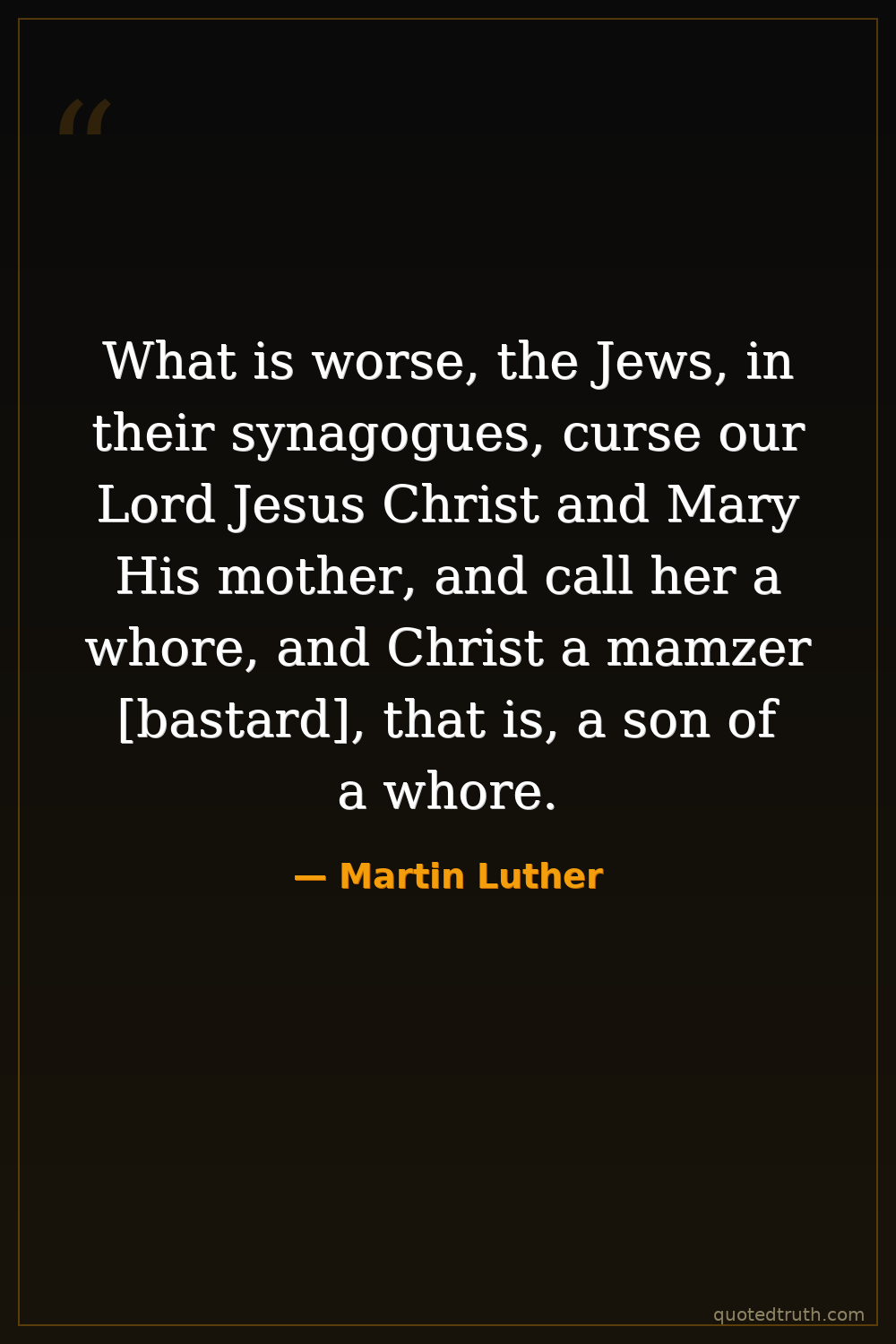
The speaker accuses Jewish worshippers of using their religious gatherings to insult Jesus and his mother Mary, allegedly branding Mary a prostitute and Jesus an illegitimate child. The claim frames a rival faith community as actively blaspheming Christian sacred figures during worship, painting them as hostile enemies rather than neighbors holding a different belief. It is a hostile accusation dressed as reportage, designed to provoke outrage against Jews.
Relevance to Martin Luther
Luther, a German monk who launched the Protestant Reformation in 1517, initially hoped Jews would convert to his reformed Christianity. When they did not, he turned savagely hostile, publishing On the Jews and Their Lies in 1543, from which this passage comes. It reflects the darker side of the reformer who translated the Bible into German: a theologian whose rage at religious rejection curdled into vicious antisemitic propaganda that later regimes weaponized.
The era
Early sixteenth-century Europe was consumed by religious upheaval as Luther's Reformation shattered Western Christendom. Jews lived precariously, already expelled from Spain (1492) and England, confined to ghettos, blamed for plagues, and pressured to convert. Printing presses spread inflammatory pamphlets rapidly, and accusations of blasphemy or ritual insult could trigger pogroms, expulsions, or synagogue burnings. Luther's late writings fed directly into this climate, providing theological cover for violence against Jewish communities across German lands.
AI-generated insights based on extensive research and information for context. Factual errors? Email [email protected].