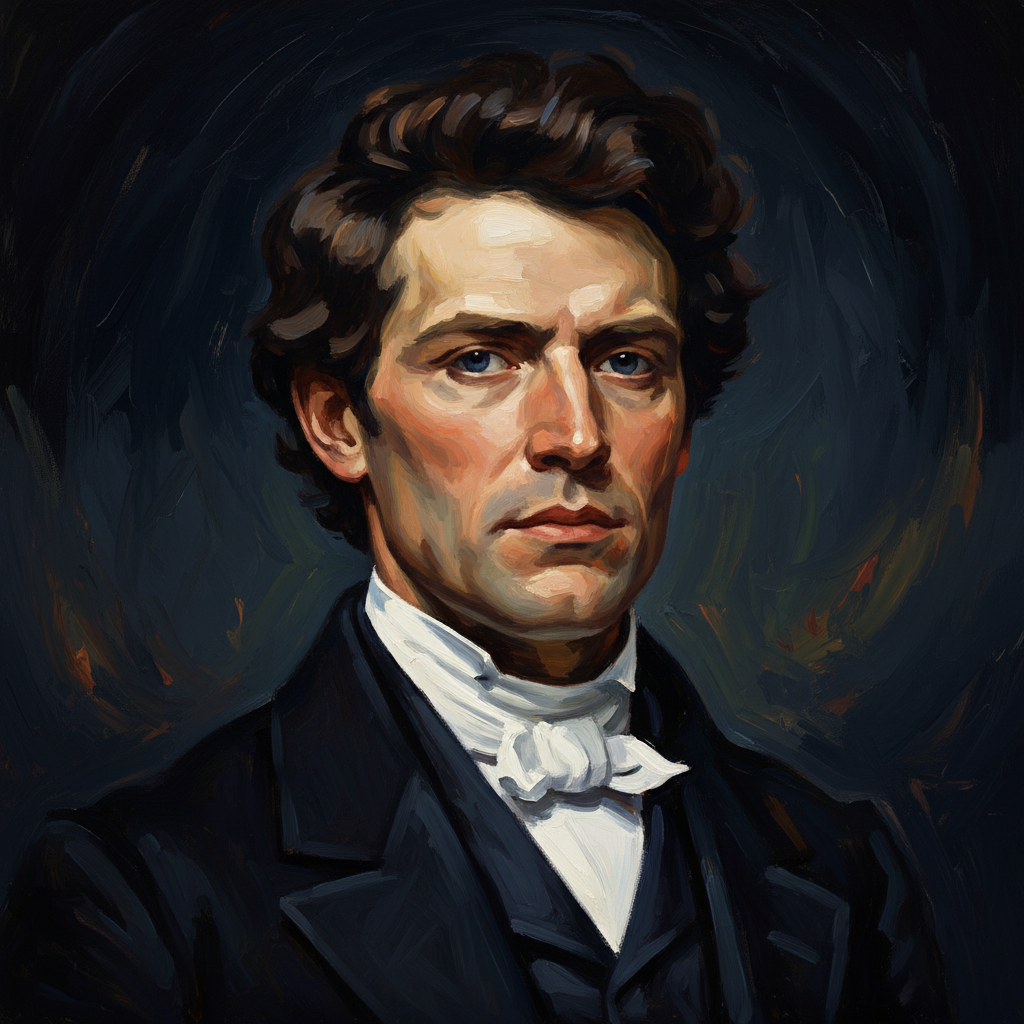
Joseph Smith — "I am tired of the traditions of men, and the doctrines of devils."
I am tired of the traditions of men, and the doctrines of devils.
I am tired of the traditions of men, and the doctrines of devils.
Click any product to generate a realistic preview. Up to 3 at a time.
* Initial load can take up to 90 seconds — revising the preview in another color is nearly instant.
"It is the first principle of the Gospel to know for a certainty that we have a right to expect to see God, and that he will converse with us as one man converses with another."
"God himself was once as we are now, and is an exalted man, and sits enthroned in yonder heavens!"
"I believe the Bible as it read when it came from the pen of the original writers. Ignorant translators, careless transcribers, or designing and corrupt priests have committed many errors."
"When all the rest of the children have received their blessings in the Holy Priesthood, then that curse will be removed from the seed of Cain, and they will then come up and possess the Priesthood, an…"
"I wish to do something to distinguish myself, and so I am going to get up a religion."
Found in 1 providers: grok
1 source checked
The speaker rejects inherited religious customs and corrupt teachings, declaring independence from centuries of human-made doctrine that obscures divine truth. It captures a conviction that mainstream religion has drifted far from its origins, layered with institutional rules and false teachings. The call is for a return to something purer, unfiltered by church tradition or human authority—direct access to truth rather than mediated, accumulated religious error.
Smith's entire prophetic mission rested on this premise. His First Vision narrative describes God telling a teenage Smith that existing churches had all gone astray. He claimed to restore original Christianity, not reform it. Rejecting 'traditions of men' justified founding an entirely new movement, producing new scripture, and claiming fresh revelation. Every controversial doctrine—plural marriage, new priesthood authority, continuing prophecy—was framed as replacing corrupted human tradition with restored divine truth.
The Second Great Awakening (1790s–1840s) flooded upstate New York—Smith's home territory, called the 'burnt-over district'—with competing revivals, new denominations, and intense theological disputes. Methodists, Baptists, and Presbyterians openly attacked each other's doctrines. Many Americans felt overwhelmed and disillusioned by contradictory claims. This religious chaos made Smith's message of a clean break from all existing traditions deeply resonant to seekers who wanted spiritual certainty over denominational argument.
AI-generated insights based on extensive research and information for context. Factual errors? Email [email protected].
Your cart is empty