What it means
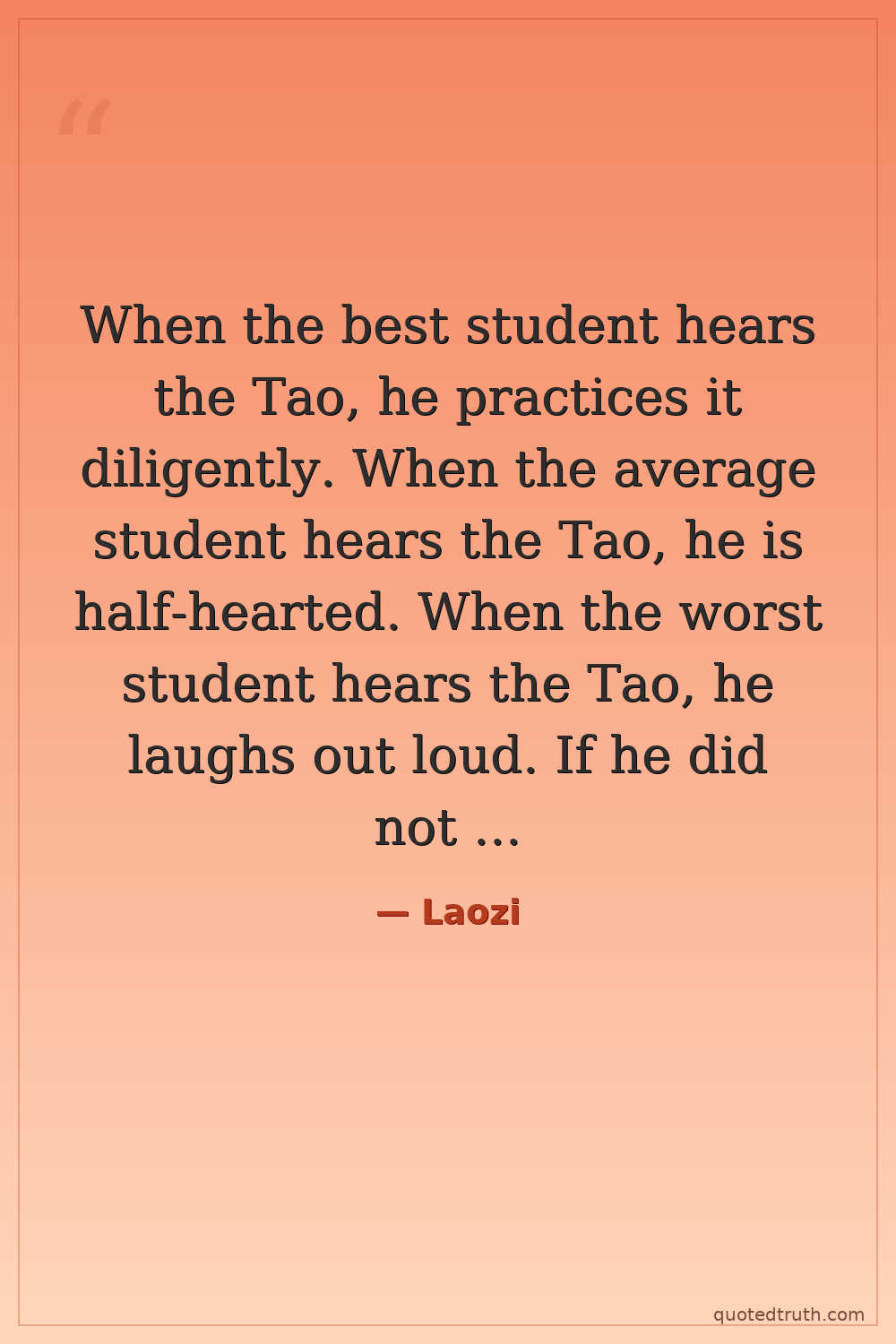
People respond to deep truth according to their capacity to receive it. Serious seekers take profound ideas and put them into practice immediately. Mediocre ones nod along but never commit. Shallow minds dismiss genuine wisdom as absurd because it contradicts their assumptions. The teaching is so counterintuitive that ridicule from unserious people is actually a signal you have found something real, not a reason to doubt it.
Relevance to Laozi
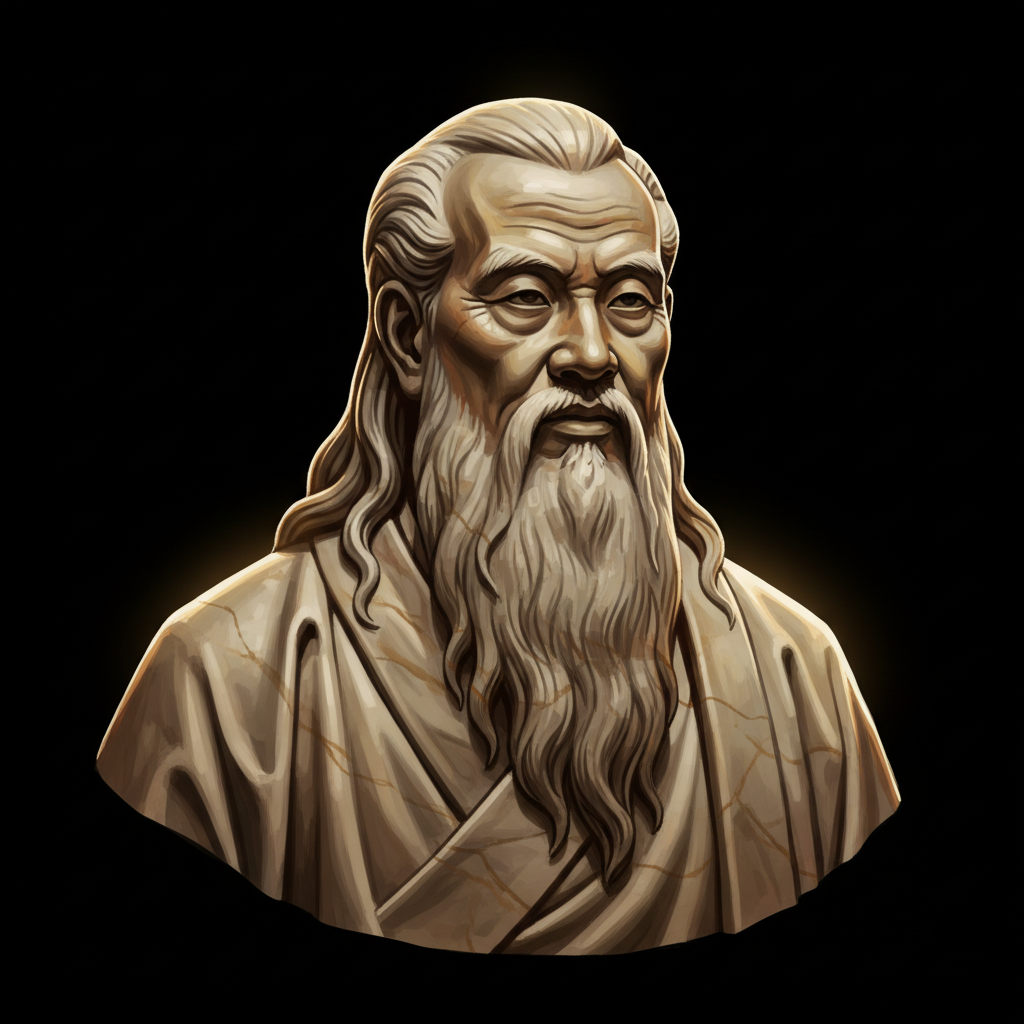
Laozi reportedly served as an archivist in the Zhou royal court, surrounded by scholars and officials who debated doctrine without living it. His decision to leave civilization and write the Tao Te Ching at a border pass reflects this very frustration: truth is for practitioners, not debaters. The paradox-loving style throughout his work deliberately invites dismissal from literalists, filtering for readers willing to sit with contradiction rather than mock it.
The era
Laozi lived during the late Zhou dynasty, likely the 6th century BCE, a period of political fragmentation leading into the Warring States era. Competing schools, Confucians, Mohists, Legalists, fought for royal patronage by selling structured doctrines. Laozi's quiet, anti-rhetorical message stood apart in a marketplace of loud persuaders. Ridicule from ambitious court intellectuals who preferred actionable statecraft was guaranteed, which is exactly why he framed laughter as confirmation rather than refutation.
AI-generated insights based on extensive research and information for context. Factual errors? Email [email protected].