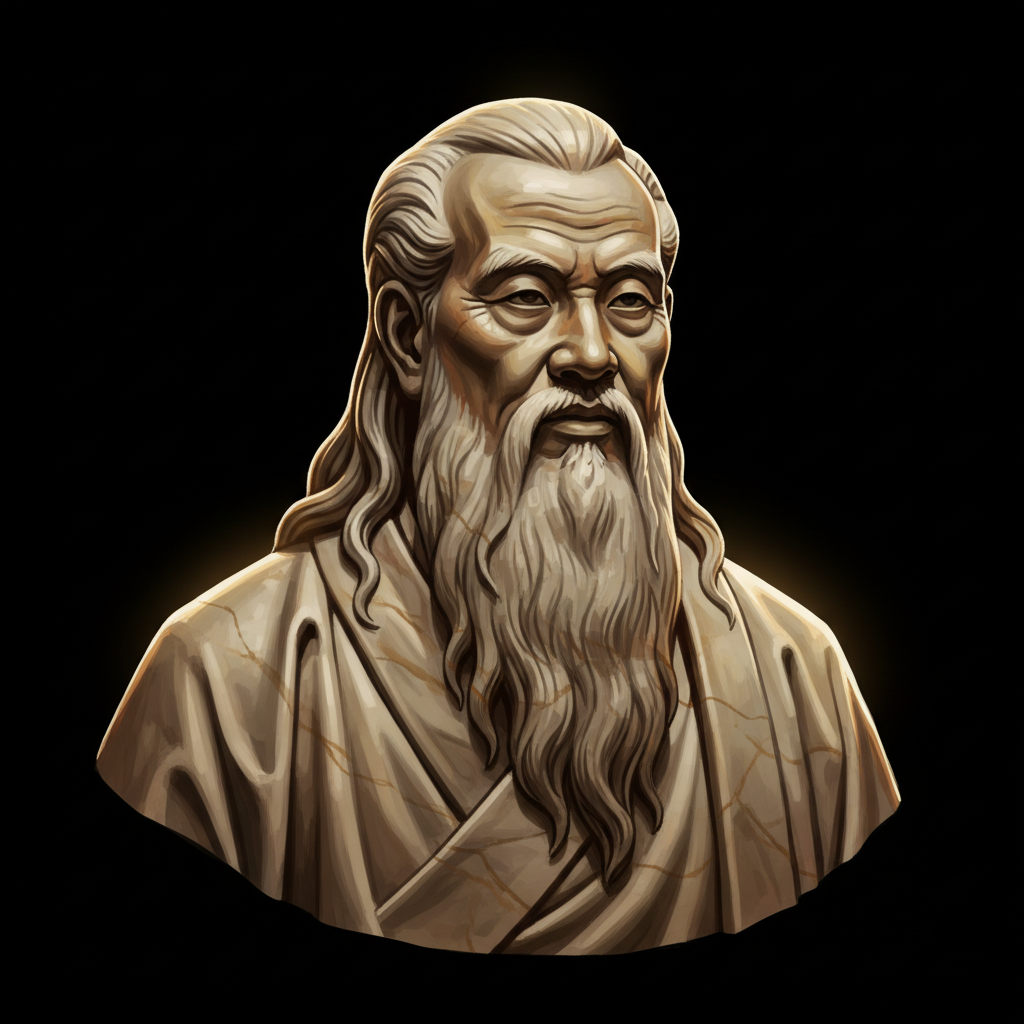
Laozi — "Empty your mind of all thoughts. Let your heart be at peace. Watch the turmoil o…"
Empty your mind of all thoughts. Let your heart be at peace. Watch the turmoil of the world, but let your serenity remain intact.
Empty your mind of all thoughts. Let your heart be at peace. Watch the turmoil of the world, but let your serenity remain intact.
Click any product to generate a realistic preview. Up to 3 at a time.
* Initial load can take up to 90 seconds — revising the preview in another color is nearly instant.
"He who values himself more than the world can be entrusted with the world. He who loves himself more than the world can be charged with the world."
"To yield is to be preserved whole. To be bent is to be straightened. To be empty is to be filled. To be worn out is to be renewed. To have little is to gain. To have plenty is to be perplexed."
"The sage is like water, which flows to the lowest places and yet is the strongest."
"The Tao never does anything, yet through it all things are done."
"Do not exalt the talented, so that people will not be contentious. Do not value rare treasures, so that people will not steal. Do not display what is desirable, so that people will not be confused."
Reputed founder of Taoism and author of the Tao Te Ching, whose wu wei (effortless action) shaped East Asian philosophy. Closely associated with Zhuangzi (later Taoist who extended Laozi's framework). For an intellectual contrast, see Confucius, near-contemporary Chinese sage of social ritual and duty — Confucius systematized social order through ritual and hierarchy; Laozi argued that all such systems were the disease, not the cure — the two founding poles of Chinese moral philosophy.
Attributed, a poetic interpretation of Taoist meditation principles, not a direct quote.
Date: Unknown
GeneralFound in 1 providers: grok
1 source checked
Clear your head of constant chatter and judgments, and settle your emotions into stillness. From that quiet center, you can observe chaos, conflict, and the frantic pace of life around you without being swept into it. Instead of reacting to every disturbance, you stay grounded and composed. Peace becomes something you carry inside rather than something the outside world grants you when conditions finally calm down.
Laozi, the legendary sage credited with founding Taoism and writing the Tao Te Ching, taught that wisdom comes from wu wei, effortless action rooted in inner stillness. Said to have served as a royal archivist before withdrawing from court life in disgust at its corruption, he modeled the very detachment this saying recommends. Watching turmoil without being consumed by it is the Taoist ideal: aligning with the Tao rather than struggling against it.
Laozi reputedly lived during China's late Zhou period, an era sliding into the Warring States chaos of shifting alliances, constant warfare, and collapsing feudal order. Rival philosophies, Confucianism stressing ritual and social duty, Legalism demanding harsh control, competed to fix a broken society. Taoism offered a radical alternative: step back, cultivate inner quiet, and let nature's rhythm guide action. In a world of political turmoil, preserving inner serenity was both spiritual discipline and survival strategy.
AI-generated insights based on extensive research and information for context. Factual errors? Email [email protected].
Your cart is empty