Laozi — "When the great sage is born, the world is at peace."
When the great sage is born, the world is at peace.
When the great sage is born, the world is at peace.
Click any product to generate a realistic preview. Up to 3 at a time.
* Initial load can take up to 90 seconds — revising the preview in another color is nearly instant.
"If you would take, you must first give, this is the beginning of intelligence."
"Fill your bowls to the brim and they will spill. Sharpen your blade to the sharpest and it will soon blunt."
"Govern a great nation as you would cook a small fish. (Do not overdo it.)"
"Simplicity has no name is free of desires. Being free of desires it is tranquil. And the world will be at peace of it's own accord."
"The sage embraces the One and becomes the model of the world. He does not display himself, therefore he shines. He does not assert himself, therefore he is distinguished. He does not boast, therefore …"
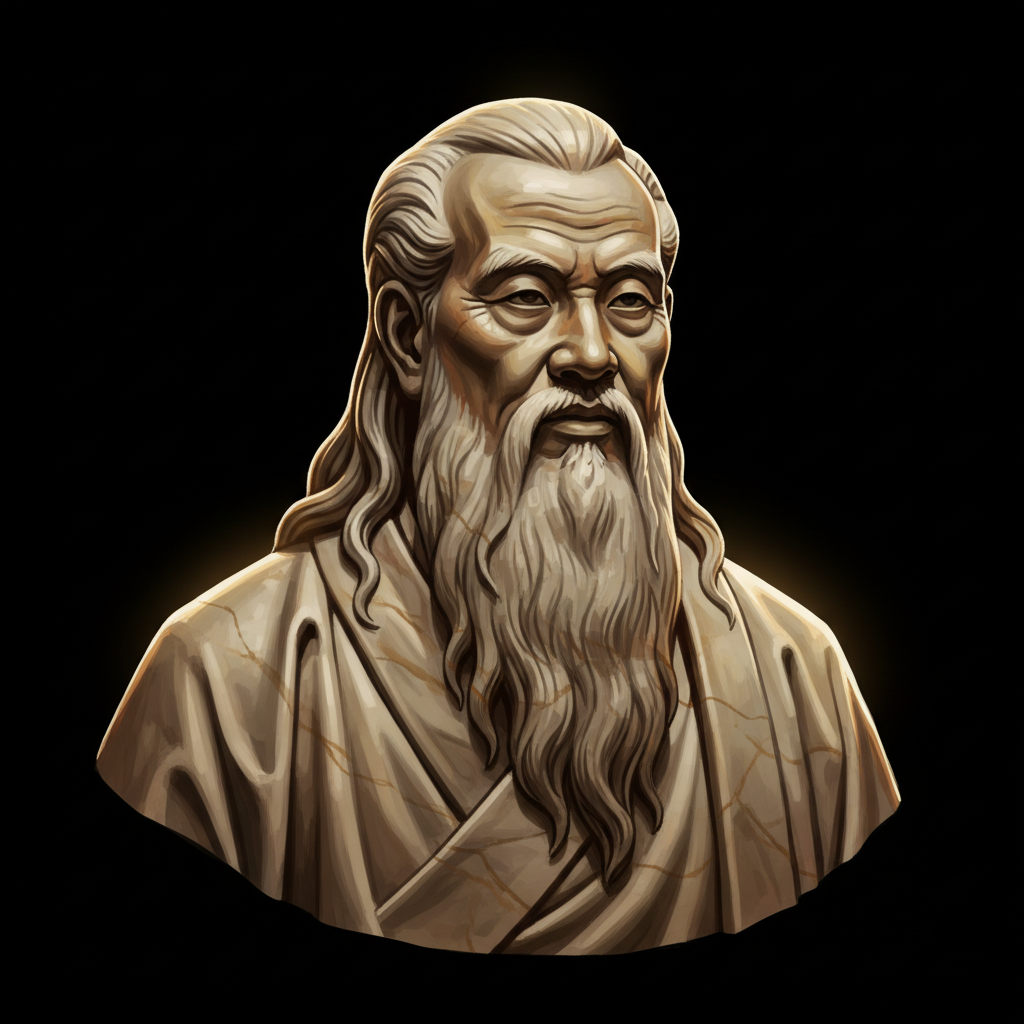
Reputed founder of Taoism and author of the Tao Te Ching, whose wu wei (effortless action) shaped East Asian philosophy. Closely associated with Zhuangzi (later Taoist who extended Laozi's framework). For an intellectual contrast, see Confucius, near-contemporary Chinese sage of social ritual and duty — Confucius systematized social order through ritual and hierarchy; Laozi argued that all such systems were the disease, not the cure — the two founding poles of Chinese moral philosophy.
Tao Te Ching (general sentiment related to sage rule)
Date: 6th century BCE (approximate)
ShockingFound in 1 providers: grok
1 source checked
A truly wise leader's arrival brings harmony rather than upheaval. The presence of someone who deeply understands the natural order calms conflict, eases suffering, and steadies society. Peace here isn't enforced by power or law but emerges naturally from the sage's quiet influence and example. When wisdom guides the world, struggle subsides because people no longer need to fight against the way things actually are.
Laozi reportedly served as a keeper of royal archives during the Zhou dynasty, withdrawing in disgust as the court declined into corruption and warfare. His Tao Te Ching praises the sage-ruler who governs through wu wei, effortless non-action, trusting the Tao rather than force. This saying captures his core belief that genuine wisdom, not ambition or military strength, is what restores order to a fractured world.
Laozi lived during the late Zhou period, an era of collapsing central authority that bled into the brutal Warring States. Rival lords waged constant war, peasants suffered, and thinkers across China searched for a remedy, producing the Hundred Schools of Thought. Against that bloodshed, the longing for a sage whose mere presence could restore peace was urgent and political, not merely poetic, making this saying a direct response to chaos.
AI-generated insights based on extensive research and information for context. Factual errors? Email [email protected].
Your cart is empty