Laozi — "Yield and overcome; Bend and be straight; Empty and be full; Wear out and be new…"
Yield and overcome; Bend and be straight; Empty and be full; Wear out and be new; Have little and gain; Have much and be confused.
Yield and overcome; Bend and be straight; Empty and be full; Wear out and be new; Have little and gain; Have much and be confused.
Click any product to generate a realistic preview. Up to 3 at a time.
* Initial load can take up to 90 seconds — revising the preview in another color is nearly instant.
"Abandon sageliness and discard wisdom, and the people will benefit a hundredfold."
"The more prohibitions there are, the poorer the people become. The more sharp weapons the people have, the more troubled the state becomes. The more cunning and skill man possesses, the more peculiar …"
"When the best student hears about the Way, he practices it diligently. When the average student hears about the Way, he is half-hearted. When the worst student hears about the Way, he laughs out loud.…"
"The heaviest thing in the world is a human heart."
"When you realize there is nothing lacking, the whole world belongs to you."
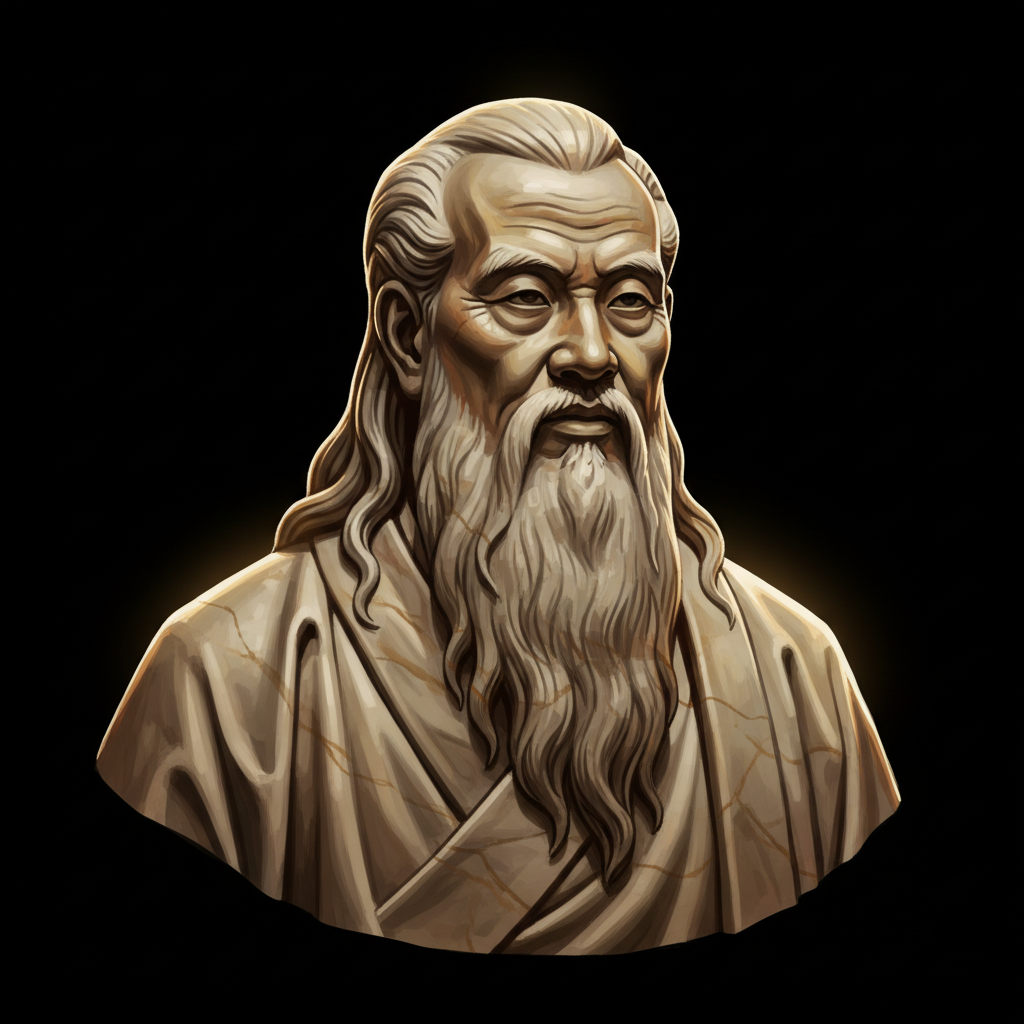
Reputed founder of Taoism and author of the Tao Te Ching, whose wu wei (effortless action) shaped East Asian philosophy. Closely associated with Zhuangzi (later Taoist who extended Laozi's framework). For an intellectual contrast, see Confucius, near-contemporary Chinese sage of social ritual and duty — Confucius systematized social order through ritual and hierarchy; Laozi argued that all such systems were the disease, not the cure — the two founding poles of Chinese moral philosophy.
Found in 1 providers: grok
1 source checked
This saying argues that the surest path to strength, fullness, and renewal runs through their opposites. Giving ground wins arguments, flexibility keeps you upright, emptying your cup lets it refill, and letting something wear out opens space for what's new. Owning little leaves room to gain, while piling up possessions and opinions only clouds judgment. Counterintuitive moves beat forceful ones.
Laozi, traditionally credited as founder of Taoism and author of the Tao Te Ching, is said to have worked as an archivist in the Zhou court before withdrawing from public life in disgust at its corruption. The paradoxes here match his core teachings on wu wei (effortless action) and the power of the soft over the hard, and his own choice to abandon status rather than accumulate it mirrors the line about having little.
Laozi is placed in the late Zhou dynasty, around the 6th century BCE, as centralized authority crumbled into the warring states that would define the next centuries. Rival rulers hired strategists, legalists, and Confucians offering rigid hierarchies, laws, and rituals to restore order through force. Taoism emerged as the counter-voice, arguing that yielding with nature outperformed grasping ambition in a collapsing age addicted to conquest.
AI-generated insights based on extensive research and information for context. Factual errors? Email [email protected].
Your cart is empty