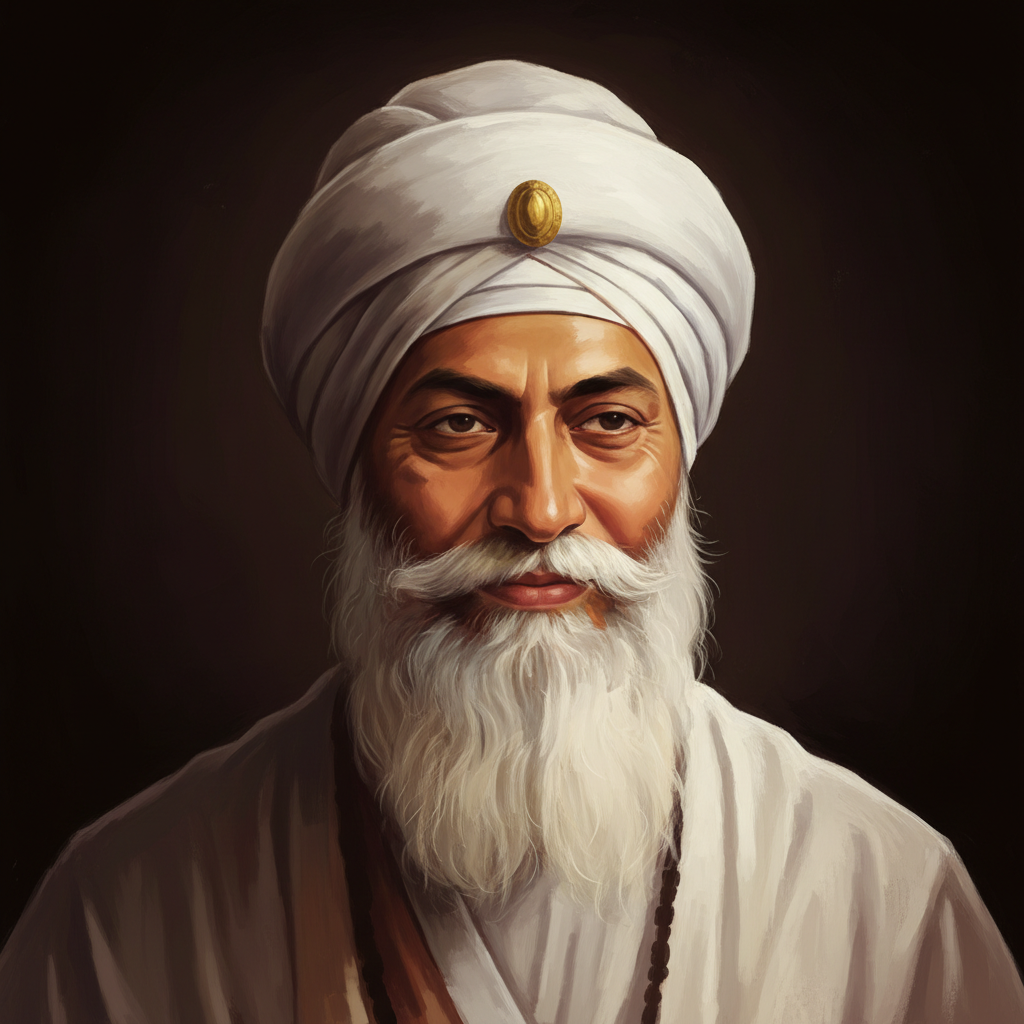
Guru Nanak — "With your hands carve out your own destiny."
With your hands carve out your own destiny.
With your hands carve out your own destiny.
Click any product to generate a realistic preview. Up to 3 at a time.
* Initial load can take up to 90 seconds — revising the preview in another color is nearly instant.
"The wise man speaks little and listens much. Especially when someone is explaining how to fix a leaky faucet."
"The Guru is the ladder, the boat, the raft, the ferryman, the ship, and the captain."
"The world is a garden, and we are its gardeners; we must sow the seeds of truth and righteousness."
"Why do you go to the forest in search of God? He lives in all, and yet is ever distinct. He abides with you, too."
"The true Guru is the one who shows the path of truth and righteousness."
Founder of Sikhism and the first of the Ten Sikh Gurus, whose teachings of one universal God and rejection of caste shaped Punjab. Closely associated with Kabir (mystical poet whose verses appear in the Sikh Guru Granth Sahib). For an intellectual contrast, see Brahmanical orthodoxy, the Hindu caste-and-ritual establishment of his era — Sikhism was founded as a deliberate alternative to both Hindu ritual hierarchy and Islamic exclusivism — Nanak's universalism was a structural rejection of caste and priestly mediation.
Found in 1 providers: gemini
1 source checked
You shape your future through your own actions and effort. Destiny is not handed to you passively — it is built through deliberate work, choice, and determination. Your hands, meaning your deeds and labor, are the instruments of your fate. Waiting for circumstances to change without acting is insufficient; personal agency and active effort are what transform your life.
Guru Nanak rejected caste hierarchy and priestly intermediaries, insisting each person stands directly accountable before God through their own deeds. He worked as a farmer and store clerk before his calling, valuing honest labor. His concept of kirat karni — earning through righteous work — made manual effort sacred. This quote directly embodies that teaching: dignified labor is both spiritual practice and self-determination.
In 15th-16th century Punjab, caste determined occupation, social standing, and spiritual access. Brahmin priests controlled religious meaning; lower castes were told their destiny was fixed by birth. Mughal conquest further disrupted social order. Guru Nanak's insistence that individuals carve their own destiny through action directly challenged caste fatalism and priestly gatekeeping, offering radical egalitarianism at a moment of profound social and political upheaval.
AI-generated insights based on extensive research and information for context. Factual errors? Email [email protected].
Your cart is empty