Martin Luther — "You people are more stupid than a block of wood."
You people are more stupid than a block of wood.
You people are more stupid than a block of wood.
Click any product to generate a realistic preview. Up to 3 at a time.
* Initial load can take up to 90 seconds — revising the preview in another color is nearly instant.
"What devilish unchristian thing would you not undertake?"
"But since they have deliberately and sacrilegiously abandoned their obedience, and in addition have dared to oppose their lords, they have thereby forfeited body and soul, as perfidious, perjured, lyi…"
"Be a sinner and sin boldly, but believe and rejoice in Christ even more boldly, for he is victorious over sin, death, and the world."
"The more we are afflicted in this world, the more we are conformed to Christ."
"The hair on my head is a fine work of art, but it is not necessary for salvation."
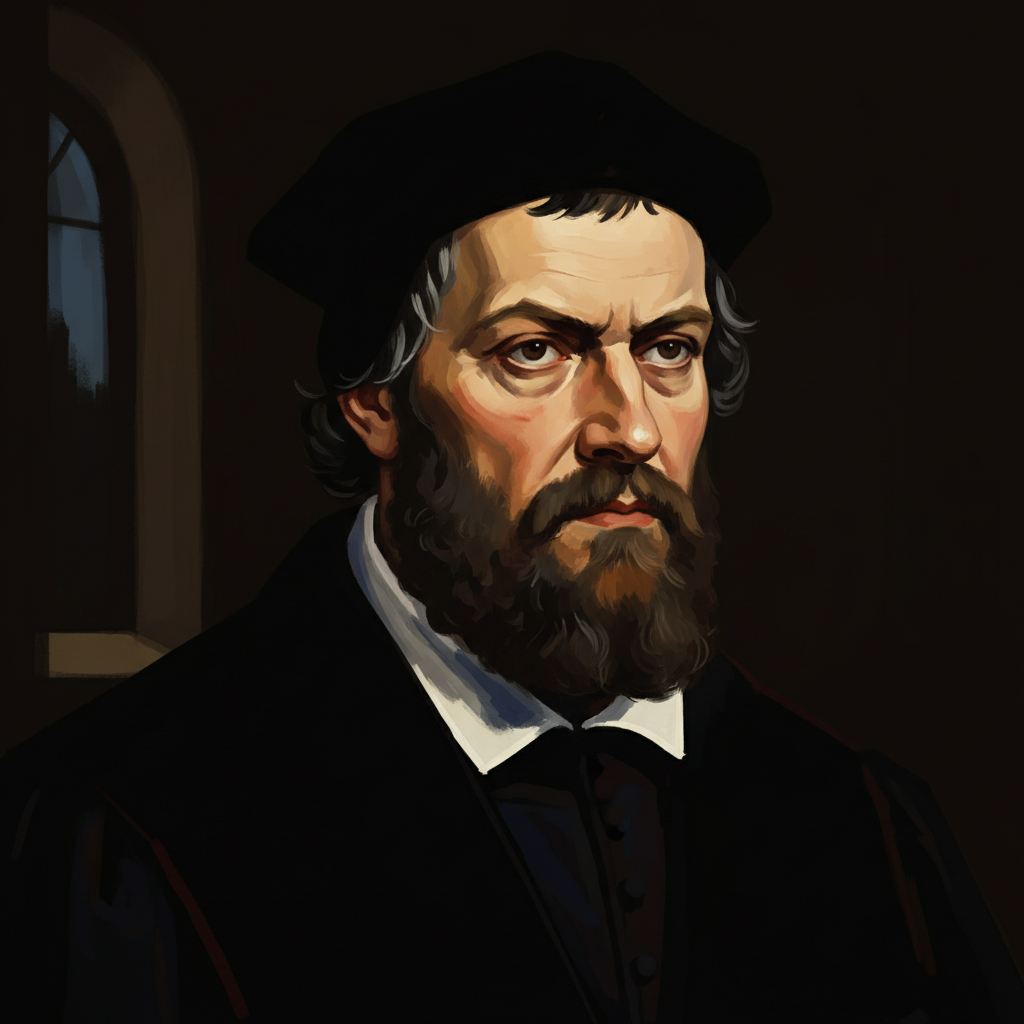
German theologian whose 95 Theses (1517) launched the Protestant Reformation and broke the Catholic Church's monopoly on Western Christianity. Closely associated with Philipp Melanchthon (Lutheran systematizer) and John Calvin (later Reformer who built on Luther's break). For an intellectual contrast, see Pope Leo X, Renaissance pope (1513-1521) — Leo X's indulgence sales triggered Luther's break and Leo excommunicated him in 1521 — Luther's entire Reformation is structured as a direct answer to the indulgence-funded Vatican Leo represented.
Found in 1 providers: gemini
1 source checked
This is a blunt, insulting rebuke aimed at people the speaker considers foolish or stubbornly incapable of understanding. Comparing someone to a block of wood suggests they are inert, unthinking, and unresponsive to reason. In modern terms, it is calling an audience denser than lumber, unable to grasp what should be obvious. It is less an argument than a verbal slap intended to shame listeners into paying attention or reconsidering their position.
Luther was famous for ferocious, scatological rhetoric against opponents, whether popes, princes, peasants, or fellow reformers. A former Augustinian monk turned theology professor at Wittenberg, he weaponized plain German insults to expose what he saw as willful blindness to scripture. Calling people dumber than wood fits his pulpit style: combative, earthy, and unafraid to humiliate audiences he believed were ignoring gospel truth in favor of tradition, indulgences, or political convenience.
In early-modern Europe, the printing press turned sermons and pamphlets into mass media, and polemical insult was standard intellectual combat. Luther's 1517-1546 campaign against Rome unfolded amid peasant revolts, Holy Roman Empire politics, and violent doctrinal splits. Literacy was rising but most laypeople still depended on preachers to interpret scripture. Calling a congregation wooden-headed reflected the era's anxiety that ordinary Christians were being misled by clergy, and that blunt vernacular shock was needed to awaken them.
AI-generated insights based on extensive research and information for context. Factual errors? Email [email protected].
Your cart is empty