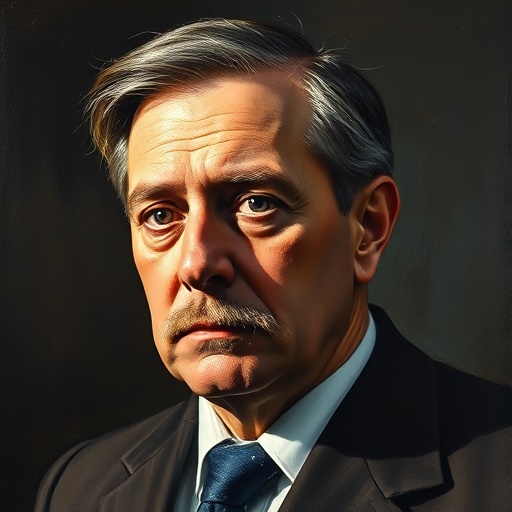
John von Neumann
Computer architecture, game theory
Sayings by John von Neumann
If you say why not bomb them tomorrow, I say why not today? If you say today at five o'clock, I say why not one o'clock?
There's no sense in being precise when you don't even know what you're talking about.
Anyone who considers arithmetical methods of producing random digits is, of course, in a state of sin.
Young man, in mathematics you don't understand things. You just get used to them.
If people do not believe that mathematics is simple, it is only because they do not realize how complicated life is.
The sciences do not try to explain, they hardly even try to interpret, they mainly make models. By a model is meant a mathematical construct which, with the addition of some verbal interpretations, describes observed phenomena. The justification of such a mathematical construct is solely and precisely that it is expected to work.
As far as I'm concerned, the two most important things in life are mathematics and sex.
I'm told that the only difference between a mathematician and a physicist is that a mathematician thinks about mathematics and a physicist thinks about physics. And a physicist is always trying to get a mathematician to do his dirty work.
The computer is the only machine that can be taught to do anything.
The game of life is a game of perfect information.
Mathematics is not a science. It is a language.
The more precisely the position is determined, the less precisely the momentum is known in this instant, and vice versa.
The problems of mathematics are not in mathematics itself, but in the human mind.
It would appear that we have reached the limits of what it is possible to achieve with computer technology, although one should be careful with such statements, as they tend to sound pretty silly in 5 years.
An honest man is one who is afraid of the police.
The greatest value of a picture is when it forces us to notice what we never expected to see.
When we look at the results of computation, we don't always know what they mean.
The world is so complicated that it cannot be described in any other way than by itself.
The more abstract a thing is, the more real it is.
It is not at all certain that the mathematical method is appropriate for the description of the world.