Laozi — "The sage is sharp but not cutting, pointed but not piercing, straightforward but…"
The sage is sharp but not cutting, pointed but not piercing, straightforward but not unrestrained, brilliant but not dazzling.
The sage is sharp but not cutting, pointed but not piercing, straightforward but not unrestrained, brilliant but not dazzling.
Click any product to generate a realistic preview. Up to 3 at a time.
* Initial load can take up to 90 seconds — revising the preview in another color is nearly instant.
"Anticipate the difficult by managing the easy."
"When the people are ignorant, they are easy to control."
"He who knows others is wise; he who knows himself is enlightened."
"Keep your mouth shut, guard your senses, and you will be free from trouble. Open your mouth, always be busy, and you will be beyond hope."
"When the great Tao is abandoned, there is humanity and righteousness. When wisdom and intelligence appear, there is great hypocrisy."
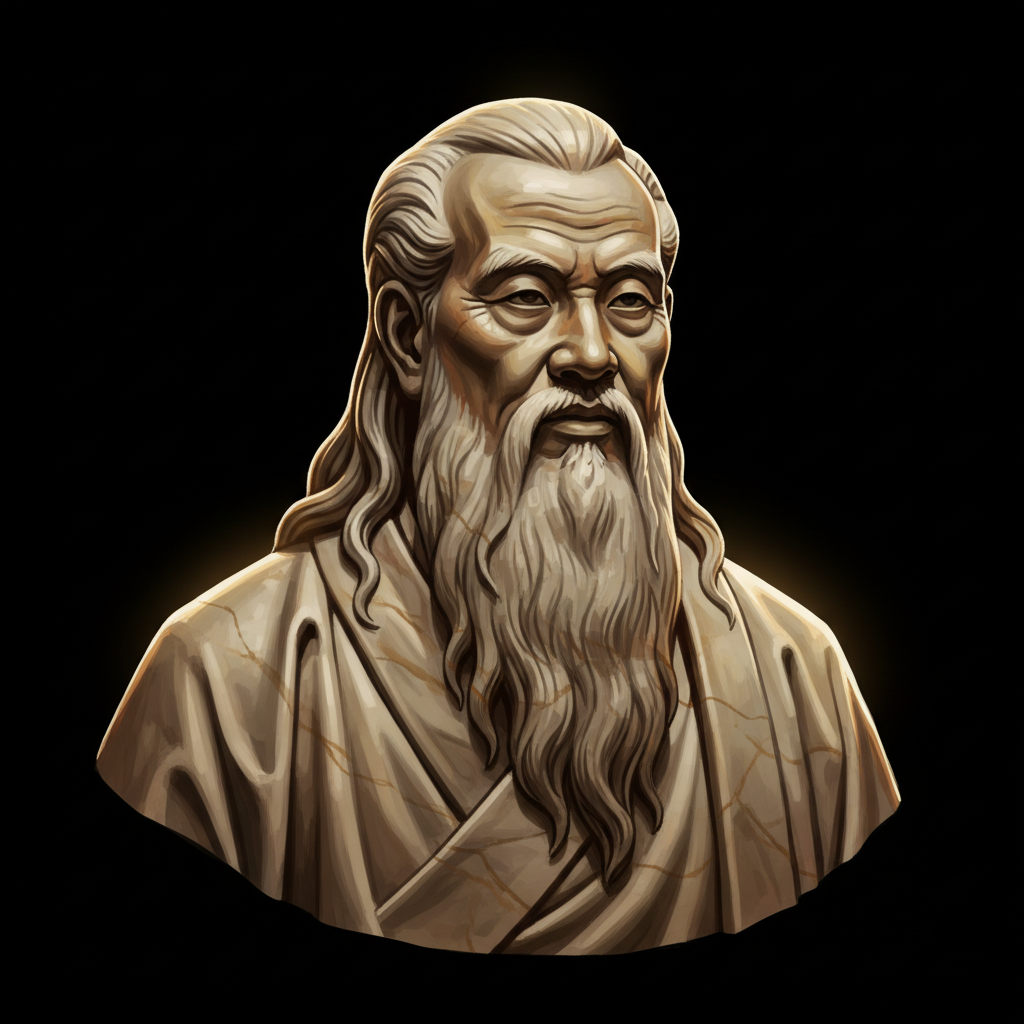
Reputed founder of Taoism and author of the Tao Te Ching, whose wu wei (effortless action) shaped East Asian philosophy. Closely associated with Zhuangzi (later Taoist who extended Laozi's framework). For an intellectual contrast, see Confucius, near-contemporary Chinese sage of social ritual and duty — Confucius systematized social order through ritual and hierarchy; Laozi argued that all such systems were the disease, not the cure — the two founding poles of Chinese moral philosophy.
Found in 1 providers: deepseek
1 source checked
A wise person possesses strong qualities but tempers them with restraint. They can be perceptive without being hurtful, direct without being aggressive, honest without being rude, and intelligent without showing off. True wisdom means having capability and keeping it under control, using your gifts to help rather than intimidate. Power without moderation becomes harm; brilliance without humility becomes arrogance. The ideal is strength softened by self-awareness.
Laozi, the traditional founder of Taoism, taught wu wei, effortless action, and the value of yielding over force. As a reputed archivist in the Zhou court, he observed rulers and scholars who wielded knowledge harshly and favored humility instead. This saying mirrors his Tao Te Ching, where the sage softens edges, dims light, and aligns with the Tao. Restrained brilliance reflects his core conviction that true power flows quietly.
Laozi lived during the late Zhou dynasty, a turbulent era preceding the Warring States period when feudal lords battled for supremacy and Confucian scholars debated ritual and hierarchy. Rulers prized sharp rhetoric, military cunning, and displays of status. Against this backdrop of ambition and violence, Laozi's call for understated wisdom offered a radical counter-philosophy, urging restraint and naturalness over the aggressive posturing that defined court life and contributed to widespread social instability.
AI-generated insights based on extensive research and information for context. Factual errors? Email [email protected].
Your cart is empty